
 Bbihi L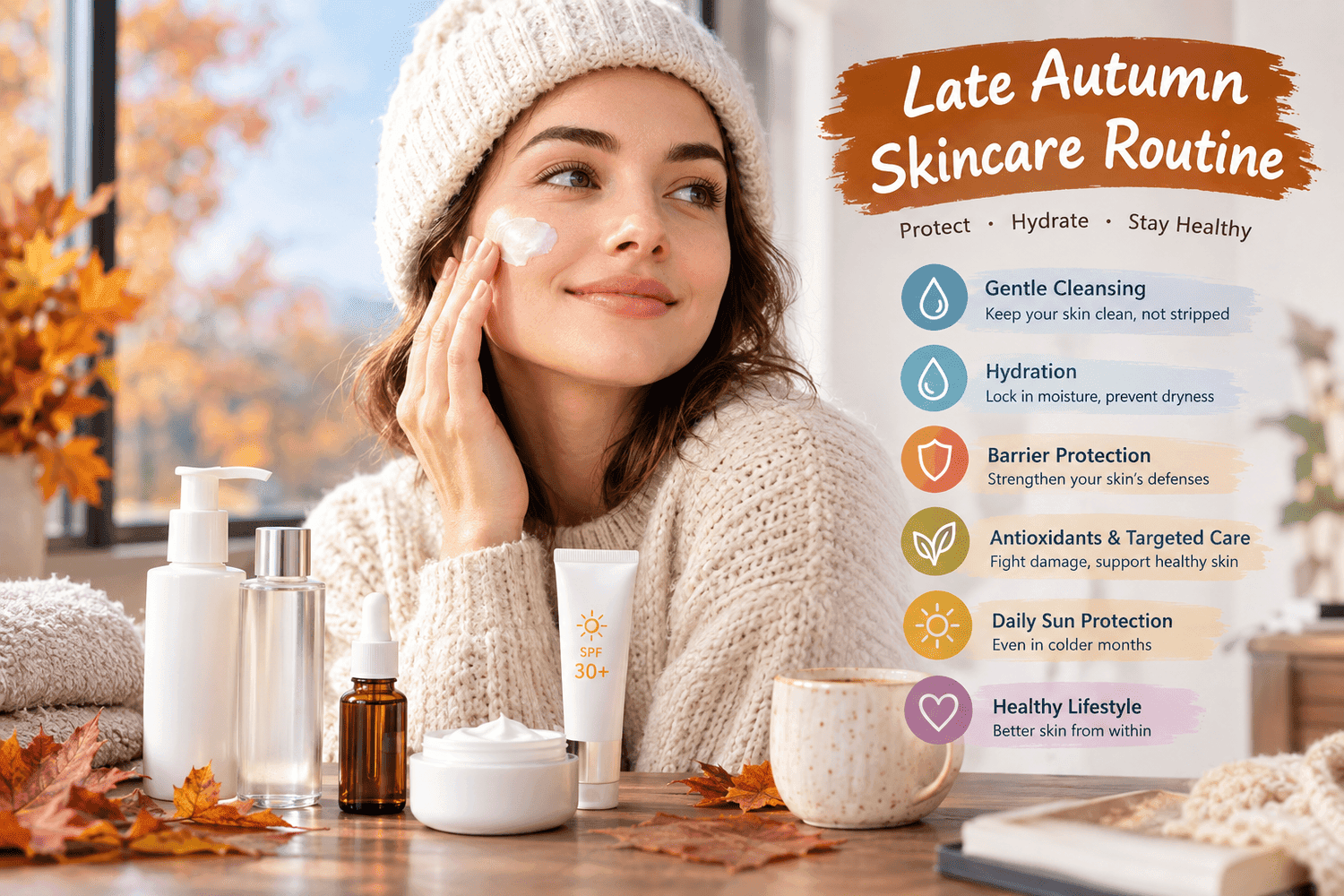
Introduction
Late autumn brings cooler temperatures, lower humidity, and stronger winds—all of which can affect skin health. As the weather shifts from the warmth of summer and early autumn toward colder conditions, many people notice increased dryness, flaking, tightness, sensitivity, or irritation.
A preventive late autumn skincare routine is not simply a beauty trend. It can help maintain skin hydration, support the skin barrier, and keep the complexion comfortable and healthy as environmental conditions change.
Your skincare routine should change with the seasons. Cold air, dry indoor environments, wind, and frequent exposure to heating can increase moisture loss from the skin. For this reason, late autumn is an ideal time to reassess your products and habits before winter arrives.
In this guide, we explore a practical autumn skincare routine designed to support hydration, strengthen the skin barrier, reduce dryness, and protect the skin from environmental stressors. The recommendations can be adapted to different skin types and individual needs.
Key Points
| Skincare Area | Main Focus | Potential Benefit |
|---|---|---|
| Hydration | Humectants and moisturizers | Helps reduce dryness and tightness |
| Skin Barrier Protection | Ceramides and nourishing lipids | Supports the skin’s protective barrier |
| Cleansing | Gentle, non-stripping cleansers | Helps preserve natural skin oils |
| Targeted Care | Antioxidants and selected treatments | Addresses specific skincare concerns |
| Sun Protection | Broad-spectrum SPF | Helps protect against UV damage |
| Lifestyle Habits | Sleep, nutrition, hydration, and indoor humidity | Supports overall skin health |
What Happens to Your Skin in Late Autumn?
As autumn progresses toward winter, outdoor humidity and temperatures often decrease. Cold air and wind can contribute to increased transepidermal water loss (TEWL), which occurs when water moves from the deeper layers of the skin and evaporates from its surface.
Lower humidity indoors can add to the problem, particularly when heating systems are used regularly. As a result, the skin may feel:
- Dry or tight
- Rough or flaky
- More sensitive than usual
- Irritated or uncomfortable
- Dull or less radiant
People with naturally dry or sensitive skin may notice these changes more quickly.
This is why late autumn is an excellent time to focus on skin hydration and barrier protection rather than waiting until winter dryness becomes severe.
Step-by-Step Late Autumn Skincare Routine
Step 1: Use a Gentle Cleanser
Cleansing removes dirt, sweat, sunscreen, makeup, and other impurities. However, overly aggressive cleansing can leave the skin feeling dry and uncomfortable.
Choose a gentle, fragrance-free or low-irritation cleanser appropriate for your skin type. Avoid products that leave your skin feeling unusually tight or stripped after washing.
Cleansing Tips
- Use lukewarm water instead of very hot water.
- Avoid vigorous rubbing.
- Choose a gentle cleanser rather than harsh soap.
- Cleanse thoroughly but avoid unnecessary over-cleansing.
- Pat your skin dry instead of rubbing it with a towel.
If your skin becomes particularly dry during late autumn, you may need to adjust how frequently you cleanse, especially in the morning.
Step 2: Add Hydration With a Toner or Essence
After cleansing, a hydrating toner or essence can provide an additional layer of moisture.
Look for ingredients such as glycerin, hyaluronic acid, or other humectants. Humectants help attract and hold water in the outer layers of the skin.
However, a hydrating toner is optional. If your moisturizer already provides sufficient hydration, you do not necessarily need another step.
Look for :
- Glycerin – a well-established humectant that helps attract water.
- Hyaluronic acid – helps support skin hydration.
- Panthenol – commonly used in products designed to soothe and moisturize.
- Aloe vera – may provide a soothing and hydrating effect for some skin types.
Apply hydrating products while the skin is slightly damp when appropriate, then follow with moisturizer to help retain moisture.
Step 3 : Apply an Antioxidant Serum
Late autumn skincare can also include an antioxidant serum. Antioxidants help counter oxidative stress caused by environmental factors such as ultraviolet radiation and pollution.
Useful Antioxidant Ingredients
Vitamin C:
A popular antioxidant that can help brighten the appearance of the skin and support collagen production.
Niacinamide:
A versatile ingredient that can support the skin barrier and improve the appearance of uneven texture and tone.
Green Tea Extract:
Contains polyphenols with antioxidant properties and is commonly included in products formulated for stressed or sensitive-looking skin.
You do not need to use several antioxidant products at once. Choose one formulation that suits your skin and introduce new products gradually.
Step 4 : Choose a Richer Moisturizer for Barrier Protection
One of the most important steps in a late autumn skincare routine is moisturizing.
As the weather becomes colder and drier, a lightweight summer moisturizer may no longer provide enough comfort or protection. Consider switching to a richer cream or lotion if your skin begins to feel dry.
Ingredients commonly used to support the skin barrier include:
- Ceramides
- Fatty acids
- Cholesterol
- Glycerin
- Squalane
- Petrolatum
Ceramides are naturally occurring lipids found in the skin and are widely used in moisturizers designed to support barrier function.
Moisturizing Tips
- Apply moisturizer after cleansing.
- Moisturize while the skin is slightly damp when practical.
- Pay extra attention to dry areas.
- Reapply hand cream after washing your hands.
- Use a richer product on particularly dry areas if needed.
Your face is not the only area affected by autumn weather. Hands, lips, elbows, and other exposed areas can also become dry.
Step 5 : Use Targeted Treatments Carefully
Targeted skincare treatments can be useful, but they should be introduced according to your skin’s needs.
For Signs of Skin Aging
Retinoids are widely used in skincare for concerns such as fine lines, uneven texture, and acne. If you already use a retinoid, continue following the product instructions and introduce it gradually if necessary.
Retinoids can increase skin sensitivity, making daily sunscreen use particularly important.
For Redness or Dry, Sensitive Skin
Products containing colloidal oatmeal may help soothe dry or irritated skin. Other active ingredients, such as azelaic acid, may be useful for certain concerns but can cause irritation in some people.
Do not introduce multiple new active ingredients simultaneously.
Important Tip
Patch-test new products when possible, particularly if your skin is sensitive or reactive. Stop using a product if it causes persistent burning, swelling, or significant irritation.
If you have a persistent skin condition or severe symptoms, seek advice from a qualified dermatologist.
Step 6 : Don’t Skip Sunscreen in Autumn
A common skincare mistake is assuming that sunscreen is only necessary during summer.
Ultraviolet (UV) radiation is present throughout the year, although exposure varies according to location, season, weather, time of day, and outdoor activity.
A broad-spectrum sunscreen helps protect the skin against UVA and UVB radiation.
Autumn SPF Tips
- Use a broad-spectrum SPF 30 or higher when appropriate for your daily exposure.
- Apply sunscreen to exposed areas.
- Remember commonly missed areas such as the neck, ears, and hands.
- Reapply during prolonged outdoor exposure according to the product’s instructions.
- Continue sun protection even on cooler or cloudy days when UV exposure remains relevant.
Daily sunscreen is an important part of long-term skin protection—not simply a summer habit.
Lifestyle Habits That Support Healthy Skin
Skincare products are only one part of maintaining healthy-looking skin. Everyday habits also matter.
Stay Hydrated
Adequate fluid intake supports normal body functions, although simply drinking more water does not automatically solve dry skin.
A balanced diet and appropriate skincare work together to support overall skin health.
Include nutrient-rich foods such as:
- Fatty fish
- Nuts and seeds
- Fruits and vegetables
- Whole grains
- Legumes
- Healthy sources of dietary fats
Foods containing omega-3 fatty acids, vitamin E, vitamin C, and other nutrients can contribute to a balanced diet that supports normal skin function.
Prioritize Quality Sleep
Sleep is an important part of overall health and recovery. Poor sleep may also affect the appearance of the skin and its ability to recover from daily environmental stress.
Aim for a consistent sleep schedule and create a relaxing bedtime routine.
Simple habits can help, including:
- Maintaining regular sleeping and waking times
- Limiting excessive screen exposure before bed
- Keeping the bedroom comfortable
- Managing stress through relaxation or physical activity
Healthy sleep habits complement a consistent skincare routine.
Use a Humidifier When Indoor Air Is Very Dry
Indoor heating can reduce relative humidity, which may make dry skin feel worse.
Using a humidifier can add moisture to indoor air and may make the environment more comfortable during colder months.
However, humidifiers require regular cleaning. Poorly maintained devices can accumulate microorganisms and other contaminants, potentially affecting indoor air quality.
Keep the device clean and follow the manufacturer’s maintenance instructions.
How to Adjust Your Routine for Different Skin Types
There is no single autumn skincare routine that works perfectly for everyone.
Dry Skin
Focus on :
- Richer moisturizers
- Ceramides
- Gentle cleansing
- Hydrating ingredients
- Reduced use of harsh exfoliants
Oily Skin
Do not stop moisturizing simply because your skin is oily.
Choose :
- Lightweight, non-comedogenic moisturizers
- Gentle cleansers
- Hydrating but lightweight products
- Appropriate sun protection
Avoid aggressively stripping the skin, as excessive cleansing can cause irritation.
Combination Skin
Use different textures where needed. A lightweight moisturizer may work well on oilier areas, while drier areas may benefit from a richer product.
Sensitive Skin
Keep the routine simple.
Prioritize:
- Fragrance-free products when possible
- Gentle cleansing
- Barrier-supporting moisturizers
- Gradual introduction of new products
- Minimal use of potentially irritating active ingredients
Common Late Autumn Skincare Mistakes to Avoid
Even a good skincare routine can become less effective if certain habits work against it.
1. Using Very Hot Water
Hot water can increase dryness and irritation. Lukewarm water is generally a better choice.
2. Over-Exfoliating
Exfoliating too frequently can leave the skin irritated, particularly when the weather is already dry and cold.
3. Skipping Moisturizer
Cold weather does not mean every skin type needs a heavy cream, but most skin types benefit from appropriate moisturization.
4. Forgetting Sunscreen
Cool temperatures do not eliminate UV exposure.
5. Introducing Too Many Products at Once
Using several new active ingredients simultaneously makes it difficult to determine what is helping—or causing irritation.
6. Ignoring the Hands and Lips
Hands and lips are frequently exposed to cold air and repeated washing. They deserve regular moisturizing and protection too.
Quick Late Autumn Skincare Routine
If you prefer a simple routine, start with these essentials :
Morning
- Gentle cleansing, if needed
- Hydrating serum or toner
- Moisturizer
- Broad-spectrum SPF 30+
Evening
- Gentle cleanser
- Hydrating product
- Targeted treatment, if appropriate
- Moisturizer
You do not need a long skincare routine to support healthy-looking skin. Consistency is more important than complexity.
Expert-Informed Takeaway
Late autumn is a useful transition period for preparing your skin for winter.
The most important priorities are :
- Protect the skin barrier
- Maintain adequate moisturization
- Avoid excessive cleansing and exfoliation
- Use products suited to your skin type
- Continue daily sun protection
- Support your skin with healthy lifestyle habits
If your skin suddenly becomes very dry, painful, persistently inflamed, or develops a rash that does not improve with basic care, professional evaluation may be appropriate.
Frequently Asked Questions
Is autumn a good time to change my skincare routine?
Yes. Changes in temperature, humidity, wind, and indoor heating can affect how your skin feels. Late autumn is a good time to reassess your cleanser and moisturizer and make gradual adjustments.
Should I use a heavier moisturizer in late autumn?
If your skin becomes dry or tight, a richer moisturizer may be helpful. However, the best texture depends on your skin type and personal preference.
Do I still need sunscreen in late autumn?
Yes. UV exposure does not disappear when temperatures fall. Broad-spectrum sunscreen remains an important part of daily skin protection.
How often should I exfoliate in autumn?
There is no universal frequency. If your skin is dry or sensitive, reduce exfoliation and avoid aggressive scrubs. If you use chemical exfoliants, follow the product instructions and monitor your skin for irritation.
Can indoor heating make my skin dry?
Yes. Heating can reduce indoor humidity, which may contribute to dry or uncomfortable skin. Maintaining reasonable indoor humidity and using an appropriate moisturizer may help.
What is the most important step in a late autumn skincare routine?
For many people, consistent moisturizing and skin-barrier protection are among the most important priorities during colder, drier weather. Gentle cleansing and daily sun protection also remain essential.
Conclusion
A late autumn skincare routine is more than a seasonal beauty trend. It is a practical way to adapt your skincare habits to changing environmental conditions before winter arrives.
Cooler temperatures, lower humidity, wind, and indoor heating can challenge the skin’s moisture balance and contribute to dryness and sensitivity. A simple routine built around gentle cleansing, hydration, barrier-supporting moisturization, appropriate targeted treatments, and daily sun protection can help keep your skin comfortable and healthy-looking.
Remember that consistency matters more than the number of products you use. Pay attention to how your skin responds, make changes gradually, and choose products that match your skin type.
Prepare your skin in late autumn, and you will enter winter with a stronger, more comfortable skincare routine.