
 Bbihi L
Quick Facts
- Cold, dry air and indoor heating can contribute to moisture loss and dry skin.
- Fragrance-free moisturizers remain an important part of winter skincare.
- Colloidal oatmeal can help soothe dry, irritated skin.
- Natural ingredients can still cause irritation or allergic reactions, so patch testing is advisable.
- A homemade face mask should complement—not replace—a basic skincare routine.
- Daily broad-spectrum SPF 30 or higher remains important during winter.
Why Cold Weather Can Make Your Skin Look Tired
Winter weather can be challenging for the skin. Low humidity, cold outdoor air, wind, and indoor heating can increase moisture loss and leave the skin feeling dry, tight, flaky, or uncomfortable. The American Academy of Dermatology notes that cold, dry conditions and indoor heating can contribute to dry skin and make it harder for the skin to retain moisture.
Common signs of winter dryness include :
- Dry or rough skin
- Flaking or peeling
- A tight or uncomfortable feeling
- Increased sensitivity
- A dull-looking complexion
- Chapped lips
- Fine lines that may appear more noticeable because of dehydration
When the skin becomes dry, the goal should be to restore and retain moisture rather than aggressively exfoliate it. Dermatologists generally recommend gentle cleansing and applying a fragrance-free cream or ointment while the skin is still slightly damp.
Can Natural Face Masks Help Tired Winter Skin?
A well-chosen face mask can provide a temporary boost of hydration, softness, and comfort, depending on its ingredients. However, homemade masks should not be presented as a treatment for a medical skin condition.
Some ingredients commonly used in skincare have properties that may benefit dry or irritated skin. For example, dermatologists recognize colloidal oatmeal as a soothing ingredient for dry, itchy skin, while green tea extract is included among ingredients that may help address inflammation in facial masks.
However, there is an important distinction between evidence for a skincare ingredient in a formulated product and evidence for applying a homemade mixture directly to the face. Kitchen ingredients may vary in concentration, purity, acidity, and contamination risk.
For this reason, natural face masks are best viewed as an optional addition to a simple skincare routine rather than a substitute for proven moisturizers and other dermatologist-recommended products.
Best Natural Ingredients for Dry and Dull Winter Skin
| Ingredient | Potential Skin Benefit | Important Consideration |
|---|---|---|
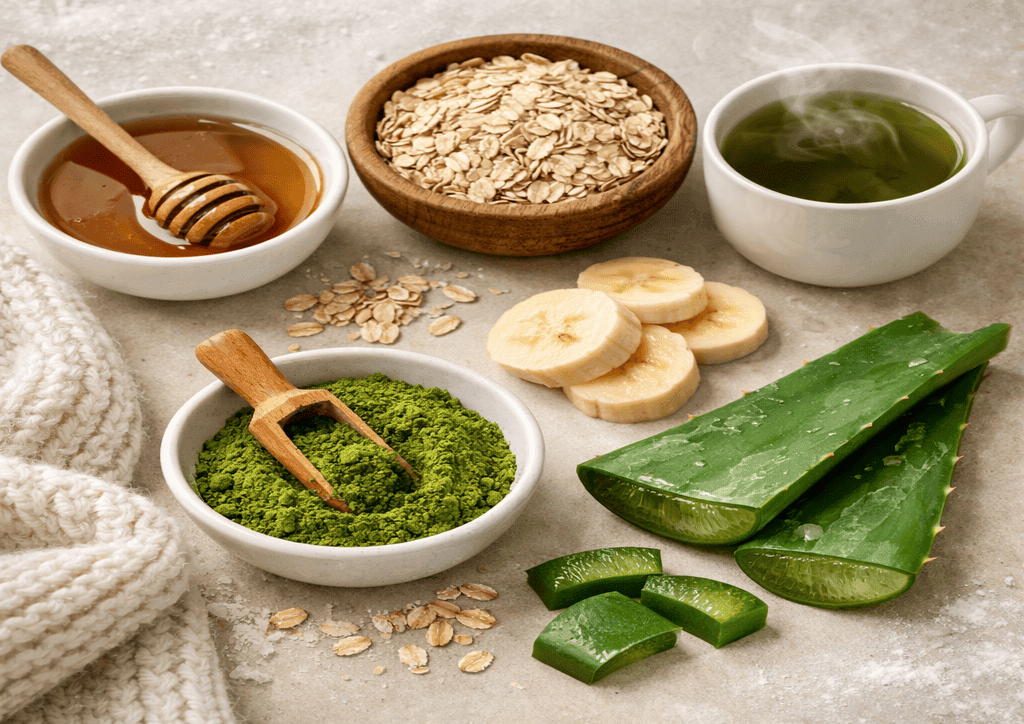
| Colloidal oatmeal | Helps soothe dry, irritated skin | Prefer cosmetic-grade colloidal oatmeal for skincare |
| Honey | Humectant and soothing properties | May cause irritation or allergy in some people |
| Aloe vera gel | Can feel soothing and cooling | Topical aloe is generally tolerated but can occasionally cause burning, itching, rash, or eczema |
| Avocado | Contains lipids and other nutrients | Limited evidence for homemade facial masks |
| Plain yogurt | Contains lactic acid and may provide mild exfoliation | May irritate sensitive skin |
| Banana | Provides a soft, creamy texture | Limited clinical evidence for topical facial benefits |
| Coconut oil | Occlusive and emollient properties | May be too heavy for some acne-prone skin |
| Green tea | Contains antioxidant compounds | Better evidence exists for formulated topical products |
| Turmeric | Contains curcumin with antioxidant and anti-inflammatory properties | Can stain skin and may irritate sensitive individuals |
| Rose water | Can provide a refreshing, soothing sensation | Fragrance components may irritate sensitive skin |
Important: “Natural” does not automatically mean “hypoallergenic.” The AAD specifically notes that natural or organic skincare products can still aggravate allergies or irritation.
4 Simple Natural Face Masks for Tired Winter Skin
1. Oatmeal and Honey Hydration Mask
This is one of the gentlest options in the original collection, particularly when using finely ground or cosmetic-grade colloidal oatmeal.
Ingredients
- 2 tablespoons finely ground colloidal oatmeal
- 1 tablespoon honey
- 1–2 tablespoons lukewarm water
How to Make and Use It
- Mix the oatmeal and honey in a clean bowl.
- Gradually add lukewarm water until you achieve a soft, spreadable consistency.
- Apply a thin layer to clean skin.
- Leave it on for approximately 10–15 minutes.
- Rinse gently with lukewarm water.
- Immediately follow with a fragrance-free moisturizer.
Why It May Help
Colloidal oatmeal is recognized by dermatologists for its ability to soothe dry, itchy skin. Honey also has humectant properties, meaning it can help attract and retain moisture. However, evidence for a homemade oatmeal-and-honey facial mask should not be overstated.
Pro Tip : Avoid scrubbing the mask off. Rubbing dry or flaky winter skin can increase irritation.
2. Avocado and Plain Yogurt Nourishing Mask
This creamy mask is designed for skin that feels dry and rough.
Ingredients
- ½ ripe avocado
- 1 tablespoon plain, unsweetened yogurt
How to Make and Use It
- Mash the avocado until smooth.
- Mix in the plain yogurt.
- Apply a thin layer to clean skin.
- Leave it on for about 10–15 minutes.
- Rinse gently with lukewarm water.
- Apply your usual moisturizer.
Why People Use It
Avocado contains lipids and other nutrients, while yogurt contains lactic acid. However, the benefits of applying these foods directly to facial skin have not been established as strongly as those of properly formulated skincare products.
If your skin is sensitive, easily irritated, or already peeling, consider skipping yogurt because exfoliating acids may cause additional discomfort.
3. Aloe Vera and Green Tea Soothing Mask
This option can provide a refreshing sensation when the skin feels uncomfortable or dry.
Ingredients
- 1–2 tablespoons pure aloe vera gel formulated for topical use
- 1 tablespoon cooled green tea
How to Make and Use It
- Prepare the green tea and allow it to cool completely.
- Mix it with the aloe vera gel.
- Apply a thin layer to clean skin.
- Leave it on for 10 minutes.
- Rinse with clean water.
- Finish with a fragrance-free moisturizer.
Why It May Help
Aloe vera is commonly used topically and is generally well tolerated, although some people can experience burning, itching, rash, or eczema. Evidence for topical aloe varies by condition, so it should not be promoted as a treatment for winter skin disorders.
Green tea contains antioxidant compounds and is among the ingredients dermatologists mention for facial masks aimed at reducing inflammation.
Safety Tip: Choose a simple aloe product without added fragrance, essential oils, or unnecessary botanical ingredients if your skin is sensitive.
4. Banana and Honey Softening Mask
A banana-based mask is a popular traditional beauty treatment for skin that looks dry or dull.
Ingredients
- ½ ripe banana
- 1 teaspoon honey
How to Use It
- Mash the banana thoroughly.
- Add the honey and mix until smooth.
- Apply a thin layer to clean skin.
- Leave it on for approximately 10 minutes.
- Rinse thoroughly with lukewarm water.
- Apply moisturizer afterward.
What to Expect
This mask can leave the skin feeling temporarily soft because of its creamy texture and moisturizing ingredients. However, claims that bananas can significantly rejuvenate or brighten the skin should be treated cautiously because strong clinical evidence for homemade banana masks is limited.
How to Use Natural Face Masks Safely
Before adding a homemade mask to your winter skincare routine, keep these precautions in mind:
- Patch test first. Apply a small amount to a discreet area before using it on your face.
- Use clean ingredients and equipment. Homemade mixtures do not contain the preservatives used in commercial skincare products.
- Avoid damaged or irritated skin. Do not apply food-based masks to open wounds, cracked skin, or active rashes.
- Do not scrub aggressively. Winter dryness can make the skin more vulnerable to irritation.
- Avoid fragrances and essential oils if your skin is sensitive.
- Stop immediately if burning, itching, swelling, or redness develops.
- Moisturize after rinsing. A fragrance-free cream or ointment can help reduce moisture loss.
- Do not assume that more is better. A face mask does not need to be used every day.
The AAD recommends gentle, fragrance-free skincare and emphasizes regular moisturizing for dry skin.
How Often Should You Use a Natural Face Mask?
There is no universal evidence-based schedule for homemade face masks. Rather than automatically using a mask two or three times a week, start conservatively and pay attention to how your skin responds.
For dry or sensitive winter skin, once a week may be enough. If a mask causes tightness, burning, redness, or increased dryness, discontinue it.
The most important part of a winter skincare routine is not the mask itself. Consistent cleansing, moisturizing, and protection from environmental factors have a much stronger role in maintaining the skin barrier.
Building a Simple Cold-Weather Skincare Routine
Natural face masks work best when they are used alongside basic skin-protective habits.
1. Cleanse Gently
Use a gentle, fragrance-free cleanser and avoid very hot water. Hot water can worsen dryness.
2. Moisturize Immediately After Washing
Apply a fragrance-free cream or ointment while the skin is still slightly damp. Creams and ointments generally provide more effective moisture retention than lighter lotions for very dry skin.
3. Use a Humidifier
Indoor heating can reduce humidity. A humidifier can add moisture to indoor air, although it should be cleaned regularly to reduce the risk of mold and microbial growth.
4. Protect Your Skin Outdoors
Cold, dry air and wind can aggravate dryness. When temperatures drop, covering exposed skin can help reduce the impact of the environment.
5. Continue Using Sunscreen
Winter does not eliminate UV exposure. Use a broad-spectrum sunscreen with SPF 30 or higher on exposed areas of skin.
6. Avoid Over-Exfoliating
If your skin is already dry or peeling, aggressive exfoliation can make the problem worse. Focus on restoring moisture instead.
Natural Face Masks vs. Commercial Skincare Products
| Feature | Homemade Natural Mask | Formulated Skincare Product |
|---|---|---|
| Convenience | Easy to prepare | Ready to use |
| Ingredient consistency | Can vary | Usually standardized |
| Preservation | Usually limited | Designed for product stability |
| Evidence | Often limited for homemade combinations | Ingredients may have stronger supporting evidence |
| Customization | Easy to modify | Depends on product |
| Sensitive skin | Requires extra caution | Can be selected based on skin needs |
For people with dry or sensitive skin, a properly formulated fragrance-free moisturizer may provide more predictable results than a homemade mask. Dermatologists commonly recommend creams and ointments containing ingredients that support hydration and the skin barrier, such as ceramides and other moisturizing agents.
Common Questions About Natural Face Masks
Can natural face masks replace my regular skincare routine?
No. A face mask can be an optional addition to your routine, but it should not replace gentle cleansing, regular moisturizing, and sun protection.
How long should I leave a homemade face mask on?
For the recipes above, approximately 10–15 minutes is sufficient. There is generally no advantage to leaving a homemade mask on until it completely dries.
Can I use a natural face mask every day?
Daily use is usually unnecessary. Overuse—especially of masks containing exfoliating ingredients—can increase irritation and dryness. Start with occasional use and adjust according to your skin’s response.
Are homemade face masks suitable for sensitive skin?
Not necessarily. Even familiar ingredients can cause irritation or allergic reactions. People with sensitive skin should be particularly cautious and consider dermatologist-recommended, fragrance-free products instead.
Is aloe vera safe to use on the face?
Topical aloe vera is generally well tolerated, but some people experience burning, itching, rash, or eczema. Patch testing is sensible, and use should be discontinued if irritation develops.
Should I moisturize after using a face mask?
Yes. Applying a fragrance-free moisturizer immediately after rinsing can help reduce moisture loss and support the skin barrier.
What should I do if my skin remains extremely dry?
If dryness becomes painful, cracked, bleeding, very itchy, or persistent despite regular moisturizing, consult a dermatologist. Excessive dryness can sometimes be associated with an underlying skin condition requiring professional treatment.
Key Results
The most useful approach to tired-looking winter skin is not simply adding more face masks. Instead, focus on a consistent skin-barrier-friendly routine:
- Choose gentle, fragrance-free skincare.
- Moisturize regularly, especially after washing.
- Consider soothing ingredients such as colloidal oatmeal.
- Avoid aggressive exfoliation when your skin is dry.
- Protect exposed skin from cold, wind, and UV radiation.
- Maintain appropriate indoor humidity.
- Treat homemade masks as an optional supplement rather than a medical treatment.
When to See a Dermatologist
A homemade face mask is not appropriate for every skin problem. Seek professional advice if you develop:
- Persistent redness or inflammation
- Significant itching or burning
- Painful cracks or bleeding
- Swelling
- A persistent rash
- Symptoms of eczema, rosacea, or another diagnosed skin condition
- Worsening dryness despite consistent skincare
A dermatologist can determine whether the problem is ordinary winter dryness or an underlying skin condition and recommend an appropriate treatment plan.
Conclusion
Cold weather can leave the skin feeling dry, tight, rough, and dull, particularly when low outdoor humidity is combined with indoor heating. Simple natural face masks containing ingredients such as colloidal oatmeal, honey, aloe vera, or avocado may provide a pleasant, temporary addition to a winter skincare routine.
However, the foundation of healthy winter skin remains gentle cleansing, regular moisturizing, adequate environmental humidity, and year-round sun protection. Dermatologists particularly recommend fragrance-free products and thicker creams or ointments for dry skin.
If you enjoy homemade skincare, choose simple ingredients, patch test before use, avoid aggressive exfoliation, and stop using any mask that causes irritation. For persistent or severe dryness, professional dermatological advice is more appropriate than relying on home remedies.
The goal is not simply to make tired skin look refreshed—it is to protect the skin barrier so your complexion stays comfortable, hydrated, and resilient throughout the cold season.
Sources and Further Reading
- American Academy of Dermatology (AAD): guidance on dry skin, winter skincare, moisturizers, and facial masks.
- National Center for Complementary and Integrative Health (NCCIH): information on the topical use and safety of aloe vera.
Editorial note : The original article included broad claims about the benefits of several kitchen ingredients. Those claims have been deliberately softened where strong clinical evidence for homemade facial masks is limited. This improves both factual accuracy and the article’s health-content credibility.