نمط lbb
Introduction
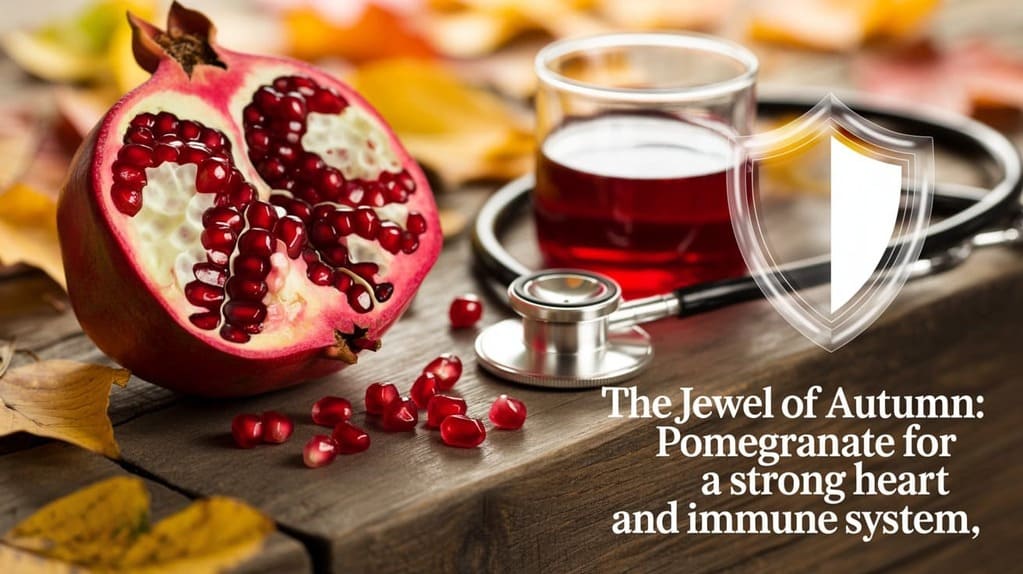
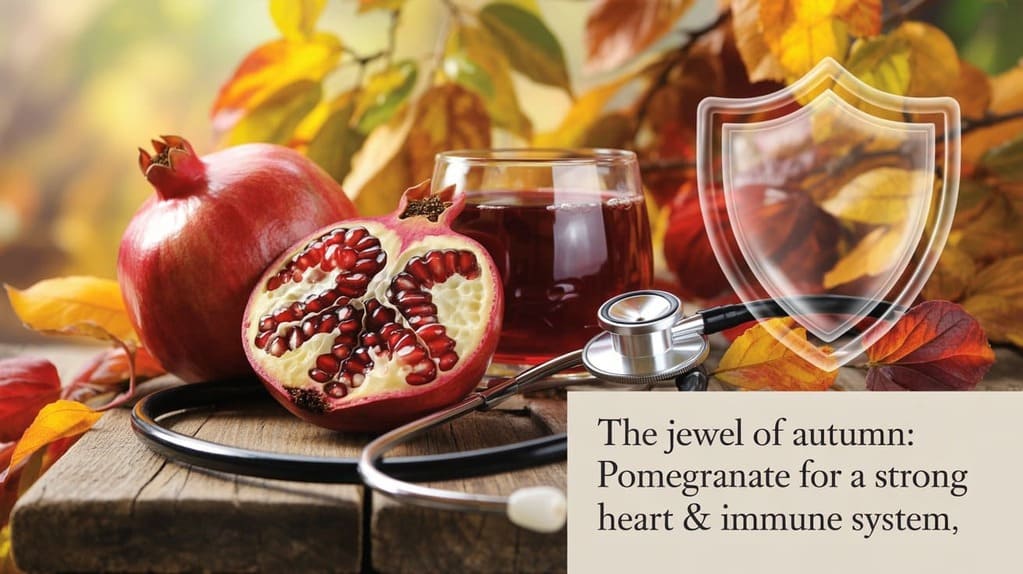
The pomegranate (Punica granatum)—with its ruby arils and autumn harvest—has been prized for centuries as both food and medicine. Today, modern science is uncovering how this seasonal fruit supports heart health and immune health through a rich combination of polyphenols, antioxidants, and micronutrients. This article explains the pomegranate’s nutritional profile, summarizes recent clinical and laboratory evidence from Asia, America, and Europe, and offers practical, evidence-based guidance for including pomegranate safely in a heart-healthy and immune-supporting diet. Key SEO phrases used throughout for discoverability include pomegranate benefits, pomegranate juice for heart, pomegranate antioxidants, pomegranate immune support, and autumn superfruit.
Main Points
- Nutrient-dense fruit rich in vitamin C, fiber, potassium, and phenolic compounds. snaped.fns.usda.gov+1
- Powerful polyphenols (punicalagin, ellagic acid and ellagitannins) appear to reduce oxidative stress and limit LDL oxidation—mechanisms important in atherosclerosis. PMC+1
- Clinical trials and meta-analyses show improvements in endothelial function, blood-pressure markers, and some cardiometabolic risk factors after pomegranate or extract consumption. PMC+2PubMed+2
- Antimicrobial and immune-modulating activity is supported by in vitro and some clinical studies (antiviral/antibacterial and anti-inflammatory effects). PMC+1
- Safety & drug interactions: mostly safe as food; rare case reports and in vitro studies suggest potential interactions with drugs metabolized by cytochrome P450 enzymes—consult your clinician if you take warfarin, certain prescription medicines, or have complex medical conditions. PubMed+1
Nutritional Profile (table)
Below is a concise nutrient summary for raw pomegranate arils (approximate values per 100 g). Sources: USDA-derived nutrition guides and public nutrition databases. snaped.fns.usda.gov+1
| Nutrient (per 100 g arils) | Amount (approx.) |
|---|---|
| Calories | 70–85 kcal. snaped.fns.usda.gov |
| Carbohydrates | ~17–19 g (of which sugars ~14 g). snaped.fns.usda.gov |
| Dietary fiber | ~3–4 g. snaped.fns.usda.gov |
| Protein | ~1.5–2 g. snaped.fns.usda.gov |
| Total fat | ~1 g (mostly negligible). snaped.fns.usda.gov |
| Vitamin C | ~10 mg (≈10% DV). snaped.fns.usda.gov |
| Potassium | ~230–260 mg. snaped.fns.usda.gov |
| Key bioactives | Punicalagin, ellagic acid, ellagitannins, anthocyanins (polyphenols). PMC+1 |
Why this matters: modest calories with fiber and potassium make pomegranate a heart-friendly fruit; polyphenols are the compounds most implicated in cardiovascular and immune effects. PMC
How pomegranate helps the heart — mechanisms and evidence
1. Antioxidant activity and LDL protection
Pomegranate polyphenols—especially punicalagin and ellagitannins—scavenge free radicals and reduce oxidative modification of low-density lipoprotein (LDL), a key early step in atherosclerosis. Landmark human and animal work led by Aviram and colleagues showed that pomegranate juice consumption reduced oxidative stress, decreased atherogenic LDL modifications, and lowered platelet aggregation, suggesting plausible anti-atherosclerotic effects. PubMed+1
2. Improved endothelial function and blood pressure
Several randomized and controlled clinical trials have reported short-term improvements in endothelial function markers and modest reductions in systolic blood pressure after pomegranate juice or extract intake in hypertensive or at-risk adults. A number of systematic reviews and recent meta-analyses have pooled these findings and concluded that pomegranate supplementation is associated with improvements in vascular function markers, although effect sizes and consistency vary by dose and formulation. PMC+2PubMed+2
3. Lipid profile and metabolic risk factors
Some randomized trials and meta-analyses show modest reductions in LDL cholesterol and triglycerides and increases in HDL in certain populations, while other studies report no change—differences likely reflect dose, product (juice vs. extract), and study population. Large, long-term randomized trials are still needed to define clinical outcomes (heart attack, stroke) rather than intermediate biomarkers. MDPI+1
Clinical takeaway: adding pomegranate (whole arils, 100% juice, or standardized extract) may support cardiovascular health by reducing oxidative stress, improving endothelial function, and favorably modulating some cardiometabolic biomarkers—especially as part of an overall heart-healthy diet. PubMed+1
Pomegranate and the immune system — what the studies say
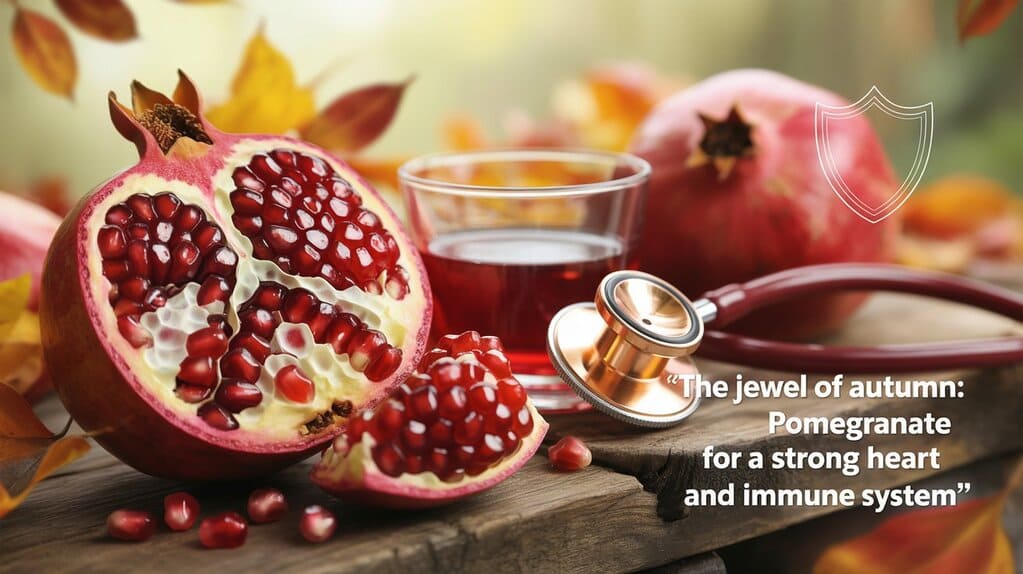
Pomegranate exhibits antimicrobial, antiviral, and anti-inflammatory effects in laboratory studies. Reviews summarize activity against bacteria and some viruses in vitro, with suggested mechanisms including direct viral/bacterial inhibition, modulation of host inflammatory responses, and antioxidant protection of immune cells. Clinical data on respiratory infections or systemic immune outcomes remain limited but promising enough to justify further trials. PMC+1
Emerging research also links pomegranate polyphenols to gut microbiome metabolism—humans metabolize ellagitannins to urolithins, compounds that may exert systemic anti-inflammatory and immune-modulating effects. This gut-mediated pathway is an active area of research across Asia, Europe, and North America. PMC+1
Practical recommendations (evidence-based)
- Whole fruit first: choose fresh pomegranate arils when possible to gain fiber plus polyphenols. A typical serving (½–1 cup arils) supplies antioxidants and potassium with modest calories. snaped.fns.usda.gov
- 100% pomegranate juice can be used in moderation (watch sugars and calories). Clinical studies used variable amounts; many trials used 50–250 mL/day or standardized extracts—follow product dosing instructions. PMC+1
- Supplements/extracts: standardized extracts deliver higher polyphenol doses but vary between products; quality and dose matter. Prefer third-party–tested supplements and consult a clinician if you are on medications. PMC+1
- Caution with certain medications: rare case reports and in-vitro studies suggest pomegranate may alter drug metabolism (e.g., warfarin, drugs metabolized by CYP enzymes). If you take warfarin, certain statins, or other prescription drugs, discuss pomegranate use with your prescribing clinician or pharmacist. Most clinical pharmacokinetic studies show minimal effect for common statins, but isolated interactions have been reported, so personalized advice is wise. PubMed+1
Limitations and areas for future research
While many preclinical and clinical studies support cardioprotective and immune-modulating properties of pomegranate, heterogeneity in study design (juice vs. whole fruit vs. extract), dose, and population limits firm conclusions on long-term clinical outcomes (MI, stroke, hospitalization for infections). Ongoing randomized trials and standardized meta-analyses are refining optimal formulations and doses. Recent reviews recommend larger, longer, and better-standardized trials to confirm benefits and safety across diverse populations. MDPI+1
Conclusion
Pomegranate is more than a seasonal delight—it’s an autumn superfruit with a growing evidence base linking its polyphenols (punicalagin, ellagic acid) and nutrients to heart health and immune support. Laboratory studies and clinical trials from researchers across Asia, America, and Europe point to reduced oxidative stress, improved endothelial function, and antimicrobial/anti-inflammatory actions. While pomegranate appears safe for most people when consumed as food, those on certain medications should seek medical advice. Incorporating pomegranate arils or moderate amounts of 100% juice into a balanced diet offers a delicious, evidence-based strategy to help protect the heart and support immune resilience—especially during the crisp days of autumn.
References (selected)
- Aviram M, Dornfeld L, Rosenblat M, et al. Pomegranate juice consumption reduces oxidative stress, atherogenic modifications to LDL, and platelet aggregation: studies in humans and in atherosclerotic apolipoprotein E-deficient mice. Am J Clin Nutr. 2000. PubMed
- Aviram M, Rosenblat M, Gaitini D, et al. Pomegranate juice consumption for 3 years by patients with carotid artery stenosis: effects on common carotid intima-media thickness (IMT) and blood pressure. (2004). PubMed
- Atrahimovich D, Aviram M, et al. Punicalagin Induces Serum Low-Density Lipoprotein Influx… (study on punicalagin and LDL interactions). 2016. PMC
- Asgary S, et al. Clinical investigation of the acute effects of pomegranate juice on blood pressure and endothelial function. 2013. PMC
- Laurindo LF, et al. Pomegranate (Punica granatum L.) and Metabolic Syndrome: A systematic review. Nutrients. 2022. MDPI
- Benedetti G, et al. An Overview of the Health Benefits, Extraction Methods and Research Trends of Pomegranate. 2023 (review). PMC
- Howell AB, D’Souza DH. The Pomegranate: Effects on Bacteria and Viruses That Infect the Oral Cavity and the Gut. 2013. PMC
- Habib HM, et al. Antioxidant, Anti-Inflammatory, Antimicrobial, and other properties of pomegranate extracts. Nutrients. 2023. MDPI
- Mansoor K, et al. Impact of Pomegranate Juice on the Pharmacokinetics of Drugs and Drug-Metabolizing Enzymes. 2023. PMC
- Jarvis S, et al. Possible interaction between pomegranate juice and warfarin (case report). Emerg Med J. 2010. PubMed
- USDA / SNAP-Ed — Pomegranates nutrition facts (nutrition summary per 100 g). snaped.fns.usda.gov
- Wikipedia — Pomegranate (overview, nutrition). Wikipédia