
 Bbihi L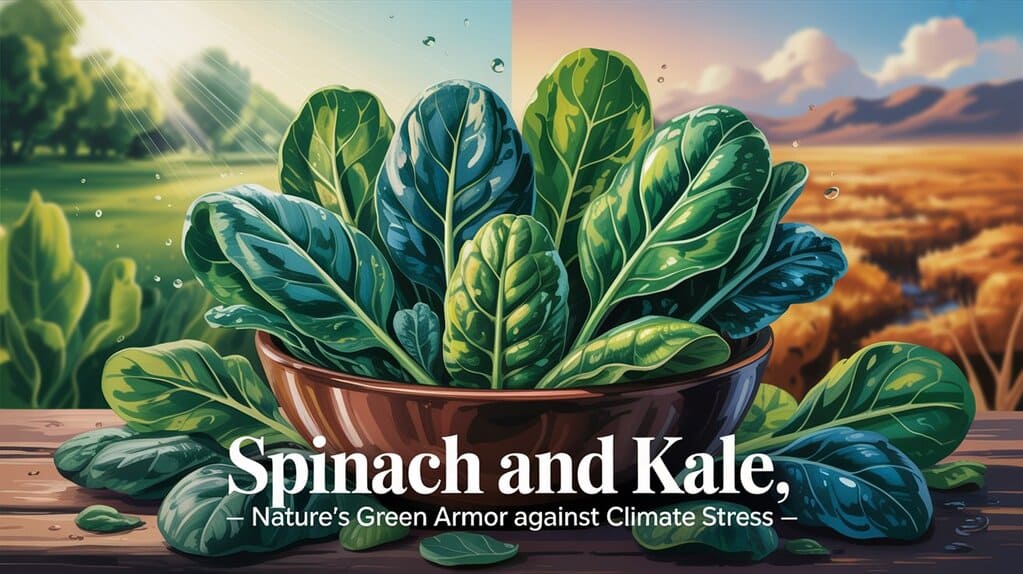
Introduction
Spinach and kale are two of the world’s most widely recommended green leafy vegetables — dense in vitamins, minerals, and protective phytochemicals. As global temperatures rise and atmospheric carbon dioxide (CO₂) levels change, food systems are facing new pressures that can reduce crop yields and the nutritional value of staple vegetables. In this context, understanding how spinach and kale contribute to human health, how climate change threatens their nutrient content, and how individuals and communities can protect nutrition security is vital. This article explains the nutritional strengths of these greens, summarizes recent scientific findings from Asia, Europe, and the Americas, and gives evidence-based, practical guidance for preserving their benefits during a changing climate.
Main points
- Spinach and kale are rich sources of vitamins A, C, K, folate, minerals (iron, magnesium, potassium), and antioxidant phytochemicals (lutein, zeaxanthin, flavonoids). FoodData Central+1
- Regular consumption of green leafy vegetables is associated with reduced risk of cardiovascular disease, stroke, and all-cause mortality. OUP Academic+1
- Emerging research shows climate change (rising CO₂ and heat) can reduce concentrations of some micronutrients and antioxidants in crops, threatening global nutrition. ScienceDaily+1
- Dietary strategies (diversity, cooking methods, preservation), local production (urban agriculture, protected cultivation), and public-health monitoring can help maintain nutrient intake as the environment changes. ScienceDirect+1
Nutritional profiles : what spinach and kale provide
Both greens are nutrient-dense but differ in specific micronutrient concentrations:
| Nutrient (per 100 g, raw) | Spinach (summary) | Kale (summary) | Why it matters |
|---|---|---|---|
| Vitamin A (as β-carotene) | High — supports vision & immunity. FoodData Central | Moderate — also good source. Healthline | Vitamin A protects mucosal barriers and supports immune function. |
| Vitamin K1 | Very high — important for blood clotting and bone health. Verywell Health | Very high — kale often higher per serving. Healthline | Vitamin K1 linked with vascular health and reduced calcification. |
| Folate (B9) | Higher than kale — crucial in pregnancy and cell division. Healthline | Lower than spinach. Healthline | Folate deficiency affects fetal development and red blood cell formation. |
| Vitamin C | Moderate | Often higher in kale — antioxidant and immune cofactor. Healthline | Vitamin C supports collagen, immunity, and antioxidant recycling. |
| Iron & Magnesium | Spinach: notable iron and magnesium. My Food Data | Kale: lower iron but good calcium. My Food Data | Minerals support oxygen transport, enzyme activity, and bone health. |
| Phytochemicals | Lutein, zeaxanthin, flavonoids — protect eyes & cells. Healthline | Glucosinolates (in kale), carotenoids, flavonoids. Healthline | Phytochemicals reduce oxidative stress and modulate inflammation. |
(Data sources: USDA FoodData Central summaries and peer-reviewed reviews.) FoodData Central+1
Health benefits supported by clinical and epidemiological studies
Large observational studies and meta-analyses across continents link higher consumption of leafy greens with lower risk of chronic diseases:
- Cardiovascular disease & stroke: Multiple cohort analyses report that each additional daily serving of green leafy vegetables is associated with a measurable reduction in cardiovascular risk (e.g., risk reductions of ~12–18% for certain endpoints). Mechanisms include improved blood pressure (potassium), reduced vascular calcification (vitamin K1), and antioxidant effects. AHA Journals+1
- Metabolic health: Leafy greens contribute to glycemic control and weight-management strategies through low energy density, fiber, and bioactive compounds; systematic reviews find benefits for prevention of type 2 diabetes and metabolic syndrome markers. ScienceDirect+1
- Cognitive and eye health: Lutein and zeaxanthin — abundant in spinach and present in kale — are associated with better macular health and may protect cognition through antioxidant action. Healthline
These findings are robust across studies from North America, Europe, and Asia, supporting global dietary recommendations to increase green leafy vegetable intake. OUP Academic+1
Climate change — a new threat to vegetable nutrition
Recent experimental and modeling studies from research groups in Asia, Europe, and the Americas indicate that rising atmospheric CO₂ and higher temperatures can alter crop composition:
- Controlled-environment and field experiments show elevated CO₂ often increases carbohydrate (yield/size) but can dilute certain micronutrients (e.g., Zn, sometimes Fe, and specific antioxidants) in some crops. The net effect can be lower mineral density per calorie. Frontiers+1
- A 2025 international analysis and related reports highlight that leafy greens such as kale and spinach are among crops where antioxidant concentrations and particular micronutrients may decline under combined CO₂ and heat stress, which could worsen micronutrient insecurity especially in vulnerable populations. ScienceDaily+1
Implication: even if crop yields remain stable or increase, the nutritional quality of what people eat could decline — making nutrient-dense greens even more important and simultaneously more vulnerable.
How spinach and kale help protect the body during climate stress
- Concentrated micronutrients: Because they pack vitamins and minerals into small servings, spinach and kale help deliver essential nutrients even when other staples lose density. This buffers individuals against small declines in nutrient concentrations across the food system. FoodData Central+1
- Antioxidant and anti-inflammatory action: Phytochemicals in these greens reduce oxidative stress — a pathway involved in heat-related inflammation and many chronic diseases that can be aggravated by environmental stress. Healthline
- Versatility and accessibility: Both crops can be grown in protected systems (greenhouses, vertical farms, hydroponics), urban gardens, and small plots — strategies that mitigate climate extremes and maintain year-round supply. Research and reviews highlight the role of crop diversification and protected cultivation in climate-resilient nutrition. ScienceDirect+1
Practical, evidence-based recommendations
To maximize the protective effects of spinach and kale in a changing climate:
- Eat a daily portion of leafy greens. Observational data suggest even modest daily intakes (≈1–1.5 cups) are linked with lower cardiovascular risk and better long-term outcomes. Verywell Health+1
- Use nutrient-preserving cooking methods. Light steaming or quick sautéing preserves water-soluble vitamins better than prolonged boiling. Raw salads or quick-blended smoothies retain many heat-sensitive nutrients. Medical News Today
- Combine with vitamin-C–rich foods (citrus, peppers) to increase non-heme iron absorption from greens like spinach. Medical News Today
- Grow locally where feasible. Urban gardens, container growing, and protected agriculture reduce transport losses and allow control of growing conditions to optimize nutrient content. Reviews on green leafy cultivation advocate for these adaptive strategies. ScienceDirect+1
- Diversify green choices. Rotate spinach, kale, Swiss chard, bok choy and other greens to blend different nutrient profiles and hedge against crop-specific nutrient losses under variable climate stressors. Healthline
Table — Quick meal ideas that maximize nutrients
| Meal | Why it’s nutrient-smart |
|---|---|
| Spinach + citrus salad with seeds | Vitamin C enhances iron absorption; seeds add zinc and healthy fats. |
| Lightly steamed kale with garlic and lemon | Preserves vitamin K and carotenoids; lemon adds vitamin C. |
| Green smoothie: spinach, banana, frozen berries, yogurt | Keeps fiber and water-soluble vitamins; convenient way to increase intake. |
| Sautéed kale with chickpeas and tomatoes | Protein + greens + vitamin C from tomatoes improves mineral uptake. |
Limitations, research gaps, and what scientists are studying now
- Many climate-nutrition experiments are recent and context-dependent; effects vary by species, variety, soil, and cultivation system. Ongoing research from Asia, Europe, and North America is refining which nutrients are most vulnerable and which agronomic practices mitigate loss. Frontiers+1
- Population-level impacts depend on dietary patterns; in regions where leafy greens are already scarce, climate-driven nutrient losses could have larger public health effects. Monitoring and nutrition surveillance are essential. Public Health Watch
Conclusion
Spinach and kale remain two of the most powerful, low-cost allies for individual and public nutrition — especially as climate change introduces new threats to food quality. Their dense mix of vitamins (A, C, K), folate, minerals, and protective phytochemicals supports cardiovascular health, immune function, eye and cognitive health, and resilience against environmental stressors. However, emerging science from research teams across Asia, Europe, and the Americas warns that rising CO₂ and heat stress can lower concentrations of selected micronutrients and antioxidants in crops. The twin response should be: (1) eat more and a variety of leafy greens, and (2) support local, climate-resilient production systems and nutrient-preserving food practices. Policymakers, clinicians, researchers, and communities must work together to protect the nutritional power of greens in a warming world.
References (selected)
- Aune D., et al. Fruit and vegetable intake and the risk of cardiovascular disease, cancer, and all-cause mortality: a systematic review and dose-response meta-analysis of prospective studies. Int J Epidemiol. 2017. OUP Academic
- Zurbau A., et al. Relation of Different Fruit and Vegetable Sources With Cardiometabolic Outcomes. J Am Heart Assoc. 2020. AHA Journals
- Pollock RL., et al. The effect of green leafy and cruciferous vegetable intake on cardiovascular disease: meta-analysis. PMC/ PubMed 2016. PMC+1
- Wang X., et al. Elevated CO₂ decreases micronutrient Zn but not Fe in vegetables: a meta-analysis. Front Plant Sci. 2025. Frontiers+1
- ScienceDaily / news coverage: Bigger crops, fewer nutrients: The hidden cost of climate change (summary of 2025 research findings). ScienceDaily
- Medical News Today — Spinach: Nutrition and health benefits. (Overview of spinach nutrients and benefits). 2017–2024 (reviewed). Medical News Today
- Healthline / Health.com — comparative nutrition profiles for kale and spinach. Healthline+1
- USDA FoodData Central — searchable nutrient database for spinach and kale (foundation food data). FoodData Central+1
- Knez M., et al. Revealing the power of green leafy vegetables: Cultivating health and sustainability. SciDirect (review). 2024. ScienceDirect
- Wen J., et al. Improved Effect of Spinach Extract on Physical Performance — systematic review. 2025. PMC. PMC







What are the problems? And how can I help you?