
 Bbihi L
Brief Description
Cold weather presents unique challenges for your body, from reduced sunlight exposure and seasonal viruses to changes in physical activity and appetite. This comprehensive guide explores the most important preventive nutrition tips for cold weather, focusing on immune support, sustained energy, hydration, and overall well-being.
Based on recommendations from leading public health organizations and nutrition experts, this article provides practical, evidence-based advice to help you stay healthy throughout the winter months.
Why Nutrition Matters More During Cold Weather
Winter affects more than just the temperature outside. Shorter days, colder conditions, and spending more time indoors can influence your immune system, energy levels, mood, and dietary habits.
According to the World Health Organization (WHO), the Centers for Disease Control and Prevention (CDC), and the Harvard T.H. Chan School of Public Health, maintaining a balanced diet rich in essential nutrients supports immune function, healthy metabolism, and disease prevention throughout the year—especially during winter.
Good nutrition cannot eliminate the risk of illness, but it can help your body function at its best.
Increased Energy Needs
When temperatures drop, your body works harder to maintain its core temperature through a process called thermoregulation. Although this may slightly increase calorie expenditure, it does not mean you need to consume excessive calories.
Instead, focus on eating nutrient-dense foods that provide lasting energy and essential vitamins and minerals.
Seasonal Immune Challenges
Respiratory infections such as the common cold and influenza become more common during winter.
Reduced sunlight exposure may lower vitamin D production, while spending more time indoors can increase exposure to viruses.
A balanced diet rich in vitamins, minerals, protein, and healthy fats helps support your body’s natural immune defenses.
Reduced Sunlight and Winter Mood
Limited daylight can affect mood, sleep quality, and energy levels.
Eating adequate amounts of :
- healthy fats
- lean protein
- whole grains
- fruits and vegetables
supports brain health and contributes to emotional well-being during the colder months.
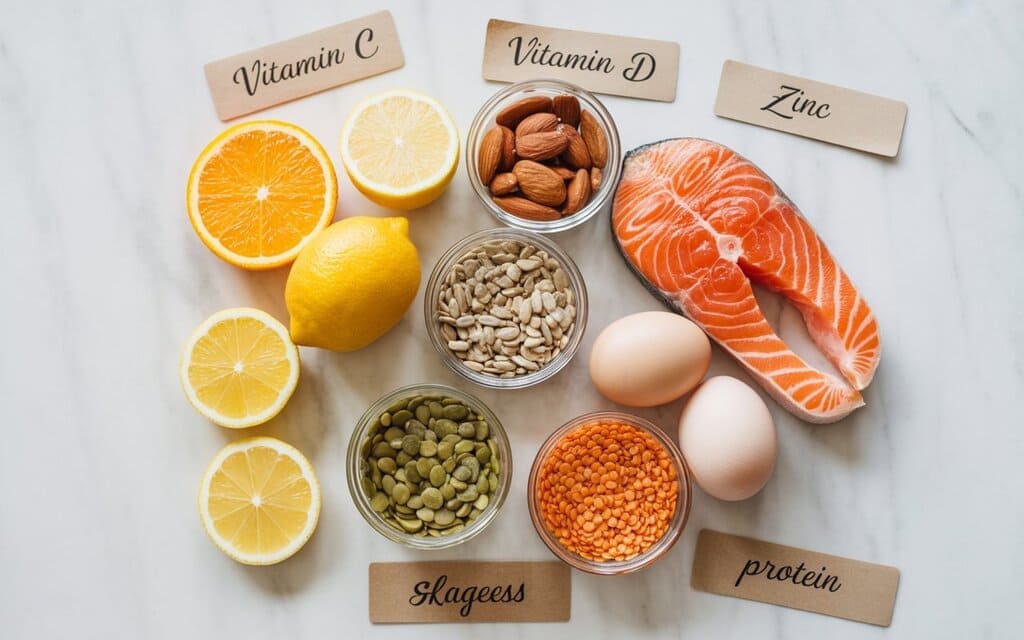
Essential Nutrients for Cold Weather
Vitamin C: Supporting the Immune System
Vitamin C plays an important role in immune function and may help reduce the duration of common cold symptoms.
Excellent Food Sources
- Oranges
- Lemons
- Grapefruit
- Kiwi
- Strawberries
- Bell peppers
- Broccoli
Tip: Obtain vitamin C primarily from whole foods unless supplementation is recommended by your healthcare provider.
Vitamin D : The Sunshine Vitamin
Because sunlight exposure decreases during winter, many people produce less vitamin D.
Vitamin D supports :
- immune function
- bone health
- muscle strength
Food Sources
- Salmon
- Sardines
- Mackerel
- Egg yolks
- Fortified milk
- Fortified plant-based beverages
People living in regions with long winters may benefit from discussing vitamin D testing with a healthcare professional.
Zinc: An Essential Immune Mineral
Zinc contributes to the normal development and function of immune cells.
Good Sources
- Lean beef
- Chickpeas
- Lentils
- Pumpkin seeds
- Nuts
- Whole grains
Protein: Building and Repairing the Body
Protein is essential for :
- tissue repair
- muscle maintenance
- antibody production
- immune cell development
Healthy Protein Sources
- Chicken
- Turkey
- Fish
- Eggs
- Greek yogurt
- Beans
- Lentils
Including protein with every meal helps maintain steady energy throughout the day.
Omega-3 Fatty Acids
Omega-3 fatty acids help support :
- heart health
- brain function
- normal inflammatory responses
Best Sources
- Salmon
- Sardines
- Flaxseeds
- Chia seeds
- Walnuts
Nutrient-Dense Winter Foods
Warm Soups and Stews
Homemade vegetable soups and lentil stews provide :
- hydration
- fiber
- vitamins
- minerals
- comforting warmth
They are also an easy way to combine multiple nutritious ingredients into one meal.
Whole Grains
Complex carbohydrates provide sustained energy and support digestive health.
Choose :
- Oats
- Brown rice
- Quinoa
- Whole wheat
- Barley
Nuts and Seeds
Nuts and seeds are rich in :
- healthy fats
- vitamin E
- magnesium
- zinc
- protein
Enjoy moderate portions as healthy snacks.
Stay Hydrated During Winter
Many people drink less water during winter because they feel less thirsty.
However, indoor heating and dry air can increase fluid loss.
Smart Hydration Tips
- Drink water regularly throughout the day.
- Include herbal teas.
- Eat broth-based soups.
- Monitor urine color as a simple hydration indicator.
Even mild dehydration can reduce concentration, physical performance, and overall well-being.
Foods to Limit During Winter
Excess Added Sugar
High sugar intake may :
- increase energy crashes
- contribute to weight gain
- negatively affect overall dietary quality
Highly Processed Foods
Ultra-processed foods often contain :
- excessive sodium
- unhealthy fats
- refined carbohydrates
while providing few essential nutrients.
Excess Saturated Fat
Healthy fats are important, but excessive saturated fat intake may increase long-term cardiovascular risk.
Choose unsaturated fats more often whenever possible.

Healthy Lifestyle Habits That Complement Good Nutrition
Nutrition is most effective when combined with healthy daily habits.
Aim to :
- Sleep 7–9 hours each night.
- Exercise regularly.
- Spend time outdoors when weather permits.
- Manage stress through relaxation techniques.
- Maintain a healthy body weight.
Overall wellness depends on consistent healthy habits—not nutrition alone.
Key Nutrients for Winter Health
| Nutrient | Primary Benefit | Food Sources |
|---|---|---|
| Vitamin C | Supports immune function | Citrus fruits, peppers, broccoli |
| Vitamin D | Bone and immune health | Fatty fish, fortified dairy |
| Zinc | Immune cell function | Legumes, nuts, lean meat |
| Protein | Tissue repair and immunity | Eggs, poultry, fish, beans |
| Omega-3 | Heart and brain health | Salmon, flaxseeds |
| Fiber | Gut and digestive health | Whole grains, vegetables |
Sample Balanced Winter Meal Plan
| Meal | Healthy Choice |
|---|---|
| Breakfast | Oatmeal topped with berries, walnuts, and chia seeds |
| Snack | Greek yogurt with fresh fruit |
| Lunch | Grilled salmon, brown rice, and steamed vegetables |
| Snack | A handful of almonds |
| Dinner | Lentil soup with whole-grain bread and a side salad |
This sample meal plan illustrates balanced nutrition and is not intended as a personalized dietary recommendation.
Frequently Asked Questions
Do we need more calories during winter?
Your body may burn slightly more energy to stay warm, but most people do not require a significant increase in calorie intake. Prioritize nutrient quality over quantity.
Should everyone take vitamin supplements during winter?
Not necessarily. Many people can meet their nutritional needs through a balanced diet. Supplements should only be taken based on medical advice or confirmed nutritional deficiencies.

Are hot drinks enough to stay hydrated?
Herbal teas and other warm beverages contribute to hydration, but drinking adequate water remains essential.
Do fatty foods keep you warmer?
Fat provides energy, but eating excessive amounts does not improve your body’s ability to stay warm and may contribute to unwanted weight gain.
Can nutrition prevent winter illnesses?
No single food or nutrient can completely prevent illness. However, a healthy, balanced diet supports normal immune function and overall health.
Practical Preventive Nutrition Tips
- Plan meals around whole, minimally processed foods.
- Prepare homemade soups in advance.
- Eat a variety of colorful fruits and vegetables every day.
- Keep nutritious snacks readily available.
- Maintain regular meal times.
- Avoid emotional overeating during colder months.
Remember, long-term consistency is far more important than perfection.
Gut Health and Winter Immunity
Growing scientific evidence suggests that the gut microbiome plays an important role in regulating immune function.
Foods that support gut health include :
- yogurt with live cultures
- kefir
- high-fiber vegetables
- legumes
- whole grains
- fruits
A diverse, fiber-rich diet may strengthen the gut microbiome and contribute to better immune resilience.
Conclusion
Following preventive nutrition tips for cold weather can help support immune function, maintain energy levels, and promote overall health throughout winter.
Focus on eating a balanced diet rich in fruits, vegetables, lean proteins, whole grains, healthy fats, and adequate fluids. Combine good nutrition with regular exercise, quality sleep, stress management, and healthy daily habits for the greatest long-term benefits.
Rather than relying on restrictive diets or quick fixes, build sustainable habits that support your health throughout the entire winter season.
Small, consistent lifestyle improvements often produce the greatest long-term results.
References
- World Health Organization (WHO). Healthy Diet Guidelines.
- Centers for Disease Control and Prevention (CDC). Nutrition, Healthy Eating, and Immune Health.
- Harvard T.H. Chan School of Public Health. The Nutrition Source.
- Food and Agriculture Organization of the United Nations (FAO). Sustainable Healthy Diets.
Health Disclaimer
This article is intended for educational and informational purposes only and should not be considered medical advice, diagnosis, or treatment. Always consult a qualified healthcare professional or registered dietitian before making significant dietary changes, especially if you have a medical condition, are pregnant, or have specific nutritional needs.