
 Bbihi L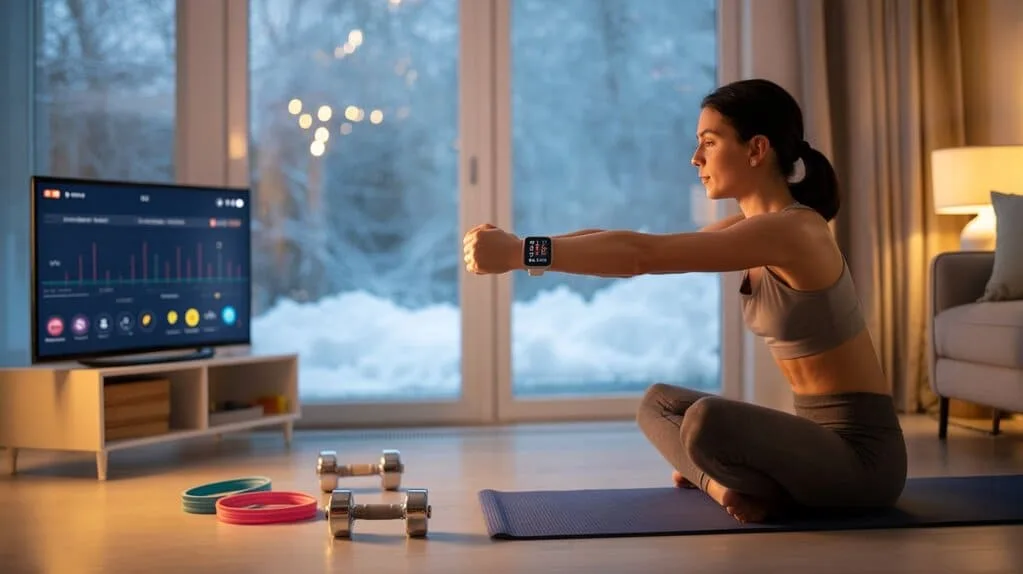
Smart Home Workouts : A New Era of Fitness at Home
Introduction
Maintaining a regular fitness routine can become challenging during the colder months. When temperatures drop, many people lose motivation to leave their homes, travel to the gym, or participate in outdoor activities. Rain, snow, freezing temperatures, and shorter days often become barriers that interrupt healthy habits.
Fortunately, the evolution of smart home workouts has completely transformed the way people approach exercise. Today, staying fit no longer requires expensive gym memberships or complicated equipment. With the help of fitness technology, mobile applications, wearable devices, and virtual coaching platforms, anyone can create an effective workout environment directly at home.
Modern home fitness solutions provide personalized training plans, progress tracking, and real-time feedback, making them a powerful alternative to traditional gym routines. Whether your goal is weight management, muscle building, improving flexibility, or maintaining overall health, smart workouts offer a flexible approach suitable for beginners and experienced athletes alike.
This guide explores the science behind smart home workouts, their advantages compared with gym training, and practical strategies to help you remain active and healthy even during the coldest days of the year.
📌 Quick Facts About Smart Home Workouts
| Category | Information |
|---|---|
| Workout Type | Indoor fitness training |
| Difficulty Level | Beginner to Advanced |
| Recommended Duration | 20–60 minutes per session |
| Required Equipment | Optional (bodyweight, resistance bands, dumbbells) |
| Best Season | Winter and cold weather periods |
| Main Benefits | Strength, flexibility, endurance, and mental well-being |
Why Smart Home Workouts Matter During Cold Weather
Cold weather is one of the most common reasons people reduce their physical activity. Even individuals who are highly motivated during warmer seasons may struggle to maintain consistency when outdoor conditions become uncomfortable.
A simple decision such as leaving the house, driving through bad weather, or walking to the gym can create psychological resistance. Over time, these small obstacles can lead to missed workouts and reduced motivation.
This is where smart home workouts provide a major advantage.
By bringing exercise into your living space, they remove many common barriers:
Key Challenges Eliminated by Home Fitness
✔ No transportation required – Exercise begins immediately without commuting.
✔ Flexible scheduling – Work out whenever your daily routine allows.
✔ Weather independence – Rain, snow, and cold temperatures no longer interrupt your progress.
✔ Personal comfort – Train in a familiar environment where you feel relaxed.
✔ Better consistency – Easier access encourages long-term commitment.
💡 Pro Tip
Creating a small, dedicated workout area at home can significantly improve motivation. Even a simple corner with enough space for movement, good ventilation, and basic equipment can transform your daily exercise experience.
Scientific Evidence Supporting Smart Home Fitness
The effectiveness of home exercise programs is supported by an increasing amount of scientific research.
Studies published through PubMed have shown that structured home-based exercise programs can improve:
- Muscular strength
- Physical function
- Balance and mobility
- Overall quality of life
Researchers have found that individuals who participate in regular home training programs experience measurable improvements compared with inactive individuals.
A systematic review and analysis of multiple studies also demonstrated that home-based exercise can improve lower-body strength and functional ability across different age groups and populations.
These findings confirm that location is not the most important factor in fitness success. Instead, the quality of the program, consistency, and personal commitment play the greatest roles.
📊 Research Highlights : Benefits of Home Exercise
| Health Outcome | Scientific Findings |
|---|---|
| Muscle Strength Improvement | Structured home workouts support strength development |
| Better Mobility | Exercise improves daily movement and physical independence |
| Quality of Life Enhancement | Regular activity supports physical and mental health |
| Functional Fitness | Positive results observed across different populations |
Why Science Supports Smart Home Workouts
The success of a workout program depends mainly on three factors :
1. Consistency
A simple workout performed regularly is often more effective than an advanced program that is rarely completed.
2. Personalization
Modern AI fitness apps and digital platforms allow users to follow programs adapted to their goals, abilities, and fitness levels.
3. Progress Tracking
Wearable devices and fitness applications help users monitor improvements and stay motivated.
Smart Home Workouts vs. Traditional Gym Training
For many years, gyms have been considered the ideal place to achieve fitness goals because they provide professional equipment, structured classes, and access to trainers. However, the rise of smart home workouts has changed this perspective by proving that effective training does not always require a gym environment.
The real difference between home fitness and gym training is not necessarily the location—it is the quality of the workout plan, consistency, and the ability to maintain a healthy routine.
Research comparing home-based exercise programs and traditional gym training shows that both approaches can improve:
- Physical strength
- Cardiovascular health
- Body composition
- Flexibility and mobility
- Overall fitness performance
While gyms may offer advantages for advanced athletes who need specialized machines and heavy weights, smart home workouts provide unique benefits that make them suitable for most people.
📊 Smart Home Workouts vs Gym Training : Complete Comparison
| Feature | Smart Home Workouts | Traditional Gym Training |
|---|---|---|
| Convenience | ⭐⭐⭐⭐⭐ Exercise anytime without travel | ⭐⭐⭐ Requires commuting |
| Cost | ⭐⭐⭐⭐⭐ Lower long-term expenses | ⭐⭐ Monthly membership fees |
| Equipment Variety | ⭐⭐⭐ Basic equipment is usually enough | ⭐⭐⭐⭐⭐ Extensive equipment options |
| Privacy | ⭐⭐⭐⭐⭐ Comfortable personal environment | ⭐⭐ Shared workout space |
| Flexibility | ⭐⭐⭐⭐⭐ Adaptable schedules | ⭐⭐⭐ Depends on opening hours |
| Technology Support | ⭐⭐⭐⭐⭐ Apps, trackers, AI coaching | ⭐⭐⭐ Limited digital assistance |
| Social Motivation | ⭐⭐⭐ Online communities | ⭐⭐⭐⭐ Group classes and gym partners |
Which Option Produces Better Results?
The answer depends mainly on personal preferences and lifestyle.
A person who enjoys social interaction, professional guidance, and access to advanced machines may prefer a gym environment. However, someone who values flexibility, privacy, and convenience may achieve excellent results through home exercise programs.
The most important factor is not where you train but whether you can maintain your routine consistently.
A simple 30-minute home workout performed five times per week can often produce better results than an expensive gym membership that is rarely used.
The Role of Smart Technology in Modern Home Fitness
Technology has completely transformed the experience of exercising at home. Today’s smart fitness solutions combine exercise science with digital innovation to create personalized training environments.
1. Fitness Applications and Personalized Programs
Modern AI fitness apps analyze user information such as :
- Fitness level
- Personal goals
- Available time
- Exercise preferences
- Previous performance
Based on this information, they create customized workout plans that adapt as users improve.
For example, a beginner may receive a program focused on :
- Basic strength exercises
- Mobility improvement
- Gradual endurance development
While an advanced athlete may receive :
- High-intensity interval training (HIIT)
- Progressive resistance training
- Performance-focused routines
2. Wearable Fitness Technology
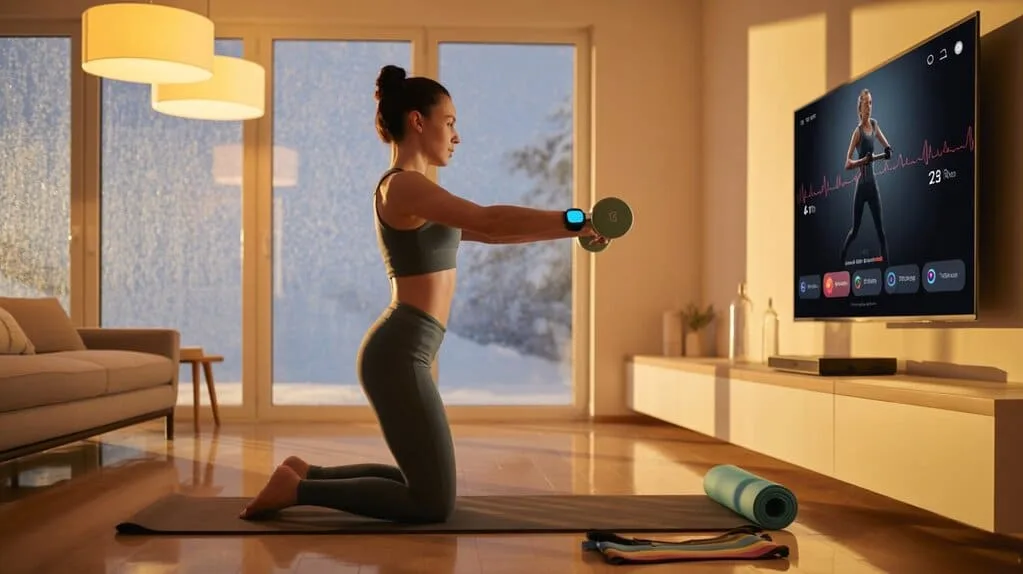
Smart devices such as fitness watches and activity trackers have become essential tools for many people practicing home fitness.
These devices can monitor :
✔ Heart rate
✔ Calories burned
✔ Daily activity levels
✔ Sleep quality
✔ Recovery status
✔ Workout intensity
This information allows users to make smarter decisions and avoid overtraining.
3. Artificial Intelligence and Virtual Coaching
One of the most exciting developments in modern fitness is the integration of artificial intelligence (AI).
AI-powered platforms can :
- Analyze exercise movements
- Detect incorrect posture
- Suggest improvements
- Adjust workout difficulty
- Provide real-time feedback
This technology creates a training experience similar to having a personal coach at home.
💡 Pro Tip : Use Technology as a Motivation Tool
Technology works best when combined with discipline.
To improve consistency :
- Set daily workout reminders.
- Track your progress weekly.
- Celebrate small achievements.
- Join online fitness communities.
- Follow realistic goals.
Remember : A smart device can guide you, but your commitment creates results.
Major Benefits of Smart Home Workouts
1. Time Efficiency and Maximum Convenience
One of the greatest advantages of smart home workouts is saving time.
A traditional gym session may require :
- Traveling to the gym
- Finding parking
- Waiting for equipment
- Returning home
A home workout eliminates these extra steps.
You can simply :
✔ Open your fitness application.
✔ Follow your training plan.
✔ Complete your session.
✔ Continue with your daily activities.
This makes exercise easier to integrate into busy lifestyles.
2. Better Exercise Consistency
Consistency is the foundation of successful fitness.
Many people fail to maintain exercise routines because of external barriers such as :
- Bad weather
- Lack of time
- Transportation problems
- Gym anxiety
With indoor workouts, these barriers are greatly reduced.
When exercise becomes simple and accessible, people are more likely to continue long-term.
3. Cost-Effective Fitness Solution
Gym memberships can become expensive over time. In comparison, home fitness requires minimal investment.
Many effective workouts need only :
- A yoga mat
- Resistance bands
- Dumbbells
- Bodyweight exercises
Free and affordable online resources also make fitness accessible to almost everyone.
4. Improved Mental Comfort and Confidence
For beginners, exercising in front of others can sometimes feel uncomfortable.
Home training creates a private environment where individuals can:
- Learn new movements without pressure.
- Exercise at their own pace.
- Build confidence gradually.
- Focus completely on improvement.
This psychological comfort can significantly improve motivation.
5. Family-Friendly Fitness
Another advantage of home workouts is that they can involve the entire family.
Parents can exercise while children participate in simple activities nearby. Couples can train together. Families can develop healthier habits as a group.
Creating a home fitness culture encourages long-term wellness for everyone.
Winter Workout Strategies : How to Stay Active on Cold Days
Cold weather does not have to interrupt your fitness journey. With the right approach, winter can become an opportunity to build stronger habits.
1. Prepare Your Body with a Proper Warm-Up
Cold temperatures can make muscles feel stiff and less flexible.
Before starting intense exercise :
- Spend 5–10 minutes warming up.
- Perform dynamic stretches.
- Start with light movements.
A proper warm-up helps improve performance and reduce injury risk.
2. Combine Different Training Styles
A balanced winter fitness routine should include different types of exercise.
Recommended Combination :
| Training Type | Main Benefits |
|---|---|
| Strength Training | Builds muscle and supports metabolism |
| HIIT Workouts | Improves cardiovascular fitness quickly |
| Yoga and Stretching | Enhances flexibility and relaxation |
| Mobility Exercises | Supports joint health |
| Low-Impact Training | Suitable for beginners |
Frequently Asked Questions (FAQ)
1. Are smart home workouts as effective as gym workouts?
Yes. Smart home workouts can be highly effective when they are structured correctly and performed consistently. Scientific research shows that well-designed home exercise programs can improve muscle strength, mobility, cardiovascular health, and overall physical fitness.
The key factors that determine success are not the location of training but :
- Workout consistency
- Exercise quality
- Progressive improvement
- Balanced nutrition
- Adequate recovery
A person who follows a regular home training plan can achieve results comparable to traditional gym training.
2. Do I need expensive equipment for effective home workouts?
No. Many successful indoor workouts can be performed with little or no equipment.
Effective exercises include :
- Push-ups
- Squats
- Lunges
- Planks
- Mountain climbers
- Bodyweight strength exercises
For additional resistance, affordable tools such as:
- Resistance bands
- Dumbbells
- Kettlebells
- Exercise mats
can increase workout variety and intensity.
3. How often should I do smart home workouts?
For general health improvement, experts commonly recommend:
- At least 150 minutes of moderate physical activity per week, or
- 75 minutes of vigorous exercise weekly
combined with :
- Two or more strength-training sessions per week
However, beginners should start gradually and increase intensity over time.
A realistic routine of 30 minutes, four to five days per week can create significant improvements.
4. Can smart home workouts help with weight loss?
Yes. Home fitness programs can support weight loss when combined with a balanced diet and healthy lifestyle.
Effective strategies include :
- High-Intensity Interval Training (HIIT)
- Strength training
- Regular movement throughout the day
- Healthy nutrition habits
Building muscle through strength exercises can also increase metabolism and support long-term weight management.
5. What are the best smart fitness tools for beginners?
Beginners can benefit from simple digital tools such as:
✔ Fitness tracking applications
✔ Smart watches
✔ Online workout platforms
✔ Virtual fitness classes
✔ AI-powered exercise guidance
These tools help users stay organized, monitor progress, and maintain motivation.
6. Are home workouts suitable for older adults?
Yes. Properly designed home exercise programs can be particularly beneficial for older adults.
They may help improve :
- Balance
- Muscle strength
- Mobility
- Daily independence
- Confidence in movement
However, individuals with health concerns should choose exercises appropriate for their abilities and consult healthcare professionals when needed.
✅ Key Takeaways : Smart Home Workouts in 2026
- Smart home workouts have become a reliable alternative to traditional gym training.
- Cold weather no longer needs to interrupt your fitness routine.
- Fitness technology provides personalized guidance and progress tracking.
- Regular home exercise programs can improve strength, flexibility, endurance, and overall health.
- The most important factor in fitness success is consistency, not location.
- A small home space can become an effective training environment with the right approach.
- Combining strength training, cardio, and mobility exercises creates a balanced fitness routine.
- AI fitness apps and wearable devices make home workouts more engaging and personalized.
Conclusion : Transform Your Home Into Your Personal Fitness Center
The growth of smart home workouts represents a major transformation in the world of fitness. What was once considered a simple alternative to gym training has now become a scientifically supported and technologically advanced approach to maintaining health.
During cold days, when motivation to leave home decreases, home fitness provides a practical solution that removes many traditional barriers to exercise. With personalized programs, digital coaching, and smart tracking tools, people can achieve meaningful results while enjoying the comfort and flexibility of exercising at home.
Although gyms continue to offer valuable advantages, especially for athletes requiring specialized equipment, smart home workouts provide something equally important: accessibility and consistency.
The best workout program is not necessarily the most expensive or the most advanced—it is the one you can maintain regularly.
By adopting smart fitness technology, creating healthy habits, and staying committed to movement throughout the year, you can transform your home into an effective fitness environment and continue progressing toward a stronger, healthier lifestyle.
Your health does not depend on perfect conditions. It depends on the choices you make every day.
Bibliography
- Habib, N., Kamal, F., & Munir, M. (2021). Comparison of the Effectiveness of Home-Based Workouts and Gym Training. International Health Review. (UMT Journals)
- The effectiveness of unsupervised home-based exercise for improving lower extremity physical function in older adults (2024). BMC Geriatrics. (SpringerLink)
- Effectiveness of home-based exercise delivered by digital health in older adults. PubMed. (PubMed)
- Technology-based physical activities and adults’ physical activity levels (2025). BMC Psychology. (Springer)
- Smart applications and physical activity adoption during the COVID-19 lockdown. Frontiers in Public Health. (Frontiers)
- Advantages and comparisons of home workouts vs gym workouts. Various fitness sources. (Home Training Hero)