نمط lbb
Introduction
Bell peppers (also called sweet peppers or capsicums) are among the most nutrient-dense vegetables you can add to your plate. Their vivid colors — red, yellow, orange, and green — signal a wide array of phytonutrients, vitamins, and minerals that support immune function, reduce inflammation, and promote healthy skin and hair. Whether enjoyed raw in salads, roasted, or gently cooked, bell peppers are a low-calorie, high-impact food that fits into heart-healthy, anti-inflammatory, and beauty-from-within dietary patterns. This article synthesizes current evidence, highlights key nutritional advantages, and cites recent scientific studies from research groups in Asia, North America, and Europe.
Key Points
- High in vitamin C — often exceeding many citrus fruits.
- Rich in beta-carotene, flavonoids, and other antioxidants.
- Supports immune function, collagen synthesis, and skin health.
- Contains nutrients important for women’s health (folate, vitamin B6).
- Provides anti-inflammatory compounds that may help reduce chronic disease risk.
- Versatile culinary use: raw, roasted, stuffed, or blended into sauces.

The Nutritional Powerhouse : What’s in a Bell Pepper?
Bell peppers are low in calories but exceptionally high in micronutrients. According to nutrient databases and recent nutrition summaries, red and yellow bell peppers provide especially high vitamin C and carotenoid content compared with the green variety. A representative nutrition profile per 100 g is shown below.
Nutritional table — approximate values (per 100 g)
| Nutrient (per 100 g) | Amount (approx.) | % Daily Value (DV) |
|---|---|---|
| Calories | 26 kcal | — |
| Vitamin C | 80–170 mg* | 89–189% DV |
| Vitamin B6 | 0.2–0.3 mg | ~12–15% DV |
| Folate (B9) | 30–50 µg | 8–13% DV |
| Beta-carotene (provitamin A) | 600–1,600 µg | — |
| Fiber | 1.5–2 g | 6–8% DV |
*Vitamin C amounts vary by color and ripeness; yellow and red peppers typically contain the highest levels. (Data sources include USDA/NAL nutrient databases and recent nutrition reviews.) fdc.nal.usda.gov+1
Immune Support : Vitamin C and More
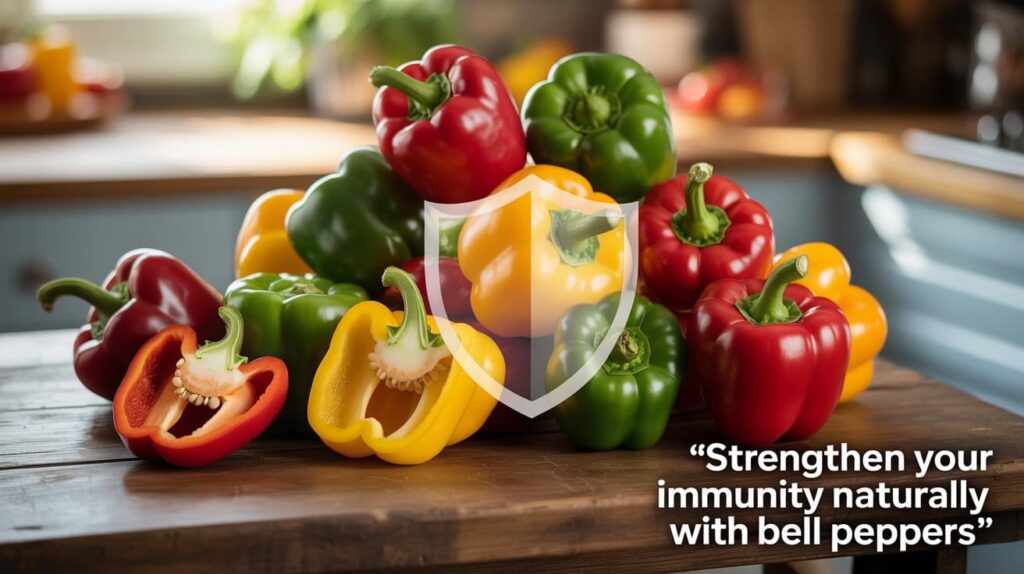
Vitamin C is central to many of the health claims for bell peppers. It supports white blood cell function, enhances skin barrier repair, and acts as a powerful antioxidant in the body. Multiple nutrition summaries and clinical reviews identify bell peppers — especially red and yellow varieties — as among the top vegetable sources of vitamin C. Regular inclusion of bell peppers in the diet can help meet daily vitamin C requirements and support immune resilience. Healthline+1
Representative studies: Research articles and reviews published in nutrition and immunology journals emphasize the importance of dietary vitamin C for immune function and reduced severity/duration of common respiratory infections. These lines of evidence underpin public-health recommendations to consume vitamin-rich vegetables. PMC+1
Anti-Inflammatory and Antioxidant Actions
Bell peppers are rich in flavonoids, carotenoids (including beta-carotene), and other polyphenols that scavenge reactive oxygen species and blunt inflammatory signaling. Experimental and cell-based studies — as well as animal models and limited human data — indicate that bell pepper extracts and juice fractions can reduce inflammatory cytokine production and oxidative stress markers. These anti-inflammatory properties are relevant to chronic conditions where inflammation plays a central role, such as cardiovascular disease, type 2 diabetes, and arthritis. PMC+1
A 2017 study of bell pepper leaf extracts reported inhibitory effects on inflammatory mediators in vitro, while later work (2020 and 2022) examined pepper extracts and juices for antioxidant, anti-photoaging, and anti-inflammatory biological activities. These research groups include teams from Asia, Europe, and North America, highlighting international scientific interest. PMC+2PMC+2

Skin and Hair Benefits : Collagen, Repair, and Radiance
Vitamin C is essential for collagen biosynthesis — the structural protein that supports skin firmness and wound healing. Reviews in dermatological and nutritional literature conclude that adequate dietary vitamin C supports skin health, reduces wrinkling, and assists tissue repair. Studies using sweet pepper juice and extracts have demonstrated protective effects against UV-induced photoaging in laboratory models, and broader reviews underscore vitamin C’s central role in maintaining skin antioxidant defenses and collagen production. For hair, improved scalp circulation and nutrient delivery — indirectly supported by vitamin C and B-vitamin status — are favorable for follicle health. PMC+1
Women’s Health : Folate, B6, and Beyond
Bell peppers deliver modest amounts of folate (vitamin B9) and vitamin B6, nutrients important for reproductive health, fetal neural-tube development (folate in early pregnancy), and hormonal regulation (B6 can influence neurotransmitter synthesis and PMS symptoms). Observational research on dietary patterns consistently finds that diets rich in colorful vegetables correlate with lower risks of some cancers, including breast cancer, though causation cannot be claimed from observational studies alone. Still, the inclusion of bell peppers in a diverse, plant-focused diet aligns with cancer-prevention nutrition guidance. cancer.ucsf.edu+1

Heart Health and Metabolic Effects
Dietary patterns that emphasize vegetables like bell peppers are linked with improved cardiometabolic outcomes. The antioxidant and fiber content of bell peppers may help support healthy cholesterol and blood-pressure control when combined with an overall heart-healthy diet (e.g., Mediterranean-style eating patterns). Leading cardiovascular bodies recommend increasing vegetable intake — including colorful capsicums — as a strategy for cardiovascular risk reduction. Hone Health+1
How to Eat Bell Peppers for Maximum Benefit
Practical tips :
- Eat a mix of colors — red and yellow peppers generally provide higher vitamin and carotenoid contents.
- Use minimal cooking (quick sauté, roasting at moderate temperature, or raw) to preserve vitamin C and heat-sensitive compounds.
- Pair bell peppers with a healthy fat (olive oil, avocado) to improve absorption of fat-soluble carotenoids.
- Add them to salads, soups (stir in at the end), salsas, and smoothies for variety and convenience.
Safety and Sensitivities
For most people, bell peppers are safe and well tolerated. Individuals with nightshade sensitivity (rare) or an allergy should avoid them. Cooking can reduce digestive irritants for those with sensitive stomachs. As with any food, variety is important — pair bell peppers with other vegetables, fruits, whole grains, legumes, healthy fats, and lean proteins for balanced nutrition.
Conclusion
Bell peppers are a colorful, affordable, and evidence-based addition to a healthy diet. They deliver high amounts of vitamin C, useful levels of B vitamins, and a portfolio of antioxidants that support immune resilience, reduce inflammation, and promote skin and heart health. Current research from international groups — spanning Asia, Europe, and North America — continues to explore the bioactive compounds in capsicums and their mechanisms of action. For daily health, aim to include bell peppers in recipes several times per week to tap into their nutritional benefits.
Selected Recent Studies & References
(Representative citations and reputable sources used in this article.)
- USDA / National Agricultural Library — FoodData Central. Nutrient database and seasonal produce guides. fdc.nal.usda.gov+1
- Pullar, J. M., Carr, A. C., & Vissers, M. C. M. (2017). The Roles of Vitamin C in Skin Health. Journal of Nutritional & Dermatological Research. (Review on vitamin C and skin). PMC
- Hazekawa, M., et al. (2017). Anti-inflammatory effects of water extract from bell pepper (PMC article). (Laboratory investigations on inflammatory mediators.) PMC
- Hu, X., et al. (2020). Effects of yellow and red bell pepper (paprika) extracts (PMC). (Studies on carotenoids and potential anticancer activity.) PMC
- Truong, V. L., et al. (2022). Protective effects of orange sweet pepper juices: UVB and dermal matrix regulation (PMC). (Photoaging and collagen gene regulation models.) PMC
- Healthline — “Bell Peppers 101: Nutrition Facts and Health Benefits.” (Practical nutrition overview). Healthline
- EatingWell / Tufts Nutrition Letter — “Which color of bell pepper has most nutrients?” (Comparison of nutrient content by color). nutritionletter.tufts.edu+1
- Cancer and Nutrition reviews — observational studies linking vegetable intake and reduced cancer risk (UCSF and other institutions). cancer.ucsf.edu+1