
 Bbihi L
Introduction
Dates have been cultivated for thousands of years and occupy a special place in the diets and cultures of the Middle East, North Africa, and beyond. Today, dates are recognized not only for their sweet flavor and culinary versatility but also for their dense nutritional profile and potential health benefits. This article — written with SEO-friendly phrasing for clarity and discoverability — summarizes the most important facts about dates, explains the nutritional composition, reviews recent scientific studies from Asia, Europe and North America, and offers practical guidance on how to include dates safely in a modern, balanced diet.
Key Points
- Dates are nutrient-dense, supplying energy, fiber, potassium, magnesium, and antioxidants. fdc.nal.usda.gov
- Controlled daily consumption of 3–5 dates can provide health benefits without excessive added sugars for most healthy adults.
- Certain varieties (e.g., Ajwa, Medjool, Deglet Noor) have been studied for antioxidant, anti-inflammatory and fertility-related effects. PMCMDPI
- Despite natural sugars, many studies report a low-to-moderate glycemic impact of dates when eaten in realistic portions. PubMedPMC
- Dates are a useful whole-food source of potassium, a mineral linked to lower cardiovascular risk when consumed instead of sodium-heavy processed foods. The Nutrition Source
The Nutritional Profile of Dates
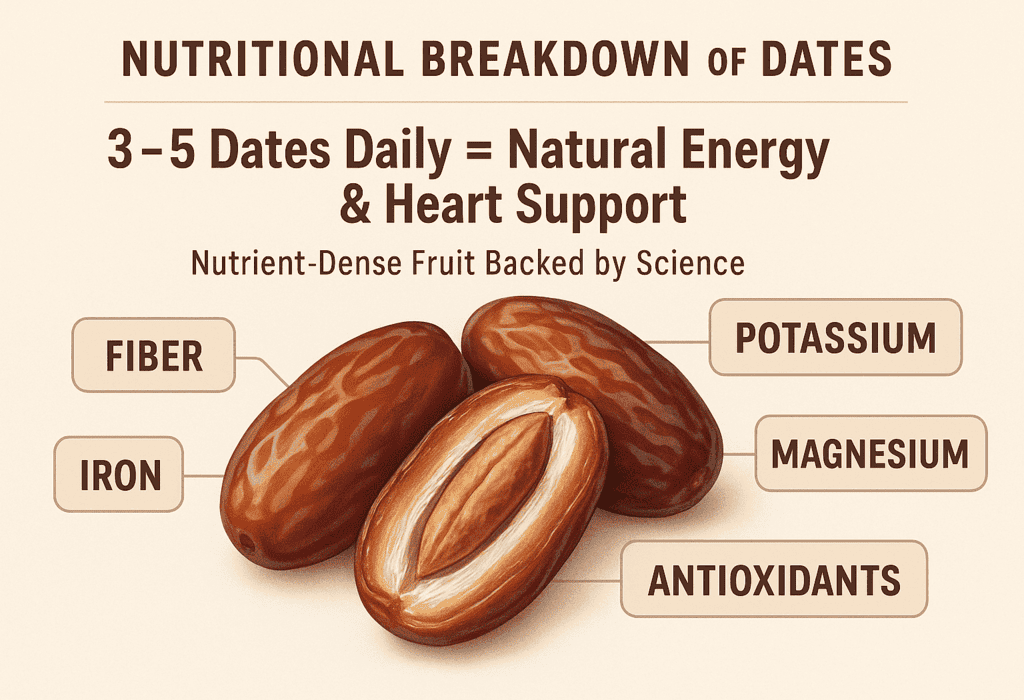
Dates are a concentrated source of carbohydrate energy and a meaningful provider of dietary fiber, minerals and micronutrients. The exact values vary by variety and ripeness, but standardized food composition data show the typical profile:
Representative nutrition (per 100 g, approximate)
| Nutrient | Typical amount per 100 g | Role in health |
|---|---|---|
| Calories | 270–280 kcal | Quick, dense energy source. |
| Carbohydrates | ~70–75 g | Mainly sugars and starches—fuel for activity. |
| Dietary fiber | ~6–8 g | Supports digestion and colon health. |
| Potassium | ~600–700 mg | Electrolyte important for blood pressure regulation. |
| Magnesium | ~50 mg | Muscle and nerve function. |
| Calcium & Phosphorus | small amounts | Bone health support. |
| Iron | ~0.5–1 mg | Contributes to red blood cell formation. |
(Primary nutrient database source: USDA FoodData Central). fdc.nal.usda.gov
Why this matters : Dates are calorie-dense, so portion control matters; they are also fiber-rich relative to many sweets, which helps moderate blood sugar responses and supports gut health.
Types of Dates : Varieties and Distinct Benefits
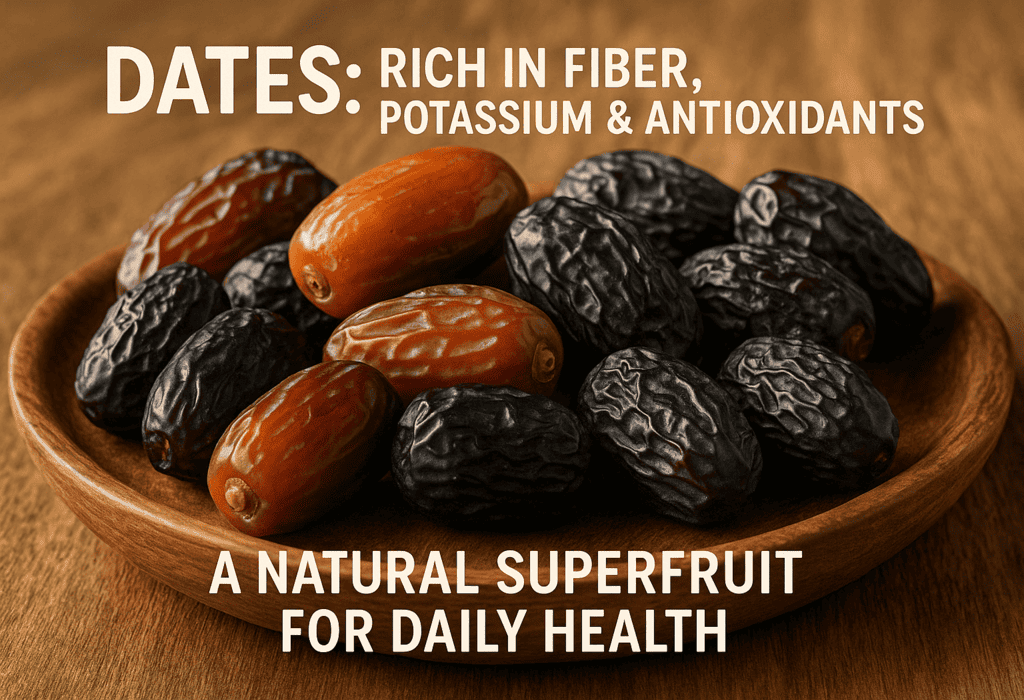
Not all dates are identical. Popular varieties include Medjool, Deglet Noor, Barhi, Ajwa, and Sukkari. Each variety differs slightly in sugar profile, texture and phytonutrient content:
- Medjool — large, soft, rich in fiber and antioxidants; popular as a natural snack.
- Deglet Noor — firmer, often used in baking and cooking.
- Ajwa — a traditional Saudi variety often studied for antioxidant and anti-inflammatory properties; frequently cited in clinical and laboratory research from Asia and the Middle East. PMCMDPI
Recent reviews and experimental studies highlight that some varieties (notably Ajwa) contain higher concentrations of polyphenols and flavonoids, which may partly explain their stronger antioxidant effects in cellular and animal studies. PMC
Scientific Evidence: Selected Recent Studies
Below are several representative studies and reviews from reputable journals and open-access repositories. They illustrate the global scientific interest in dates — from mechanistic lab work to small human trials.
- Therapeutic review (open access) — A recent, comprehensive review describes the nutritional and therapeutic traits of date fruit, summarizing evidence on antioxidant, anti-inflammatory, antimicrobial, and metabolic effects. This review consolidates in vitro, animal, and human data and frames dates as a functional food candidate. PMC
- Glycemic impact and metabolic markers — Systematic reviews and glycemic index tables report that many commonly consumed dates have a low-to-moderate glycemic index, and controlled studies show that moderate portions do not necessarily cause large postprandial glucose spikes in otherwise healthy adults. Larger, higher-quality clinical trials are still needed, but current data are reassuring for moderate consumption. PubMedPMC
- Ajwa and antioxidant/anti-inflammatory effects — Multiple studies from Asia and the Middle East have explored Ajwa date extracts and whole-pulp effects, reporting reduced oxidative stress and anti-inflammatory signals in animal models and biochemical assays. Translational human studies are emerging. PMCMDPI
- Dates and male reproductive health — Reviews covering animal and some human data suggest dates may have protective or supportive effects on sperm parameters and reproductive hormones, possibly attributable to antioxidant phytochemicals; however, data are heterogeneous and more randomized human trials are required. PMCecommons.aku.edu

Benefits — Mechanisms and Practical Effects
1. Heart and Vascular Health
Dates are a potassium-rich whole food. Higher dietary potassium is associated with lower blood pressure and reduced cardiovascular risk when balanced against sodium intake. Eating potassium-rich foods like fruits (including dates) instead of processed, sodium-rich snacks can improve the sodium-to-potassium dietary ratio — a relevant public-health goal. The Nutrition SourceHarvard Health
2. Digestive Health and Colon Function
The dietary fiber in dates supports bowel regularity and promotes beneficial gut bacteria. Observational and interventional data indicate that adding fiber-rich fruits to the diet reduces constipation risk and supports colon health.
3. Antioxidant and Anti-Inflammatory Actions
Dates contain polyphenols, flavonoids and carotenoids that scavenge free radicals and modulate inflammatory pathways in lab and animal models. Varieties with higher polyphenol content (e.g., Ajwa) have attracted research interest for potential protective effects against oxidative damage. PMC
4. Energy and Sports Nutrition
Because they supply digestible carbohydrates and potassium, dates are a traditional, portable energy source for endurance exercise and intermittent fasting breaks (e.g., in Ramadan). Their sugar profile yields rapid energy with fiber to moderate absorption.
5. Fertility and Reproductive Health
Preclinical and some clinical studies suggest dates may support male reproductive parameters through antioxidant mechanisms; this is an active research area, especially in Asia and the Middle East. More definitive clinical trials are needed before therapeutic claims can be made. PMCecommons.aku.edu
Risks, Contraindications and Practical Dosage
- Caloric density : Dates are calorie-dense; excessive intake can contribute to weight gain.
- Diabetes : Individuals with diabetes should monitor blood glucose responses; many studies show modest effects with small portions, but personalized guidance is essential. PubMedPMC
- Dental care : Sticky fruits can adhere to teeth — good oral hygiene is recommended.
- Suggested serving : For most healthy adults, 3–5 medium dates per day is a reasonable guideline to gain benefits without excessive sugar/calorie intake (adjust based on activity level and overall diet).
Practical Uses and Recipes (Healthy Ideas)
- Breakfast : Chopped dates with plain yogurt, oats, and nuts—fiber + protein + healthy fats.
- Snack : One or two medjool dates stuffed with almond butter for a compact energy boost.
- Baking : Replace part of added sugar in recipes with pureed dates to add fiber and micronutrients.
- Savory : Add diced dates to grain bowls, tagines or salads for sweet-savory balance.

Table : Quick Reference — Which Date for Which Use
| Variety | Best for | Notable attribute |
|---|---|---|
| Medjool | Snacking, natural sweetener | Large, soft, high moisture |
| Deglet Noor | Baking, cooking | Firmer texture |
| Ajwa | Traditional remedies, research interest | High polyphenols (research subject) |
Conclusion
Dates are more than a traditional treat — they are a nutrient-dense, versatile whole food with a body of scientific literature supporting benefits for heart health, digestion, antioxidant protection, and energy. While some promising results (especially regarding Ajwa dates and reproductive or anti-inflammatory effects) come from laboratory and early clinical work, the consensus is that moderate daily consumption as part of a balanced diet can contribute positively to health. People with specific conditions (notably diabetes) should consult healthcare professionals for personalized recommendations.
Frequently Asked Questions (short)
Q: Can I eat dates every day?
A: Yes — in moderation. For most healthy adults, 3–5 medium dates per day is commonly suggested.
Q: Do dates raise blood sugar quickly?
A: Dates contain natural sugars, but many varieties have low-to-moderate glycemic impact when eaten in reasonable portions and combined with protein or fat. Monitor if you have diabetes. PubMedPMC
Q: Which dates are best for antioxidants?
A: Ajwa and Medjool are often highlighted in research for high polyphenol or antioxidant content. PMC
References and Further Reading
- USDA FoodData Central — Date palm fruit nutrient composition. fdc.nal.usda.gov
- Therapeutic Power of Date Fruit (Phoenix dactylifera L.) — review (PMC open access). PMC
- Atkinson FS, et al. International tables of glycemic index and glycemic load values 2021: a systematic review. Am J Clin Nutr. 2021. PubMed
- Mirghani HO, et al. Effects of dates on blood glucose and metabolic markers (review). PMC 2021. PMC
- Anwar S., et al. Role of Ajwa Date Fruit Pulp and Seed in the Management of Diseases (2022). PMC. PMC
- Harvard T.H. Chan School of Public Health — Potassium and cardiovascular health. The Nutrition SourceHarvard Health
- Almatroodi SA., et al. Therapeutic potential of Ajwa dates (MDPI / Applied Sciences). MDPI
- Shehzad M., et al. Therapeutic Potential of Date Palm against Human Infertility (review). PMC 2021. PMC