نمط lbb
Introduction
During winter, much attention is given to facial skincare and hair protection, while lips and hands—two of the most exposed areas of the body—are often overlooked. Cold air, low humidity, frequent hand washing, and indoor heating quietly work together to strip moisture from the skin. The result is dryness, rough texture, flaking, and loss of natural softness.
This article explores winter lip and hand care from a natural beauty perspective, focusing on realistic habits, ingredient awareness, and daily routines that support healthy-looking skin without medical or therapeutic claims. By understanding why these areas are more vulnerable and how to care for them gently, you can maintain comfort, appearance, and skin integrity throughout the cold season.
Why Lips and Hands Suffer the Most in Winter
Constant Environmental Exposure
Unlike other parts of the body, lips and hands are rarely covered for long periods. They are directly exposed to:
- Cold wind and low temperatures
- Sudden temperature changes between indoors and outdoors
- Dry indoor heating
- Frequent contact with water and cleansers
This constant exposure weakens the skin’s natural protective barrier.
Unique Skin Structure
The skin on the lips and hands differs from facial or body skin:
- Lips lack oil glands, making them unable to self-lubricate
- Hands have thinner skin and fewer sebaceous glands than the face
- Both areas lose moisture faster than other body parts
These characteristics make winter dryness more noticeable and persistent.

Common Winter Problems Affecting Lips and Hands
Lip-Related Issues
- Dryness and tightness
- Visible cracking and peeling
- Loss of natural color and smoothness
- Rough texture that affects lipstick application
Hand-Related Issues
- Dry, flaky skin
- Redness and sensitivity
- Rough cuticles and brittle nails
- Loss of softness and flexibility
While these concerns are common, they are often the result of neglected daily habits rather than unavoidable seasonal damage.
Daily Habits That Worsen Winter Dryness
Overwashing and Harsh Cleansers
Frequent hand washing is essential for hygiene, but hot water and strong soaps can remove natural oils, leaving hands dehydrated.
Lip Licking and Picking
Licking lips may feel relieving but actually increases moisture loss as saliva evaporates. Picking at dry skin worsens flaking and texture.
Skipping Moisturization
Many people apply hand cream or lip balm only when discomfort appears, rather than preventively.
Natural Winter Care Principles for Lips and Hands
Gentle Cleansing
- Use lukewarm water instead of hot
- Choose mild, fragrance-light cleansers
- Pat skin dry instead of rubbing
Consistent Moisture Support
Applying moisture before dryness becomes visible helps maintain softness and comfort throughout winter.
Barrier Awareness
Winter care is less about adding layers and more about supporting the skin’s natural barrier using simple, nourishing ingredients.
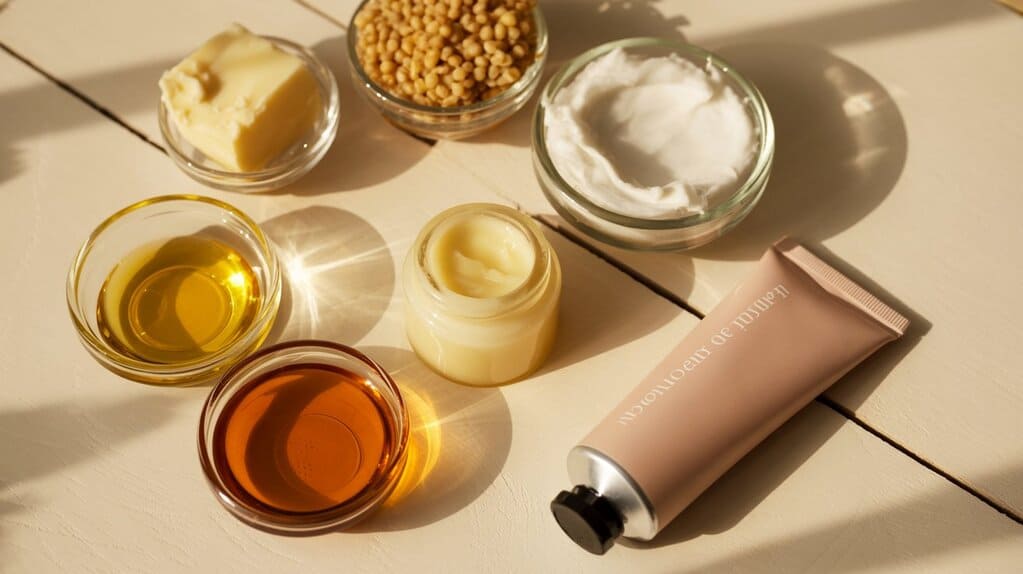
Natural Ingredients Commonly Used in Winter Care
The following table highlights natural ingredients commonly included in lip and hand care products and their general cosmetic benefits:
| Natural Ingredient | Common Use in Beauty | General Skin Benefit |
|---|---|---|
| Shea Butter | Lip balms, hand creams | Helps soften and reduce dryness |
| Beeswax | Protective balms | Creates a moisture-sealing barrier |
| Coconut Oil | Hand masks, balms | Enhances skin smoothness |
| Sweet Almond Oil | Nail and cuticle care | Supports flexibility and softness |
| Olive Oil | Overnight treatments | Helps maintain skin comfort |
| Cocoa Butter | Lip care | Improves texture and suppleness |
These ingredients are widely used in natural beauty routines due to their compatibility with dry winter skin.

Building a Simple Winter Lip Care Routine
Daily Lip Care Essentials
- Apply a nourishing lip balm before going outdoors
- Reapply after eating or drinking
- Choose balms with simple ingredient lists
Gentle Lip Exfoliation (Occasional)
- Use a soft cloth or mild natural scrub
- Limit exfoliation to once per week
- Follow immediately with hydration
Exfoliation should be gentle and optional, not aggressive or frequent.
Building a Simple Winter Hand Care Routine
Daytime Hand Protection
- Use a light hand cream after washing
- Keep a small tube accessible during the day
- Wear gloves when outdoors in cold weather
Nighttime Hand Care Ritual
- Apply a richer cream or natural oil
- Massage gently into hands and cuticles
- Optional: wear cotton gloves overnight
Night care allows ingredients to support skin comfort without daily interruptions.
Nail and Cuticle Care in Winter
Winter dryness affects not only skin but also nails and cuticles:
- Dry cuticles can crack and appear uneven
- Nails may feel brittle or dull
Simple habits such as applying natural oils to cuticles and avoiding excessive nail polish removal can help maintain a neat appearance.
Lifestyle Factors That Influence Skin Comfort
Hydration from Within
While topical care matters, overall hydration habits influence skin appearance. Regular water intake supports general skin comfort.
Indoor Environment Awareness
- Use a humidifier if indoor air feels dry
- Avoid placing hands near heat sources for long periods
Balanced Nutrition Perspective
Foods containing natural fats are often associated with healthy-looking skin, though results vary individually.
Frequently Asked Questions (FAQs)
How often should I apply hand cream in winter?
Applying hand cream after every hand wash or whenever hands feel dry is a common beauty practice during winter.
Is lip exfoliation necessary?
Lip exfoliation is optional. Some people find gentle exfoliation helpful once a week, while others prefer focusing only on hydration.
Can natural oils replace hand cream?
Natural oils can complement hand care routines, especially at night, but many people prefer creams for daytime use due to faster absorption.
Why do my lips dry even when I use balm?
Environmental exposure, frequent lip licking, and product choice all affect results. Consistency and ingredient simplicity matter more than quantity.
Bibliography
- American Academy of Dermatology – General Skin Care Guidelines
- National Eczema Association – Seasonal Skin Comfort Insights
- Journal of Cosmetic Dermatology – Ingredient Use in Cosmetic Formulations
- Harvard Health Publishing – Skin and Environmental Factors
(References are provided for educational context and general skin awareness.)
Health Disclaimer
This article is intended for educational and informational purposes only and focuses on general beauty and skincare habits. It does not provide medical advice, diagnosis, or treatment. Individual skin responses vary. For persistent skin concerns, consult a qualified healthcare or skincare professional.