نمط lbb
Introduction
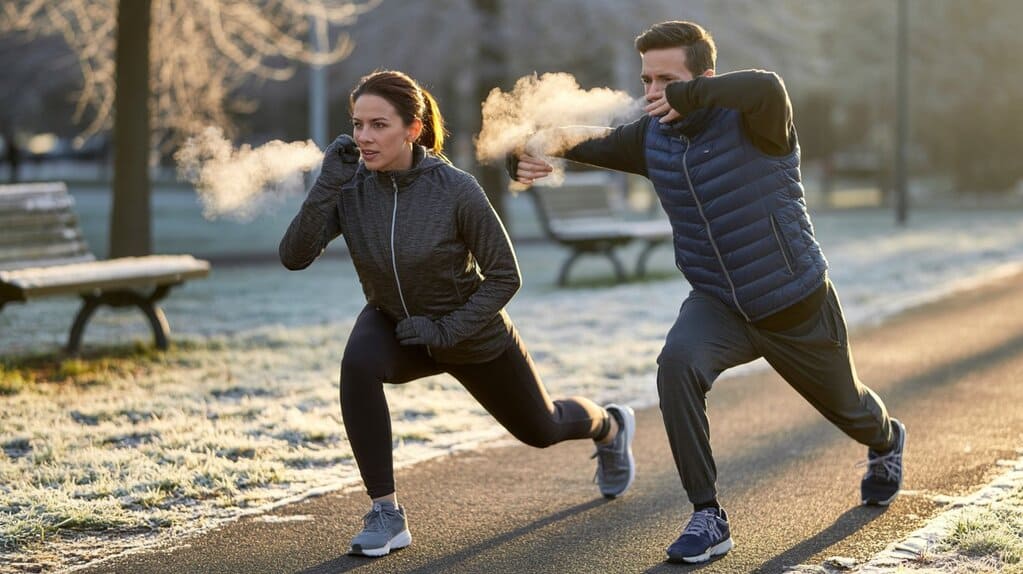
Exercising outdoors during cold months can be invigorating and beneficial for cardiovascular health and mental well-being. However, low temperatures create unique physiological challenges: muscles, tendons, and joints become stiffer, reaction times slow, and the risk of strains, sprains, and cold-related injuries rises. A well-designed warm-up tailored for cold weather exercise is therefore not optional — it’s essential. This article explains why warming up matters more in the cold, reviews evidence from recent scientific and medical studies across Asia, Europe, and North America, and provides practical, evidence-based routines and recommendations to reduce injury risk and improve performance. Wikipédia+1
Why cold increases injury risk
Cold affects the neuromuscular system and the mechanical properties of tissues. When muscle temperature falls, contractile speed and maximal strength decline, while muscle and fascia stiffness increase — both factors that elevate the risk of strains and joint injuries during sudden or high-force movements. Epidemiological and scoping reviews show an association between cold exposure and increased musculoskeletal complaints and workplace/sport injuries. In winter conditions, athletes and recreational exercisers commonly experience reduced power output and slower nerve conduction, which can compromise coordination and protective reflexes. PMC+1
Key evidence (select) :
- Scoping review: cold exposure increases musculoskeletal condition risk. PMC
- Laboratory studies: cooling reduces muscle contractile speed and strength. csep.ca
What a warm-up does (physiology in brief)
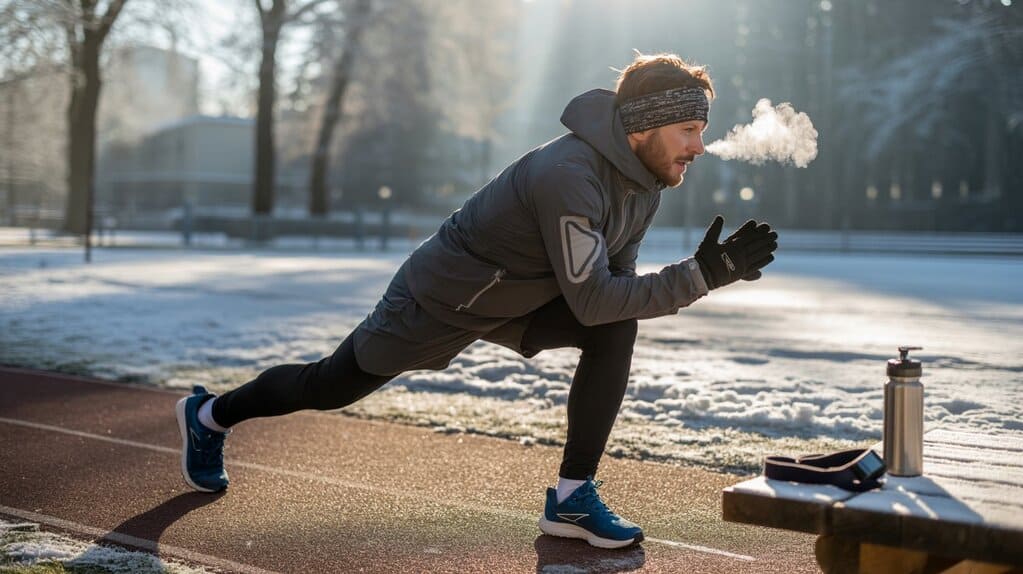
A proper warm-up raises muscle temperature, increases blood flow, improves joint range of motion (ROM), primes the nervous system, and readies energy systems for the demands ahead. These physiological effects translate into improved power, coordination, and protective reflexes, which together reduce the chance of injury. Dynamic activities that mimic the sport or exercise (so-called dynamic warm-ups) are generally superior to long static stretches for performance and injury prevention. PMC+1
Evidence that warm-ups reduce injury (recent studies)
Systematic reviews and randomized trials show that structured warm-up programs significantly reduce injury rates in sports — often by 30% or more — especially when programs include dynamic movements, neuromuscular control drills, and sport-specific activation. Warm-up effect sizes vary by population and program design, but meta-analyses and expert consensus statements (including those dealing specifically with cold-weather exercise) agree that warming up is a cornerstone of injury prevention. PMC+1
Representative studies and statements:
- Meta-analysis of warm-up intervention programs: significant reductions in limb injuries. MDPI
- ACSM Expert Consensus on cold-weather exercise: emphasizes warm-up, clothing strategy, and risk mitigation. UCL Discovery+1
Practical warm-up guidelines for cold weather
Below is a practical, evidence-based warm-up template you can use before outdoor workouts in cold conditions. Tailor intensity and duration to fitness level, age, and workout demands.
| Component | Example (duration) | Purpose |
|---|---|---|
| Light aerobic pulse-raiser | Brisk walk, light jog, or cycling (6–8 min) | Increases heart rate and core/muscle temperature. Longer than usual in cold weather. nhs.uk |
| Dynamic mobility & joint prep | Leg swings, arm circles, hip openers (4–6 min) | Restores joint ROM, reduces stiffness, prepares movement patterns. PMC |
| Activation & neuromuscular drills | Glute bridges, bodyweight squats, plank variations (3–5 min) | Activates target muscles, improves motor control and stability. PMC |
| Sport-specific build-up | Gradual increase to activity intensity (4–8 min) | Replicates movement demands; prevents sudden loading on cold tissues. MDPI |
| Brief static stretching (optional) | 20–30 s per muscle if needed | Use after dynamic work; avoid prolonged static stretching immediately before max efforts. Wikipédia |
Total warm-up time in cold conditions: 15–25 minutes depending on temperature and activity intensity; elite athletes may require more specific protocols. Shorter warm-ups (e.g., 6–10 minutes) are useful for light sessions but may be insufficient in very cold environments. GQ+1
Specific tips to make warm-ups more effective in the cold
- Add duration and intensity gradually. Because tissues cool faster outside, extend your warm-up by several minutes and include slightly higher intensity bursts to increase muscle temperature. MDPI
- Wear removable outer layers. Start with an insulating outer layer during the initial warm-up; remove it before high-intensity work to avoid overheating and sweating, which can cause rapid heat loss when you stop. PMC
- Prioritize dynamic movements over long static stretching. Dynamic stretches preserve explosive muscle function and improve ROM without temporarily reducing strength. PMC
- Re-warm during long breaks. If you have a long pause between warm-up and activity (e.g., waiting for a race start or court entry), perform short activation sets to maintain muscle temperature and neuromuscular readiness. bmjopensem.bmj.com
- Hydrate and fuel appropriately. Cold blunts thirst sensation; ensure hydration and a light carbohydrate snack if the session is long or intense. ACSM
Addressing special populations and high-risk scenarios
- Older adults: Age-related reductions in muscle mass and circulation mean longer, gentler warm-ups and careful pacing are necessary. Use more mobility and balance work. PMC
- People with cardiovascular or respiratory disease: Cold can increase cardiovascular strain; consult a clinician and consider indoor alternatives if temperatures are extreme. ACSM guidance highlights increased risk in susceptible individuals. UCL Discovery+1
- High-performance winter sports athletes: Evidence from snowsports shows teams use multi-stage activation routines (including heated clothing, on-ski drills, and neuromuscular activation) to reduce injuries. bmjopensem.bmj.com
Examples of short cold-weather warm-ups (two templates)
Runner — 20 minutes
- 6-minute brisk walk progressing to light jog.
- 5 minutes dynamic drills: high knees, butt kicks, leg swings, walking lunges.
- 4 minutes activation: 2×10 glute bridges, 2×10 air squats.
- 3–5 minutes progressive strides (60–90% effort). nhs.uk+1
Strength session outdoors — 18 minutes
- 5 minutes cycling or skipping (light).
- 6 minutes mobility and dynamic stretches for hips/shoulders.
- 5 minutes activation: banded pull-aparts, banded squats, plank hold.
- 2 minutes light practice sets at submaximal load. PMC
Limitations and ongoing research
Although many high-quality studies support warm-up benefits, exact “optimal” durations and intensities vary by sport, age, and environment. Recent reviews (Asia, Europe, North America) continue to refine best practices, particularly for cold-exposure scenarios. Newer work emphasizes individualized protocols and integrating wearable thermometry and neuromuscular monitoring for precision warm-ups. Readers should consult updated consensus statements and sport-specific guidelines. PMC+1
Conclusion
Cold weather increases muscle stiffness, slows neuromuscular function, and raises the likelihood of strains and other musculoskeletal injuries. A proper warm-up — longer and including dynamic, sport-specific activation — is a powerful, low-cost strategy to protect joints and muscles, improve performance, and reduce injury risk. Follow practical templates, extend warm-up time when temperatures drop, layer clothing smartly, and re-activate after long breaks. When in doubt, err on the side of extra warm-up time — your muscles, joints, and future training sessions will thank you.
Key Points
- Cold lowers muscle temperature, increasing stiffness and injury risk. PMC
- Dynamic warm-ups with activation exercises reduce injuries and improve ROM more reliably than prolonged static stretching. PMC
- In cold weather, increase warm-up duration to 15–25 minutes depending on intensity and individual needs. MDPI+1
- Wear removable layers during warm-up; avoid heavy sweating that can cause rapid cooling. PMC
- High-risk individuals should consult health professionals and consider indoor alternatives if conditions are extreme. UCL Discovery
Bibliography (selected sources and further reading)
- Afonso J. Revisiting the “Whys” and “Hows” of the Warm-Up. 2023. PMC. PMC
- Farbu EH, et al. Cold exposure and musculoskeletal conditions; A scoping review. 2022. PMC. PMC
- Ding L, et al. Effectiveness of Warm-Up Intervention Programs to Prevent Injuries: Systematic Review and Meta-Analysis. Int J Environ Res Public Health. 2022. MDPI
- Castellani JW, et al. ACSM Expert Consensus Statement: Injury Prevention and Exercise Performance during Cold-Weather Exercise. 2021. UCL Discovery
- Sople D. Dynamic Warm-ups Play Pivotal Role in Athletic Performance and Injury Prevention. 2024. PMC. PMC
- Chiba I., et al. Warm-Up Intensity and Time-Course Effects on Jump Performance under Cold Conditions. MDPI. 2022. MDPI
- Gatterer H., et al. Practicing Sport in Cold Environments. PMC. 2021. PMC
- Wikipedia. Warming up. (overview of warm-up types and evidence). Wikipédia
- NHS. How to warm up before exercising. NHS.uk. (practical routine guidance). nhs.uk