نمط lbb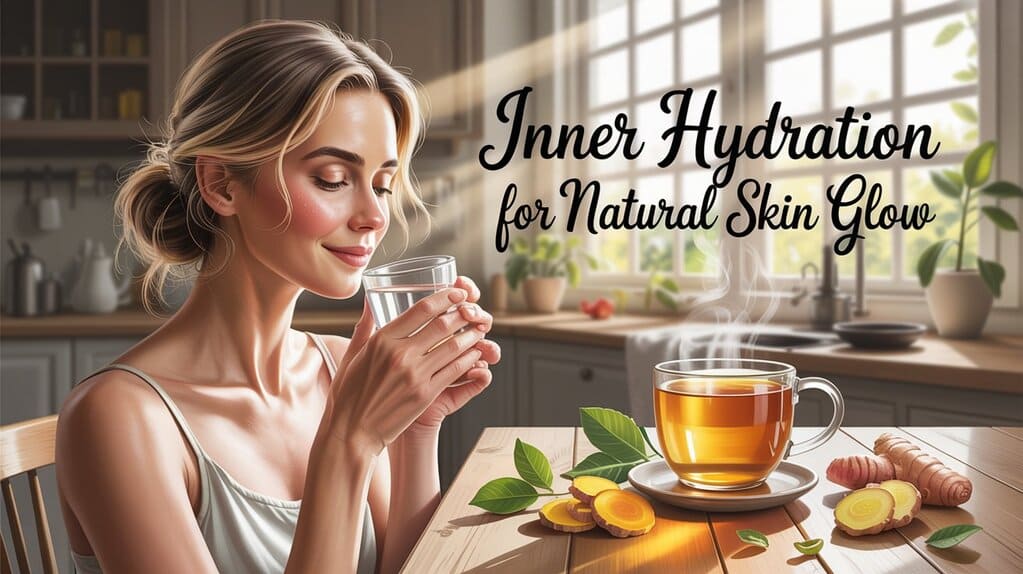
Introduction
Beautiful, healthy skin is not produced by face creams alone. Increasingly, research and clinical practice emphasize that internal hydration—the combined effect of adequate drinking water and supportive warm herbal beverages—plays a central role in skin hydration, barrier function, and visible skin health. Internal hydration contributes to epidermal moisture, helps maintain elasticity, supports wound healing and repair, and can modulate inflammation that accelerates aging. This essay explains the physiology behind internal hydration, summarizes recent scientific evidence from Asia, Europe, and North America, and reviews how warming herbs (like ginger, turmeric, and certain herbal teas) may complement water to support skin beauty. Practical recommendations, a concise evidence table, and a bibliography are included.
Body
How internal hydration affects skin : physiology and measurable parameters
The skin’s outer layer (stratum corneum) requires water to remain flexible and resilient. Two commonly measured clinical parameters are skin hydration (stratum corneum water content) and transepidermal water loss (TEWL), which reflects barrier integrity. Adequate systemic hydration maintains dermal and epidermal water content, influences microcirculation, and supports the extracellular matrix (collagen and glycosaminoglycans), all important to reduce visible dryness and fine lines.
Controlled studies show that changes in total water intake can measurably affect superficial skin hydration and some skin-biophysical markers—especially in individuals who start with relatively low water intake. However, effects on deeper dermal structure and on TEWL are variable across studies, suggesting individual baseline hydration, diet, age, and environmental factors all matter. MDPI+1
Evidence that drinking water improves skin hydration and appearance
Clinical and observational research is mixed but growing. A 2024 review of lifestyle influences found increased total water intake was associated with improved superficial skin hydration in several populations, though effects on other measures (pH, TEWL) were less consistent. Importantly, people with low habitual water intake tend to show the largest improvements when their intake is increased. MDPI
A randomized trial examining mineral (oligo-mineral) water reported that changes in water composition and increased intake may influence skin biology and some barrier features, indicating that both quantity and quality of consumed fluids can matter. Still, many clinical endpoints (especially long-term structural skin changes) require larger, longer trials. PMC+1
Practical takeaway : Regularly drinking sufficient plain water (adjusted for climate, activity, and health) is a simple, evidence-supported strategy to improve surface skin hydration, particularly for people who previously drank too little.
Warming herbs : definitions, mechanisms, and why they help
“Warming herbs” here means commonly consumed hot herbal infusions and culinary spices that have thermogenic or circulation-supporting actions when taken as teas or in warm beverages—e.g., ginger, turmeric (curcumin), cinnamon, and certain types of green tea. These botanicals can support skin health through multiple mechanisms:
- Anti-inflammatory effects: Chronic low-grade inflammation accelerates aging and skin conditions such as acne, eczema, and rosacea. Many herbs contain polyphenols that modulate inflammatory pathways. PMC+1
- Antioxidant action: Polyphenols can neutralize reactive oxygen species triggered by UV and pollution, protecting collagen and lipids in the skin. PMC+1
- Improved microcirculation: Mild thermogenic activity and vasodilation from warm beverages can temporarily increase blood flow to the skin, aiding nutrient delivery and waste removal.
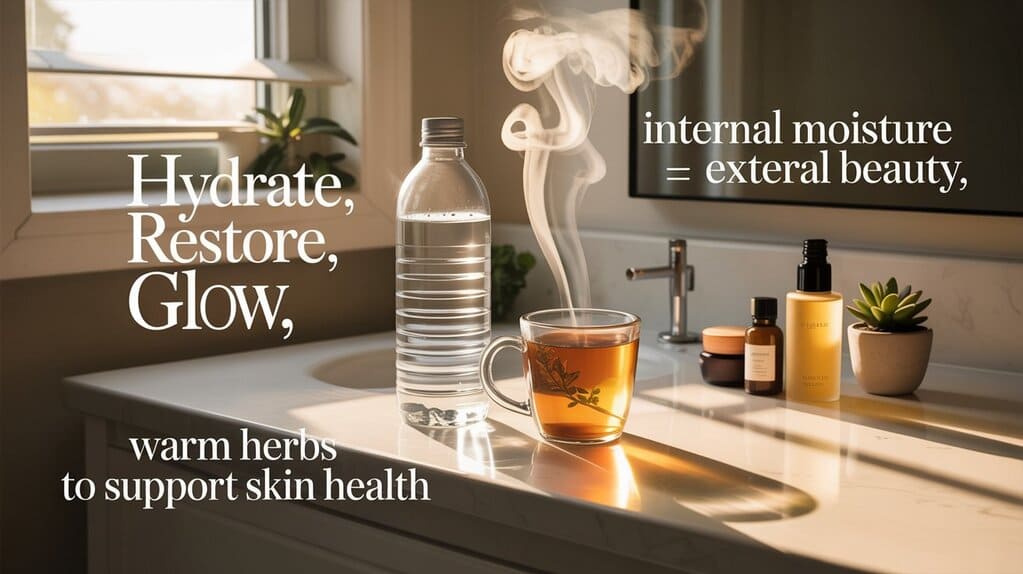
- Hydration vehicle: Herbal teas are chiefly water—drinking warm herbal infusions increases total fluid intake, which itself improves skin hydration. IJRPR
Selected herbs and what the science says
Below is a short evidence summary of commonly used warming herbs and beverages:
| Herb / beverage | Proposed skin benefit | Evidence summary (recent studies / reviews) |
|---|---|---|
| Ginger (Zingiber officinale) | Anti-inflammatory, antioxidant; may support circulation and reduce oxidative stress | Systematic reviews highlight ginger’s antioxidant and anti-aging potential; clinical data relevant to skin are promising but limited; benefits seen in systemic inflammation and topical wound models. PMC+1 |
| Turmeric / Curcumin | Anti-inflammatory, antioxidant, may support collagen and wound healing | Multiple reviews and clinical trials show curcumin’s potential in skin conditions (psoriasis, acne, photodamage) though bioavailability is a limitation; topical and oral forms studied. PMC+1 |
| Green tea (Camellia sinensis) | UV protection, antioxidant activity; may improve some skin parameters | Clinical evidence supports oral green tea polyphenols for UV protection and some improvements in skin quality. PMC+1 |
| Cinnamon / other spices | Circulation, mild antimicrobial effects | Preliminary evidence for antimicrobial and circulation effects; more skin-specific trials needed. (general reviews). MDPI |
(Each of the above herbs has a long safety record as culinary ingredients; however, therapeutic dosing—especially supplements—requires medical guidance.)
Integration : How to use water + warming herbs safely and effectively
- Prioritize plain water: Aim to meet individualized fluid needs (a common simple target is ~1.5–2.5 liters/day depending on climate/activity), increasing intake if current consumption is low. More demonstrable skin benefits are seen when low-intake individuals increase to recommended ranges. MDPI+1
- Use warm herbal infusions as hydration tools: Replace some less-healthy drinks (sugary beverages) with warm herbal teas—ginger tea, turmeric-ginger blends (with a pinch of black pepper to increase curcumin absorption), and green tea are practical choices that combine hydration with phytochemical benefits. PMC+1
- Timing and frequency: Frequent sips across the day maintain steady hydration and dermal perfusion better than large infrequent boluses. Warm beverages are soothing in colder seasons and encourage drinking when plain water feels less appealing.
- Safety and interactions: High-dose extracts or supplements (especially curcumin) can interfere with medications and may affect liver enzymes in rare cases—consult a clinician before starting supplements. Culinary amounts in tea and food are generally safe. PMC+1
Limitations and current research gaps
- Many human trials are small, short-term, or focused on topical formulations rather than oral intake; thus, robust, large randomized trials specifically linking increased plain water intake or routine warming-herb consumption to long-term structural skin improvements (e.g., reduced wrinkle depth) remain limited. PMC+1
- Bioavailability is a recurring issue (notably curcumin). Combining with black pepper (piperine) or using formulations that enhance absorption can improve systemic exposure where clinically indicated. PMC
Key Points
- Internal hydration (drinking enough water) supports skin hydration, elasticity, and barrier function—especially in under-hydrated individuals. MDPI
- Warming herbs (ginger, turmeric, green tea) add antioxidant and anti-inflammatory benefits while increasing fluid intake. PMC+2PMC+2
- Herbal teas are a low-risk, practical way to increase daily water while delivering phytochemicals that complement topical skin care. IJRPR
- More large-scale clinical trials are needed to confirm long-term structural benefits on skin aging; current evidence supports symptomatic and surface-level improvements. PMC+1
Practical, evidence-based recipe ideas
- Daily warming tonic: Hot water + thin slices of fresh ginger + a pinch of turmeric + a grind of black pepper — steep 8–10 minutes. Drink 2–3 cups across the day as part of total fluid intake. (Culinary doses; consult a physician before higher-dose supplements.) PMC+1
Conclusion
Healthy, radiant skin is best supported from the inside out. While topical care remains essential, internal hydration—achieved by adequate drinking water and complemented by warming herbal infusions—provides measurable benefits for superficial skin hydration, supports barrier function, delivers antioxidant and anti-inflammatory phytochemicals, and promotes microcirculation. The evidence base is growing across Asia, Europe, and North America: systematic reviews, clinical trials of plant polyphenols, and randomized studies of water type/volume show meaningful signals in favor of these simple interventions. They are low-cost, low-risk first steps that pair naturally with good nutrition and topical skin care. As with any health strategy, personalization, attention to baseline hydration, and consultation with healthcare professionals for high-dose supplements are recommended.
Table (quick reference)
| Goal | Simple action | Evidence level |
|---|---|---|
| Improve surface skin hydration | Increase total plain water intake; use warm herbal teas as part of fluids | Moderate (clinical + observational studies). MDPI+1 |
| Add antioxidant/anti-inflammatory support | Drink green tea; use culinary turmeric and ginger | Moderate (reviews and clinical trials on polyphenols). PMC+1 |
| Enhance absorption of curcumin | Add a pinch of black pepper or use bioavailable formulations | Supported by pharmacology reviews. PMC |
Bibliography (selected, representative sources)
- Załęcki P, et al. Impact of Lifestyle on Differences in Skin Hydration (Cosmetics). 2024. MDPI
- Damiani G, et al. Water Is an Active Element: A Randomized Double-Blind… (trial on oligo-mineral water and skin). 2023. PMC
- Ozkur M, et al. Ginger for Healthy Ageing: A Systematic Review. PMC/NCBI. 2022. PMC
- Kunnumakkara AB, et al. Role of Turmeric and Curcumin in Prevention… PMC/NCBI. 2023. PMC
- Di Sotto A, et al. Efficacy and Safety of Oral Green Tea Preparations in Skin… PMC/NCBI. 2022. PMC
- Kasprzak-Drozd K, et al. Potential of Curcumin in the Management of Skin Diseases. MDPI Int. J. Mol. Sci. 2024. MDPI
- Wakeman M, Skin Within™ clinical report. (Collagen supplement trial). 2017. Metagenics
- Danessa G, et al. Effects of collagen-based supplements on skin’s hydration and elasticity: systematic review and meta-analysis. IJDVL. 2025. Journ. Ind. Dermatologie, Vénéréologie, Léprologie
- IJPR / herbal tea reviews (2025). Evidence summaries on polyphenols and skin hydration. IJRPR