نمط lbb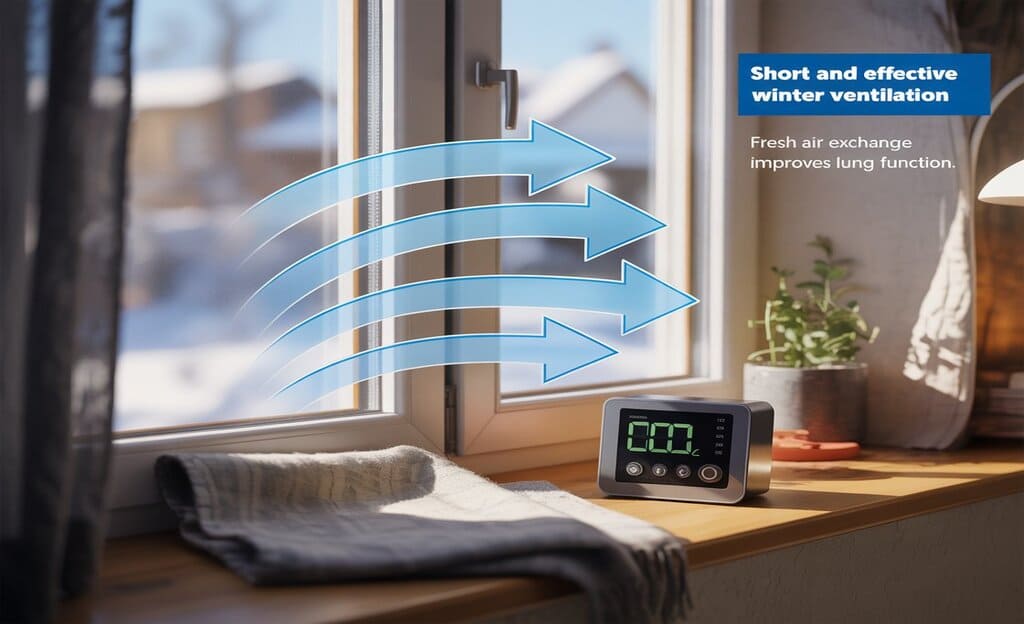
Introduction
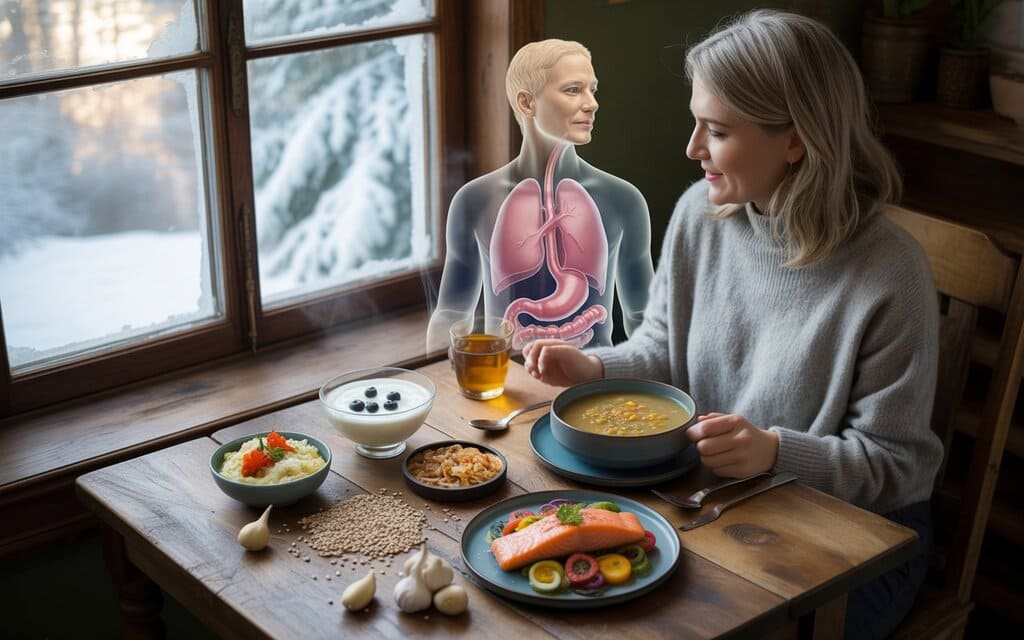
Winter brings cold weather, cozy blankets, and a tendency to keep windows and doors shut. While staying warm is important, poor indoor ventilation during winter can raise concentrations of air pollutants, allergens, and infectious aerosols, which negatively affect lung health and overall wellbeing. This article explains why good ventilation matters in homes during winter, summarizes recent scientific evidence from Asia, Europe, and North America, and gives clear, translatable practical guidance to reduce respiratory risks while keeping households comfortable and energy-efficient. Key ideas are written simply to make translation and reuse on websites easy.
Main takeaway: Ventilate safely in winter — small, frequent bursts of fresh air plus filtration and humidity control significantly reduce respiratory hazards without sacrificing comfort.
Key points
- Ventilation lowers indoor concentrations of PM2.5, CO₂, volatile organic compounds (VOCs), and airborne pathogens. Iris+1
- Increasing air exchange and using filtration reduces risk of respiratory infection transmission. PMC+1
- Short, frequent window opening (or mechanical ventilation) in winter balances air quality and heat loss. PMC
- Control humidity (40–60%) to protect mucosal defenses and limit some pathogens and dust-mite activity. PMC
- Households with asthma, COPD, or young children should prioritize ventilation + air cleaning. PMC+1
Why ventilation matters for lung health in winter
1. Indoor pollution accumulates when homes are sealed
When windows and doors are closed, sources like cooking, candles, cleaning products, building materials, and outdoor infiltration contribute to elevated concentrations of particulate matter (PM2.5), CO₂, and VOCs. Prolonged exposure to these pollutants can irritate airways, worsen asthma, and increase susceptibility to infections. Systematic reviews and clinical summaries show clear links between indoor pollutants and respiratory symptoms. PMC+1
2. Airborne infections spread more easily in poorly ventilated spaces
Respiratory pathogens (including seasonal flu and coronaviruses) can spread through aerosols that linger in indoor air. Numerous high-quality reviews and observational studies have identified ventilation as a key mitigation measure to reduce airborne transmission, alongside masks and reduced crowding. Improving ventilation reduces the concentration of infectious aerosols and therefore lowers transmission risk. The Lancet+1
3. Ventilation supports vulnerable lungs (asthma, COPD, children, elderly)
People with chronic lung disease are particularly sensitive to poor indoor air. Studies from multiple regions report associations between indoor pollutant exposure and increased exacerbations of asthma and COPD. Effective ventilation and air cleaning lead to fewer symptoms and potentially fewer hospital visits. MDPI+1
Practical winter ventilation strategies (clear, translatable guidance)
A. Low-effort ventilation habits
- Short, frequent airing: Open windows for 5–10 minutes several times per day (cross-ventilate if possible). This removes stagnant air while limiting heat loss. PMC
- Kitchen and bathroom fans: Run extractor fans while cooking or showering and for 10–15 minutes afterward to remove moisture and combustion products.
- Avoid indoor smoking and limit candles/incense: These add fine particles and VOCs.
B. Mechanical and assisted ventilation
- Use heat-recovery ventilators (HRVs) or energy-recovery ventilators (ERVs) when available — they exchange stale indoor air for fresh outdoor air while recovering most of the heat, minimizing energy waste. HRVs are particularly useful for cold climates. MDPI+1
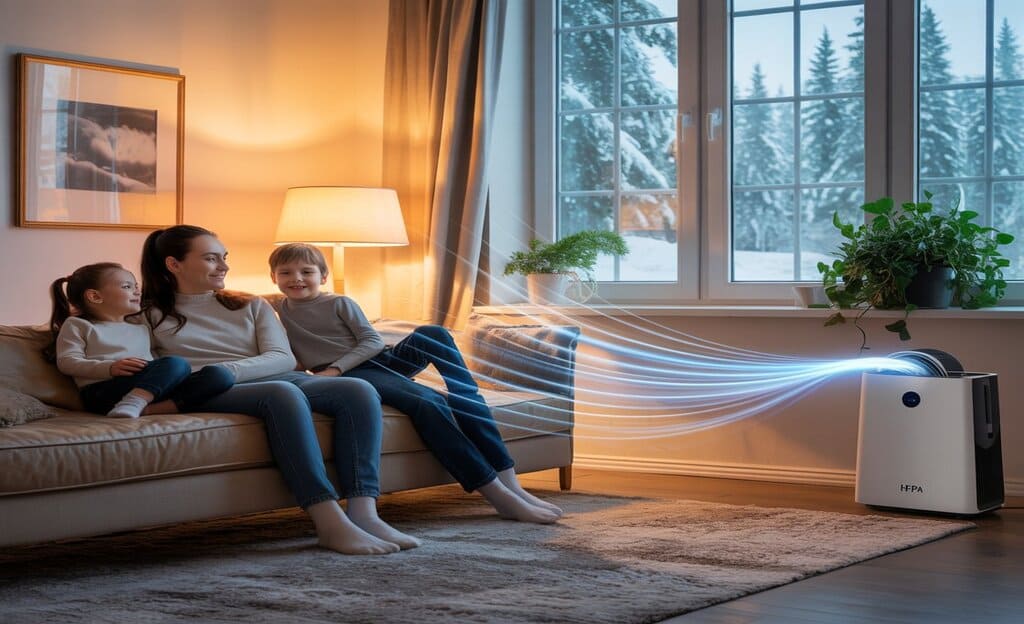
- Portable HEPA air purifiers in bedrooms and living rooms reduce particulate burden and can complement ventilation, especially in homes with poor natural airflow. PMC
C. Monitor and adjust
- CO₂ monitors: A simple proxy for ventilation — sustained indoor CO₂ above ~1000 ppm suggests insufficient fresh air; aim for lower levels when possible.
- Humidity control: Keep indoor relative humidity between 40–60% to support mucosal defenses and reduce dust-mite proliferation; use humidifiers or dehumidifiers as needed. PMC
Simple table: Ventilation methods and winter trade-offs
| Method | Effect on air quality | Winter pros | Winter cons | Best for |
|---|---|---|---|---|
| Short-window airing (5–10 min) | High immediate dilution of pollutants | Quick, energy-efficient if short | Some heat loss | Homes without mechanical ventilation |
| Kitchen/Bath extractor fans | Removes moisture, pollutants at source | Low energy use | Only local (doesn’t ventilate whole home) | During cooking/showering |
| HRV / ERV systems | Continuous fresh air with heat recovery | Balances IAQ + energy saving | Installation cost | Cold climates, whole-home ventilation |
| HEPA portable purifier | Removes PM and some aerosols | No heat loss | Does not remove CO₂ or VOCs | Rooms where occupants spend time |
| CO₂ monitor | Indicator of ventilation adequacy | Low cost, actionable | Needs interpretation | All homes |
Evidence from recent studies and official guidelines
- WHO and global air-quality guidance emphasize lower exposure to fine particles and identify indoor air as a critical determinant of respiratory health; their guidelines provide benchmarks and encourage ventilation as a mitigation approach. Iris
- Reviews on airborne transmission and ventilation (including widely cited syntheses in leading journals) conclude that improved ventilation and air cleaning substantially reduce airborne infection risk in indoor spaces. These reviews informed public-health guidance during the COVID-19 pandemic and remain relevant for seasonal respiratory pathogens. The Lancet+1
- Practical experimental studies (schools, residences) show that natural ventilation strategies and modest mechanical interventions can significantly lower indoor CO₂ and particulate concentrations, even in winter contexts, when implemented correctly. PMC+1
These sources represent research and guidance from researchers and institutions across Europe, North America, and Asia, and together form a strong evidence base for improving household ventilation in winter.
Translating guidance into everyday behavior (easy-to-translate sentences)
- “Open two windows for five minutes in the morning and again in the evening to exchange the indoor air.”
- “Run the kitchen fan whenever cooking and for ten minutes afterward.”
- “Use a HEPA filter in the bedroom if someone has asthma or is recovering from a respiratory infection.”
- “Check a CO₂ monitor during gatherings; values above 1000 ppm mean increase ventilation.”
Conclusion
Maintaining good ventilation during winter is a practical, evidence-based measure to protect lung health. By combining short, frequent airing, effective source control (exhaust fans, avoiding indoor smoking), mechanical systems where possible, portable HEPA filtration, and monitoring (CO₂ and humidity), households can substantially reduce airborne pollutants and infection risk while keeping occupants warm and comfortable. The best approach balances air quality improvements with sensible energy use — and it is achievable with simple behaviors and a few tools.
Selected bibliography (sources cited)
- World Health Organization. WHO Global Air Quality Guidelines. (2021). Iris
- Greenhalgh T., et al. Ten scientific reasons in support of airborne transmission. The Lancet. (2021). The Lancet
- Marr LC., et al. Reducing Transmission of Airborne Respiratory Pathogens. (Review). PMC. (2024). PMC
- Raju S., et al. Indoor Air Pollution and Respiratory Health. (Review). PMC. (2020). PMC
- Rey-Hernández JM., et al. Assessment of natural ventilation strategy to decrease the risk… (2023). PMC. PMC
- Burridge HC., et al. The ventilation of buildings and other mitigating measures for… (2021). Royal Society Publishing. Royal Society Publishing