نمط lbb
Introduction
Autumn is a transition season — the air cools, daylight shortens, and routines change. For many people this shift brings a temptation to slow down and become more sedentary, yet autumn offers a unique opportunity to reset your fitness, rebuild habits, and boost energy, mood, and immune resilience before winter. This guide — optimized for search engines and human readers alike — explains the best autumn-friendly exercises, why they work, how to plan a season-safe routine, and which recent medical studies support these recommendations. You’ll find clear action steps, a quick-reference table, key points, and citations to prominent research from Asia, North America, and Europe.

Body
Why autumn is a crucial time for fitness
Autumn commonly brings changes in daylight, temperature, and social schedule that can affect circadian rhythms, mood, and activity levels. Regular physical activity counteracts seasonal dips in energy, helps regulate sleep, and supports metabolic and immune health. Multiple reviews and clinical summaries recommend consistent exercise as part of lifestyle strategies for seasonal mood disruption and fatigue management. PMCCNIB
SEO keywords (examples): Autumn fitness, fall exercise routine, energy-boosting workouts, seasonal wellness, autumn cardio, strength training for fall, immune-boosting exercise.
Best exercise types for autumn — what to do and why
Below are five exercise categories that work especially well in autumn, the physiological reasons they help, and practical recommendations.
1. Brisk walking and interval walking
- Why: Walking is accessible, low-impact, and can be done outdoors to soak up daylight and fresh air — helpful for mood and vitamin D exposure. Evidence links higher daily step counts to lower all-cause mortality and improved cardiometabolic health. JAMA NetworkPMC
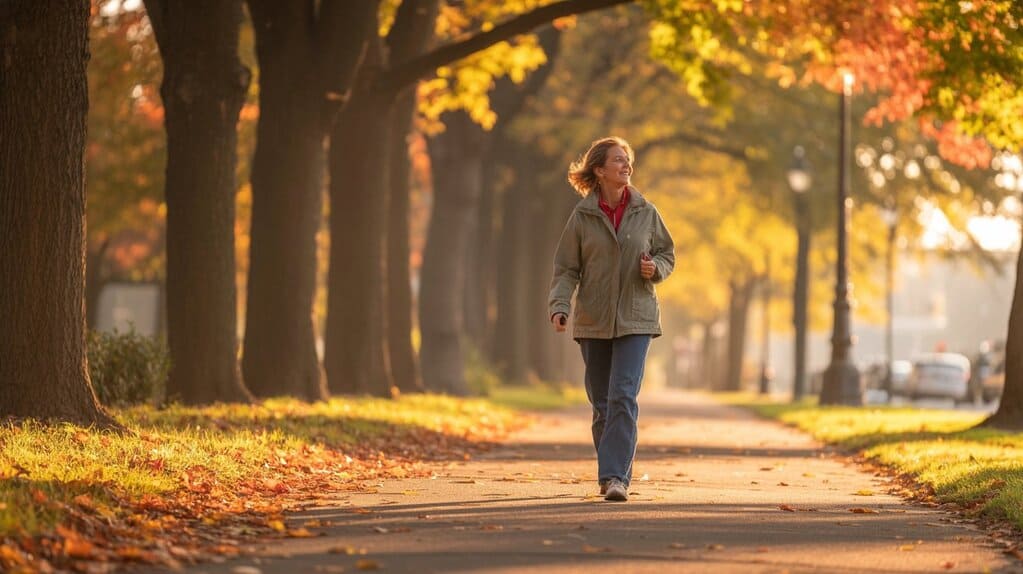
- Practical autumn plan: Aim for 20–40 minutes of brisk walking most days. Try interval walking (e.g., 3 minutes brisk / 3 minutes easy) to increase intensity without running. Recent reports highlight “interval walking” regimens developed and studied in Asia that boost fitness safely for older adults. The Guardian
2. High-Intensity Interval Training (HIIT) — scaled
- Why: HIIT produces rapid improvements in cardiovascular fitness and executive brain function even with short workouts; it can also raise energy and mood acutely. Recent meta-analyses and randomized trials show HIIT benefits for older adults’ cardiometabolic health when appropriately supervised. PMCNature
- Practical autumn plan: Two short HIIT sessions per week (e.g., 20–25 minutes including warm-up and cool-down). For beginners or older adults, use low-impact modalities (cycling, brisk walking intervals, or incline treadmill) and consult a clinician if you have health conditions.
3. Resistance training (strength)
- Why: Strength training preserves muscle mass, supports metabolic health, and combats age-related sarcopenia — a critical autumn/winter priority as people tend to reduce activity. Reviews and clinical studies indicate resistance programs increase strength and physical performance across populations. PMCThe Lancet
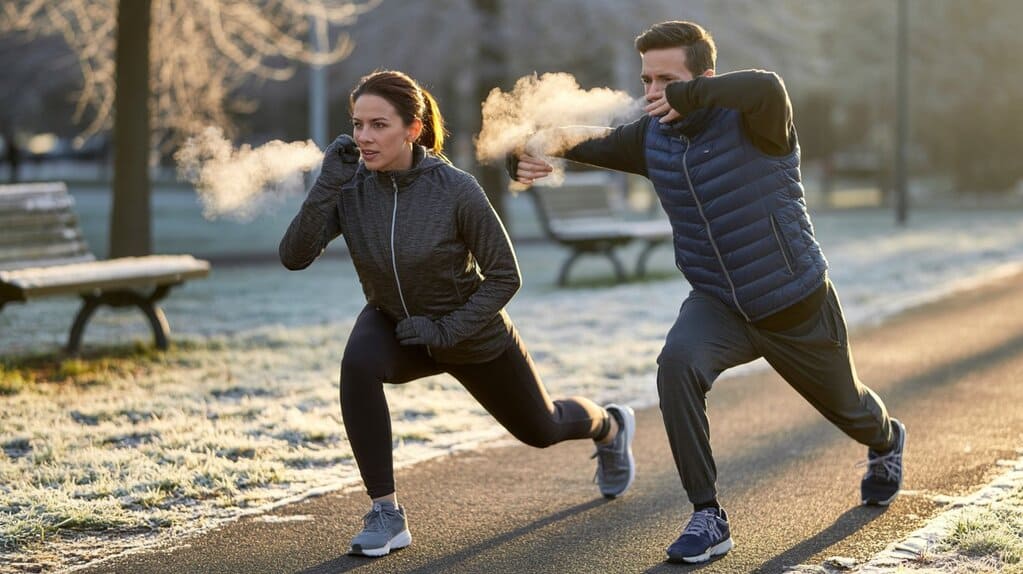
- Practical autumn plan: Two to three weekly sessions, focusing on compound movements (squats, lunges, push/pull patterns) with progressive overload. A combination of heavier loads for strength and moderate loads for endurance is effective.
4. Mobility, balance, and flexibility work
- Why: Cooler weather can stiffen joints; mobility and balance training reduces fall risk and supports functional independence. These sessions also aid recovery and improve the quality of movement for cardio and strength workouts. ScienceDirect
- Practical autumn plan: 10–15 minutes after each workout or on rest days including dynamic stretches, single-leg balance drills, and hip/shoulder mobility sequences.
5. Outdoor seasonal activities (cycling, hiking, gardening)
- Why: Seasonal sports combine physical activity with social and mental health benefits — exposure to nature enhances mood and can counteract seasonal affective symptoms. Structured outdoor activity increases daily step counts and overall activity volume. PMC+1
- Practical autumn plan: Plan one longer weekend hike or bike ride (45–90 minutes), and incorporate purposeful outdoor tasks like vigorous gardening as “active rest.”

Sample autumn weekly plan (balanced, scalable)
| Day | Focus | Session example |
|---|---|---|
| Monday | Strength | 40 min full-body resistance training (3 sets x 8–12 reps) |
| Tuesday | Walk + Mobility | 30 min brisk walk (intervals 3:3) + 10 min mobility |
| Wednesday | HIIT (short) | 20–25 min HIIT (6 × 1 min hard + 2 min easy) |
| Thursday | Active recovery | 40 min light cycling or gardening + balance work |
| Friday | Strength | 30–40 min lower/upper split strength session |
| Saturday | Long outdoor | 60–90 min hike or bike (moderate intensity) |
| Sunday | Rest + Mobility | Gentle yoga or stretching 20 min |
How exercise improves energy, mood, and immune resilience — what the science says
- Energy and fatigue: Systematic reviews show that exercise therapy reduces fatigue across a variety of conditions and in general populations when programs are tailored and supervised. Exercise improves mitochondrial efficiency and cardiovascular function, contributing to better daytime energy. PMC+1
- Mood and seasonal affective patterns: Physical activity is recommended as part of treatment plans for seasonal mood changes and Seasonal Affective Disorder (SAD). Exercise interacts with light therapy and sleep regulation to stabilize circadian rhythms and increase serotonin and endorphin activity. CNIBPMC
- Cardiometabolic and longevity benefits: Step-count studies and cohort research demonstrate a strong inverse association between daily physical activity and mortality risk — even modest increases in steps produce measurable benefits. JAMA NetworkPMC
- Muscle, function, and aging: Recent large-scale analyses and Lancet-affiliated research link structured activity and intensity-specific movement to reduced sarcopenia risk and better physical function in older adults — essential for autumn when activity often drops. The Lancetaginganddisease.org

Safety, adaptation, and clinical considerations
- Start where you are: If new to exercise, prioritize consistency over intensity. Even small bouts of movement (e.g., 10–15 minutes) daily accumulate meaningful benefits. PMC
- Supervision for clinical conditions: People with chronic diseases, significant obesity, or cancer-related fatigue should follow supervised, individualized programs — research supports improved fatigue outcomes with well-designed therapeutic exercise. MDPIScienceDirect
- Weather and daylight: In regions with shorter days, schedule outdoor activity in daylight hours when possible; combine exercise with bright-light exposure for mood benefits. CNIB
Key points
- Consistency beats intensity in the long term: small daily movement is powerful. PMC
- Combine modalities — brisk walking, strength, and mobility provide the broadest benefits. PMC+1
- Autumn is ideal for re-establishing outdoor routines that support mood and vitamin D exposure. PMC
- Older adults benefit from interval walking and supervised HIIT variants that increase aerobic capacity safely. The GuardianPMC
Conclusion
Autumn offers a seasonal inflection point: a chance to build resilient, energy-enhancing habits before winter’s shorter days. The science is clear — from step-count epidemiology to randomized trials of HIIT and resistance training — that combining daily movement, strength-building, and short higher-intensity sessions produces measurable gains in energy, mood, cardiometabolic health, and functional longevity. Start with reachable goals (consistent steps and two strength sessions per week), layer in interval training for time-efficient gains, and prioritize mobility and outdoor time to protect mood and circadian rhythm. For people with chronic conditions, follow structured programs under professional guidance — the evidence shows tailored exercise reduces fatigue and improves quality of life. Make this autumn the season you re-energize: move daily, lift often, enjoy nature, and sleep well.
Selected references and further reading
- Paluch, A. E., et al. Steps per Day and All-Cause Mortality in Middle-aged Adults. JAMA Network Open (2021). JAMA Network
- Drew, E. M., et al. Seasonal affective disorder and engagement in physical activity: systematic insights. PMC review (2021). PMC
- Sánchez-Sánchez, J. L., et al. Association between physical behaviours and sarcopenia. Lancet Healthy Longevity (2024). The Lancet
- Sert, H., et al. Meta-analysis: HIIT interventions in older adults (2025). PMC
- Cheng, F., et al. Effect of resistance training on patients with secondary conditions (2024). PMC
- StatPearls: Seasonal Affective Disorder — clinical guidance on lifestyle and exercise. (2024). CNIB
- Oliveira, A., et al. Effects of HIIT vs. moderate continuous training — meta-analysis (2024). ScienceDirect