نمط lbb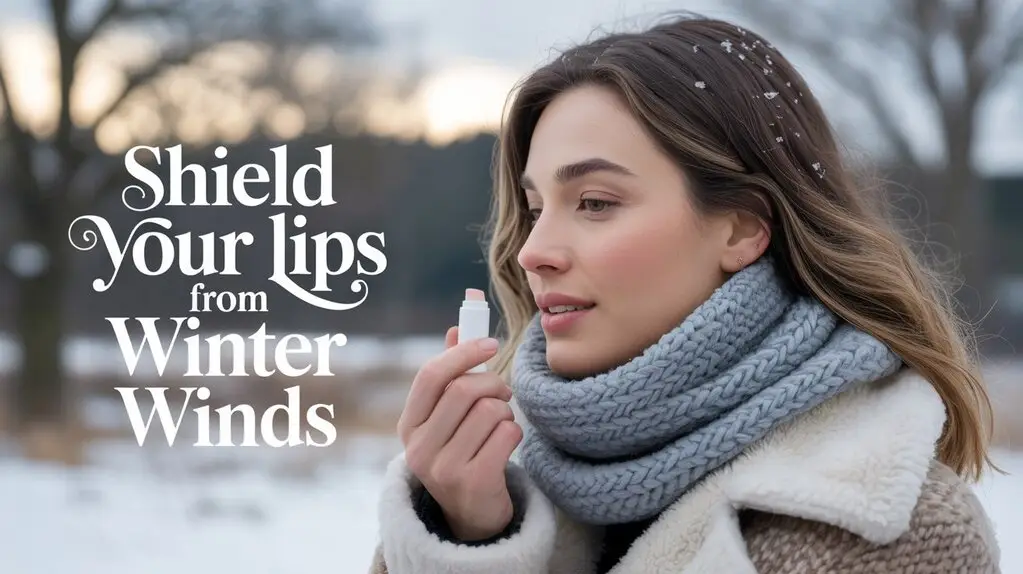
Introduction
Cold, dry air and wind make chapped lips one of the most common and uncomfortable seasonal complaints. The skin on the lips is thinner than the rest of the face, lacks sebaceous glands, and loses moisture rapidly — factors that leave it vulnerable to dryness, fissures, and inflammation. This guide explains why lips chap in autumn and winter, reviews evidence-based prevention and treatment strategies, and gives a practical, SEO-friendly plan you can follow. Throughout the text I highlight important keywords and cite recent scientific and clinical sources from Asia, North America, and Europe to support the recommendations. Nature+2PubMed+2
Key points
- Lips are structurally fragile (very thin stratum corneum) and lose water faster than facial skin, increasing risk of chapping. Nature
- The most effective barrier products are occlusives (e.g., petrolatum/petroleum jelly) which reduce transepidermal water loss (TEWL). PubMed+1
- Avoid irritating ingredients like strong fragrances, menthol, and some flavorings that can worsen cheilitis. Health
- Use SPF lip products outdoors year-round to prevent actinic (sun-related) damage. Académie Américaine de Dermatologie
- If chapping persists, see a clinician — chronic cheilitis may reflect allergy, infection, or systemic disease. CENIB
Why lips chap in autumn and winter (science and causes)
- Environmental dehydration. Cold air holds less moisture; indoor heating lowers humidity further. Together these increase evaporative water loss from the skin surface, including the lips.
- Anatomy of the lip. The vermilion border has a very thin epidermis, no underlying sebaceous glands, and fewer stratum corneum layers — so the barrier is weaker and TEWL is higher compared with facial skin. Clinical analyses of cheilitis document this higher TEWL and the vulnerability of the lip tissue. Nature
- Behavioral factors. Lip licking and picking, using irritating cosmetics, or repeated mouth breathing worsen dryness and can cause eczematous or angular cheilitis. PMC+1
- Sun exposure and actinic damage. UV radiation can cause a form of chronic lip damage (actinic cheilitis) even in winter sun; use of lip SPF is advised. Académie Américaine de Dermatologie+1
Evidence-based prevention and treatment (practical steps)
Below are the main, research-supported strategies for protecting lips in colder months.
1. Use an occlusive barrier — petrolatum remains the gold standard
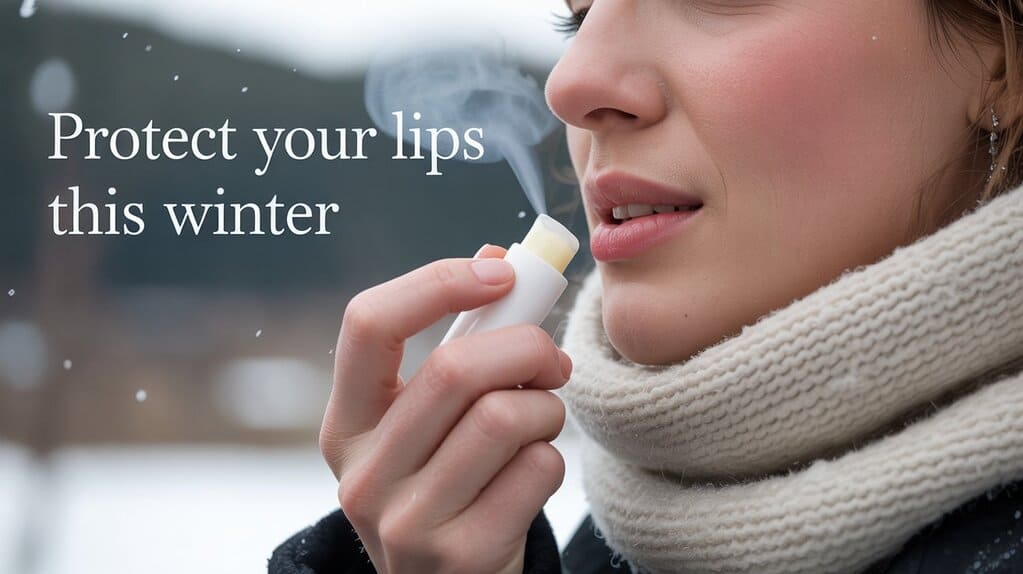
Occlusives physically block water loss. Multiple clinical reviews and randomized comparisons show petrolatum (petroleum jelly) to be highly effective at reducing TEWL, soothing cracked lips, and promoting healing; it is safe, inexpensive, and widely recommended by dermatologists. Use a rich, fragrance-free ointment at bedtime and as needed during the day. PubMed+1
2. Layer humectants and emollients under occlusives
Humectants (e.g., glycerin, hyaluronic acid, sorbitol) attract moisture; emollients (e.g., shea butter, plant oils) soften. A good practice is to apply a thin humectant-containing balm and then seal it with an occlusive. Clinical studies of occlusive formulations show that occlusivity is a key driver of improvement in lip roughness. ResearchGate
3. Choose products with beneficial active ingredients — and avoid irritants
Look for:
- Petrolatum / petroleum jelly (occlusive). PubMed
- Ceramides and skin-related lipids (support barrier restoration). PubMed
- Humectants: glycerin, hyaluronic acid.
- SPF (titanium dioxide or zinc oxide) for daytime protection. Académie Américaine de Dermatologie
Avoid:
- Fragrances, strong flavors (cinnamon, menthol), and some preservatives that can trigger allergic or irritant cheilitis. Health
4. Behavioral and lifestyle measures
- Stop lip-licking and picking. Licking briefly increases moisture but then accelerates evaporation; saliva enzymes can irritate. Behavioral interventions and habit-reversal techniques help. PMC
- Humidify indoor air. A humidifier (especially at night) keeps relative humidity higher and reduces TEWL.
- Hydrate and maintain general skin care. Drinking adequate fluids and using gentle face moisturizers that can be extended onto the lip border help.
- Nutrition and supplements. Severe, persistent cheilitis sometimes links to vitamin B deficiencies (B2/riboflavin) or iron deficiency; check with a clinician before supplementing. CENIB
5. Gentle exfoliation only when necessary
If lips show loose, flaky skin, gentle mechanical exfoliation (soft toothbrush or sugar scrub) can remove scales — but only after softening with an occlusive and never on inflamed, bleeding lips. Over-exfoliation perpetuates damage.
6. When to see a clinician
Seek professional care if:
- Cracks are deep, painful, or bleeding.
- Symptoms persist despite routine care.
- There are recurrent ulcers, pus, or signs of infection.
- Lesions are localized to the corners of the mouth (angular cheilitis) or show unusual coloring — these may need topical antifungal, antibacterial, or patch testing for allergens. Clinical reviews summarize diagnostic and treatment options for chronic cheilitis. CENIB+1
Quick reference tables
Table 1 — Ingredients: Recommended vs. Avoid
| Recommended (use) | Why | Avoid (do not use) | Why not |
|---|---|---|---|
| Petrolatum (petroleum jelly) | Powerful occlusive, reduces TEWL. PubMed | Menthol, cinnamon, strong flavors | Can irritate or sensitize lips. Health |
| Ceramides / skin lipids | Help restore barrier. PubMed | Fragrance / perfume | Common allergen/irritant. |
| Glycerin / hyaluronic acid | Humectants that attract water | Camphor / phenol | Can be drying/irritating for sensitive lips |
| Zinc oxide / titanium dioxide (SPF) | Physical sun protection; safe for lips. Académie Américaine de Dermatologie | Agent with unknown ingredients | Risk of allergy or sensitization |
Table 2 — Quick Lip Care Checklist (Daily)
| Morning | Midday | Evening |
|---|---|---|
| Apply SPF lip balm before going outdoors. Académie Américaine de Dermatologie | Reapply lip balm after eating/drinking | Apply a thick petrolatum ointment before bed. PubMed |
| Drink water | Use sugar scrub only when flaky (softened first) | Use humidifier overnight |
| Avoid licking lips | Avoid irritant cosmetics | Seek care if not improving |
Recent clinical and scientific support (representative studies)
- Wang et al., analysis of lip TEWL and clinical presentations of chronic cheilitis (2022) — documents the lip’s barrier properties and clinical patterns. Nature
- Kamrani et al., comprehensive review of petrolatum (2024) — summarizes petrolatum’s effectiveness and safety as an occlusive moisturizer. PubMed
- American Academy of Dermatology (patient guidance) — recommends SPF lip protection and frequent application of non-irritating balms; provides expert practical tips. Académie Américaine de Dermatologie
- Practical interventions in lip-licking dermatitis (2020) — highlights behavioral measures and simple emollient therapy. PMC
- Reviews and clinical articles on cheilitis and actinic cheilitis discuss diagnosis and when to escalate to specialist care. CENIB+1
Conclusion
Protecting your lips from chapping during autumn and winter is straightforward when you understand the underlying causes and use evidence-based measures. Combine a reliable occlusive (petrolatum) with humectants and ceramides, avoid irritants, practice healthy habits (no lip-licking), use SPF outdoors, and humidify your indoor environment. These steps are supported by clinical reviews and dermatology guidance from Asia, America, and Europe. If lips remain persistently dry, fissured, infected, or painful despite good home care, consult a dermatologist — chronic cheilitis can require targeted therapy or further testing. PubMed+2Nature+2
Bibliography & selected references
- Wang Y, et al. Analysis of clinical presentations, lip transepidermal water loss, and chronic cheilitis. Sci Rep. 2022. Nature
- Kamrani P. Petroleum jelly: A comprehensive review of its history, uses and safety. 2024. PubMed. PubMed
- American Academy of Dermatology Association. 7 dermatologists’ tips for healing dry, chapped lips. AAD patient guidance. Académie Américaine de Dermatologie
- Fonseca A, et al. Practical interventions in lip-licking dermatitis. BMJ Open or similar (PMC). 2020. PMC
- StatPearls. Cheilitis. NCBI Bookshelf. 2023. (Clinical review of types, causes, and management.) CENIB
- Malave GS. Petrolatum is effective as a moisturizer… Clinical Tox or review summary. 2022. cdn.mdedge.com
- Wikipedia. Cheilitis (Chapped lips). (Background and definitions.) Wikipédia
- Al-Fartwsi M, et al. Actinic cheilitis: systematic review. 2025. (Recent review about sun-related lip damage.) MDPI