lbb style
Introduction
Healthy nutrition is the cornerstone of long-lasting vitality, mental clarity, and disease prevention. What we eat daily supplies the macronutrients and micronutrients our bodies and brains require to function, repair, and adapt. A diet built around whole foods, adequate hydration, and balanced macronutrient proportions supports energy, immunity, and mood — while poor dietary patterns raise the risk of chronic illness and cognitive decline. Public health guidance and recent clinical research consistently show that dietary patterns (not single “superfoods”) drive the greatest gains in physical and mental health. Organisation mondiale de la santé+1

Body
1. What is a Balanced, Healthy Diet?
A balanced diet supplies appropriate amounts of carbohydrates, proteins, healthy fats, vitamins, minerals, fiber, and water in the context of an individual’s age, sex, activity level, and medical needs. International guidelines recommend limiting saturated and trans fats, reducing excess added sugar, and favoring unprocessed plant foods and lean protein — principles shown to lower chronic disease risk across populations. Organisation mondiale de la santé
Key principles (bolded keywords): whole foods, balanced diet, lean protein, healthy fats, fiber, hydration, micronutrients, portion control.
2. Diet Patterns Proven to Benefit Heart, Brain, and Immune Health
Large randomized trials and long-term cohort studies show that dietary patterns — such as the Mediterranean diet — reduce cardiovascular events and support metabolic health. The PREDIMED trial (Spain) demonstrated fewer major cardiovascular events in adults assigned to a Mediterranean eating pattern enriched with extra-virgin olive oil or nuts compared with a low-fat control. This finding supports recommending dietary patterns rich in monounsaturated fats, whole grains, fruits, vegetables, and legumes for cardiovascular prevention. PubMed+1
At the same time, mounting evidence links dietary patterns to brain health: diets high in omega-3s, antioxidants, fiber, and low in ultra-processed foods are associated with lower rates of cognitive decline and better mood regulation in population studies. Recent genomic and mendelian-randomization research also supports a causal role for certain nutrients (for example, omega-3 fatty acids) in mood regulation and depression risk. Nature
Practical takeaway : prioritize a Mediterranean-style, plant-forward pattern — vegetables, fruits, legumes, whole grains, nuts, fish, and healthy oils — for heart and brain benefits.

3. Nutrients with Strong Evidence for Mental and Immune Support
Omega-3 Fatty Acids (EPA & DHA)
Long-chain omega-3s are structural components of neuronal membranes and influence inflammation and neurotransmitter signaling. Meta-analyses and recent genetic studies indicate omega-3s (particularly EPA) can reduce depressive symptoms and may be protective against mood disorders when integrated into broader dietary patterns. Consider eating fatty fish (salmon, mackerel) 2–3 times per week or using clinically validated supplements when dietary intake is insufficient. PubMed+1
Magnesium
Magnesium supports neuromuscular function and helps regulate the stress response. Systematic reviews and recent randomized trials indicate that supplemental magnesium can reduce symptoms of mild anxiety and depressive symptoms in people with low baseline magnesium status. Food sources include leafy greens, nuts, seeds, legumes, and whole grains. PMC
Probiotics & the Gut–Brain Axis
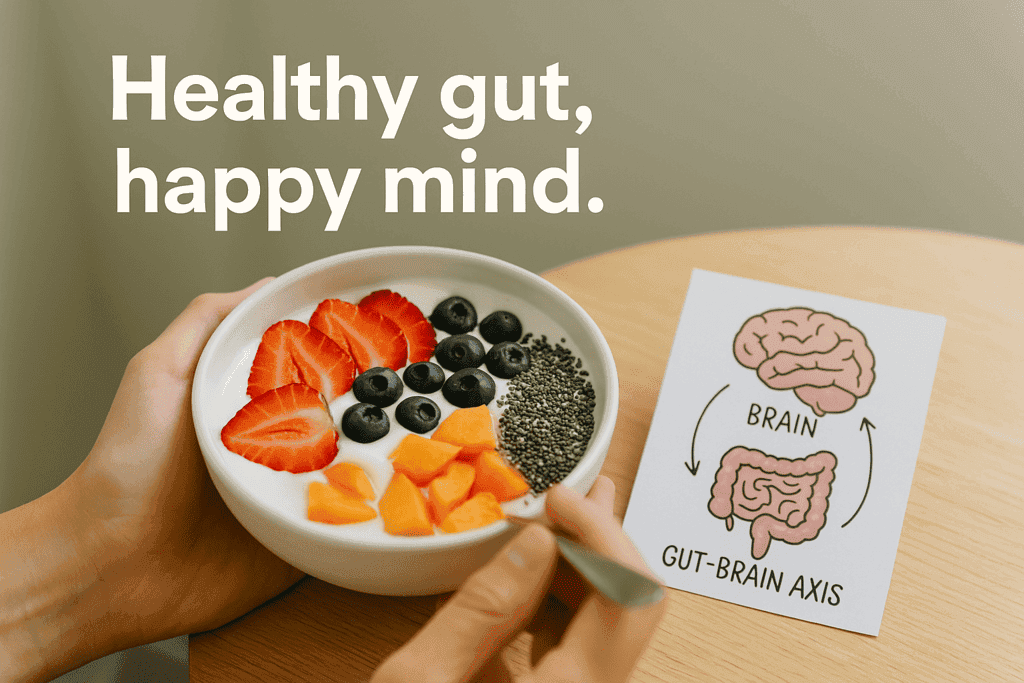
The microbiota–gut–brain axis is a rapidly evolving field showing bidirectional communication between gut microbes and the central nervous system. Clinical trials and mechanistic reviews suggest probiotic and fermented foods may improve mood, reduce stress, and modulate cognitive outcomes — likely via immune, endocrine, and neural signaling pathways. Including yogurt, kefir, kimchi, and other fermented items can help support gut microbial diversity. Nature+1
Vitamins, Minerals & Antioxidants
Micronutrients such as vitamin C, vitamin D, zinc, B-vitamins, and antioxidants (flavonoids, carotenoids) are essential for immune function and cellular resilience. Deficiencies impair immune responses and cognition; balanced intake through diverse whole foods is preferred over mega-dosing isolated supplements unless clinically indicated. PMC
4. Hydration and Cognitive Performance
Even mild dehydration can impair attention, memory, and physical performance. Longitudinal studies show that maintaining adequate hydration is associated with better cognitive preservation in older adults. Aim for regular fluid intake from plain water, herbal teas, and water-rich foods while adjusting for climate and activity. PMC+1
5. Practical Meal Structure & Daily Examples
A simple, evidence-based plate model improves dietary adherence and nutrient balance:
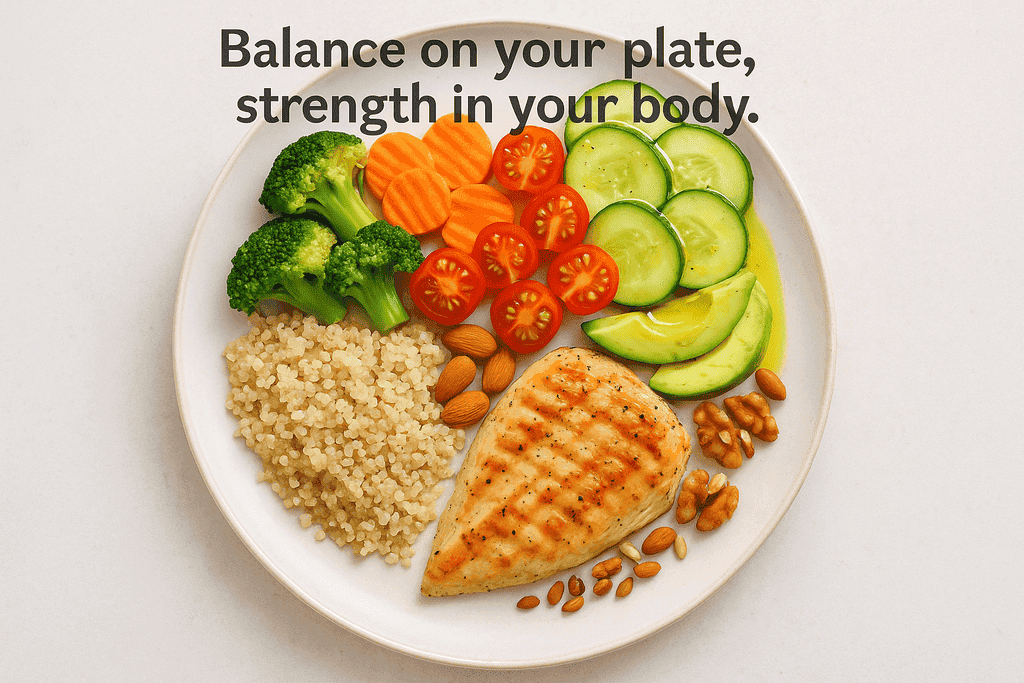
- Half the plate — Vegetables & fruits (fiber, vitamins, antioxidants)
- Quarter — Lean protein (fish, poultry, legumes)
- Quarter — Whole grains / starchy vegetables (energy, fiber)
- Add small portions of healthy fats (olive oil, nuts, avocado) and a serving of fermented food daily when possible.
- Hydration: aim for 2–3 liters/day depending on activity and climate.
Sample day: breakfast: oatmeal, berries, walnuts; lunch: grilled salmon, quinoa, mixed salad; snack: yogurt with fruit; dinner: lentil stew with spinach and whole-grain bread.
6. Foods and Behaviors to Limit or Avoid
- Ultra-processed foods high in added sugar, sodium, and industrial trans-fats — linked to inflammation and poorer mental and physical outcomes.
- Excessive alcohol — impairs immune function and cognitive health.
- High sugar and refined carbohydrates — increase blood-glucose variability and may worsen mood swings and cardiometabolic risk.
7. Implementing Changes : Practical Tips for Individuals and Families
- Meal planning and batch cooking reduce reliance on processed convenience foods.
- Read labels — look for low added sugars and minimal ingredients.
- Focus on variety — rotate different vegetables, whole grains, and protein sources to cover micronutrient needs.
- Mindful eating — prioritize mealtimes without screens to support digestion and satiety cues.
- Policy & systems: adoption of dietary patterns at population level (school meals, food labeling) amplifies individual benefits; recent policy updates (e.g., evolving “healthy” label definitions) reflect this shift. Verywell Health
Table — Key Nutrients, Food Sources & Benefits
| Nutrient | Top Food Sources | Primary Health Benefit |
|---|---|---|
| Omega-3 (EPA/DHA) | Fatty fish, flaxseed, walnuts | Brain structure, mood regulation, anti-inflammatory |
| Magnesium | Leafy greens, nuts, legumes | Stress reduction, neuromuscular function |
| Probiotics | Yogurt, kefir, kimchi | Gut-brain signaling, immune modulation |
| Vitamin C | Citrus fruit, bell peppers | Immune cell function, antioxidant |
| Fiber | Whole grains, legumes, vegetables | Gut health, glycemic control, satiety |
Conclusion
Healthy nutrition is not a short-term diet but a lifelong strategy for resilience — physical, cognitive, and emotional. Modern evidence from randomized trials, systematic reviews, and mechanistic research (across Asia, Europe, and the Americas) converges on a clear message: dietary patterns emphasizing whole, minimally processed foods, adequate hydration, healthy fats, micronutrient-rich produce, and fermented foods yield the most consistent benefits for heart, immune, and brain health. Implementing these patterns through meal planning, policy support, and simple plate models makes high-quality nutrition accessible and sustainable for most people.
Key Points
- Prioritize whole foods, plant-forward meals, and healthy fats.
- Eat fatty fish regularly for omega-3 benefits; include magnesium-rich foods.
- Support gut health with probiotics and dietary fiber.
- Maintain hydration for cognitive performance.
- Limit ultra-processed foods, added sugars, and excessive alcohol.
References & Further Reading
- World Health Organization. Healthy diet — fact sheet. 2020. Organisation mondiale de la santé
- Estruch R., PREDIMED investigators. Primary Prevention of Cardiovascular Disease with a Mediterranean Diet. NEJM / PREDIMED (2018 follow-up). New England Journal of Medicine+1
- Carnegie R. et al. Omega-3 fatty acids and major depression: Mendelian randomization study. Nature Translational Psychiatry (2024). Nature
- Rawji A. et al. Supplemental magnesium and anxiety/insomnia: Systematic review & trials. PMC (2024). PMC
- Loh JS., Microbiota–gut–brain axis and therapeutic applications: Review. Nature (2024). Nature
- Munteanu C., The relationship between nutrition and the immune system. Nutrients / PMC (2022). PMC
- U.S. Dietary Guidelines & related updates (2020–2025; 2025 guidance pages). Directives Alimentaires+1
- Harvard Health Publishing. The gut-brain connection; probiotics & mood. (2023). Harvard Health+1