نمط lbb
Cold weather can take a toll on your complexion. Dry air, low humidity, indoor heating, and brisk winds can all contribute to dehydrated, dull, and tired-looking skin. While professional skincare products can help, many people also turn to natural face masks as nourishing and affordable options. This article explores how to revitalize tired skin in winter using natural beauty remedies rooted in traditional skincare knowledge and general expert opinions.
Note : This article offers general guidance and should not replace professional medical advice. Always perform a patch test before trying a new skincare mask, especially if you have sensitive skin.
Why Cold Weather Affects Your Skin
During the colder months, the skin’s protective barrier can become compromised. This leads to:
- Reduced moisture retention
- Increased dryness or flakiness
- Dull and fatigued complexion
- Tightness or discomfort
Experts in dermatology and beauty consistently emphasize that maintaining adequate hydration, nutrient-rich skincare, and protective routines is key to supporting overall skin health in cold climates (source: general dermatological consensus).
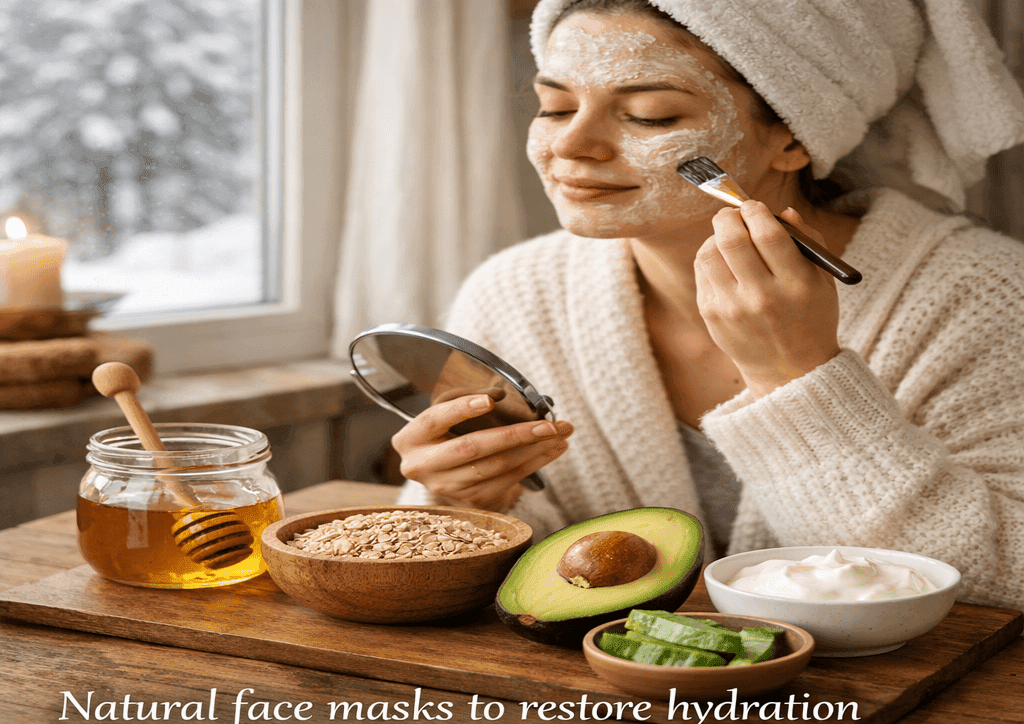
How Natural Face Masks Can Help
Natural face masks can provide:
- Moisture replenishment
- Antioxidant support
- Nutrient-rich nourishment
- Gentle exfoliation without harsh chemicals
They rely on ingredients that are rich in vitamins, minerals, and hydration-promoting compounds. Many of these ingredients have been traditionally used in holistic beauty care.
Best Natural Ingredients for Tired Winter Skin
Here’s a quick overview of common natural skincare ingredients and how they can support your skin in cold temperatures :
Table 1 : Natural Ingredients and Their Benefits
| Ingredient | General Benefits for Skin |
|---|---|
| Honey | Humectant (retains moisture), antibacterial, soothing |
| Oatmeal | Calming, exfoliating, anti-inflammatory |
| Aloe Vera | Soothing, hydrating, cooling |
| Avocado | Rich in healthy fats and vitamins A & E, deeply moisturizing |
| Yogurt | Contains lactic acid for mild exfoliation; hydrating |
| Banana | Rich in potassium and antioxidants; softens and conditions |
| Coconut Oil | Moisturizing, emollient, supports lipid barrier |
| Turmeric | Antioxidant-rich; can brighten dull skin |
| Green Tea | Antioxidants and anti-inflammatory properties |
| Rose Water | Soothing and toning; helps calm redness |
Top Effective Natural Face Masks for Tired Skin
Below are several popular and easy-to-make natural masks tailored to combat dull, tired skin in cold weather. You can prepare them with common kitchen or grocery ingredients.
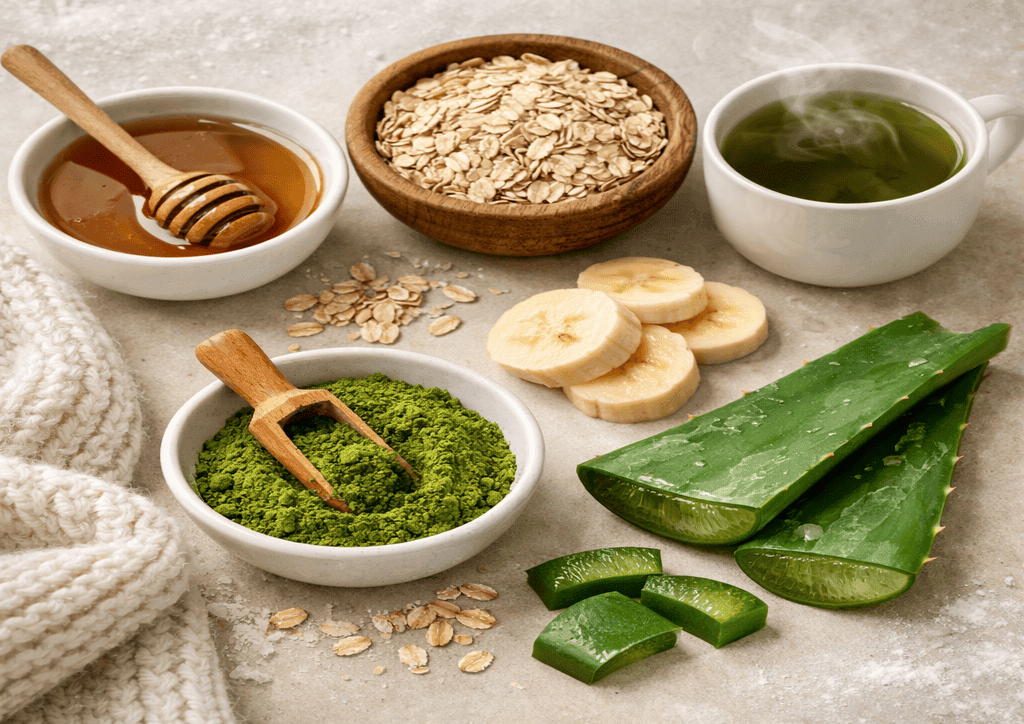
1. Honey + Oatmeal Hydration Mask
This mask is ideal for dry and irritated skin.
Ingredients
- 2 tablespoons oatmeal
- 1 tablespoon honey
- 2–3 tablespoons warm water
Instructions
- Blend the oatmeal into a fine powder.
- Mix with honey and warm water to form a paste.
- Apply evenly to the face and leave on for 15–20 minutes.
- Rinse with lukewarm water.
Benefits : The oatmeal gently exfoliates while honey locks in moisture. This mask supports skin hydration—especially helpful when the skin feels tight or flaky.
2. Avocado + Yogurt Nourishing Mask
Perfect for skin that needs both moisture and nutrients.
Ingredients
- ½ ripe avocado
- 2 tablespoons plain yogurt
Instructions
- Mash the avocado until smooth.
- Stir in the yogurt until a creamy consistency forms.
- Apply to the face and relax for 15 minutes.
- Rinse with cool water.
Benefits : Avocado is rich in essential fatty acids that support the skin’s lipid barrier. Yogurt adds hydration and mild exfoliation.
3. Aloe Vera + Green Tea Soothing Mask
Great for calming redness and refreshing tired skin.
Ingredients
- 2 tablespoons aloe vera gel
- 1 tablespoon cooled green tea
Instructions
- Mix aloe gel and green tea in a bowl.
- Apply to the face and leave on for 10–15 minutes.
- Rinse with fresh water.
Benefits : Aloe soothes dry, irritated skin while antioxidants from green tea help support overall skin health.
4. Banana + Honey Rejuvenating Mask
Ideal for dull, lackluster skin.
Ingredients
- ½ ripe banana
- 1 tablespoon honey
Instructions
- Mash the banana and blend with honey.
- Apply evenly and rest for 10–15 minutes.
- Rinse thoroughly.
Benefits : Bananas provide potassium and antioxidants, which can help soften the skin and give a fresh, radiant look.
Tips for Applying Natural Face Masks
To get the most benefit from your natural face masks, follow these tips:
- Always cleanse your skin first. Remove makeup and dust before applying a mask.
- Use fresh, organic ingredients when possible to reduce irritation.
- Do a patch test on the inner wrist or behind the ear to check for sensitivity.
- Apply masks 2–3 times per week based on your skin type.
- Follow with a moisturizer to lock in hydration.
Common Questions About Natural Face Masks
Q1: Can natural masks replace regular skincare products?
Answer : Natural masks can complement your skincare routine but are not a substitute for essential daily products like a gentle cleanser and moisturizer. They are most effective when used alongside a consistent skincare regimen.
Q2 : How long should I leave a natural mask on my face?
Answer: Most natural masks are effective between 10–20 minutes. Leaving them on longer may dry out the skin instead of providing hydration.
Q3 : Can I use these masks every day?
Answer : Use natural masks 2–3 times per week for best results. Overuse can sometimes lead to irritation, especially if your skin is sensitive.
Q4 : Are these masks safe for all skin types?
Answer : Natural ingredients are generally gentle, but people with allergies or very sensitive skin should perform a patch test first. If irritation occurs, discontinue use.
Q5 : Should I moisturize after using a mask?
Answer : Yes. Applying a moisturizer after rinsing your mask can help seal in moisture and enhance overall skin softness and resilience.
Building a Cold Weather Skin Care Routine
In addition to face masks, consider including the following healthy habits:
- Drink plenty of water to support internal hydration
- Use a gentle, fragrance-free cleanser
- Apply a rich, nourishing moisturizer
- Wear SPF, even in winter, to protect from UV exposure
- Use a humidifier indoors to maintain ambient moisture
These practices complement natural masks and help maintain a glowing and healthy complexion during cold weather.
Safety and Health Disclaimer
This article provides general information on natural skincare practices. It does not constitute medical advice. Consult a qualified dermatologist or medical professional before starting any new skincare regimen, especially if you have pre-existing skin conditions such as eczema, rosacea, or severe dryness.
Bibliography
Below are general references consulted for understanding natural skincare practices and cold weather effects on skin health:
- American Academy of Dermatology – Winter Skin Tips
- National Center for Complementary and Integrative Health – Herbs at a Glance
- General dermatology resources on skin barrier function and hydration
Cold weather doesn’t have to leave your skin looking tired and dull. With the help of natural face masks and mindful care, you can support your skin’s health and radiance throughout the winter months. By combining nutrient-rich ingredients and good daily skincare habits, you can help your skin feel calm, moisturized, and refreshed all season long.