 Bbihi L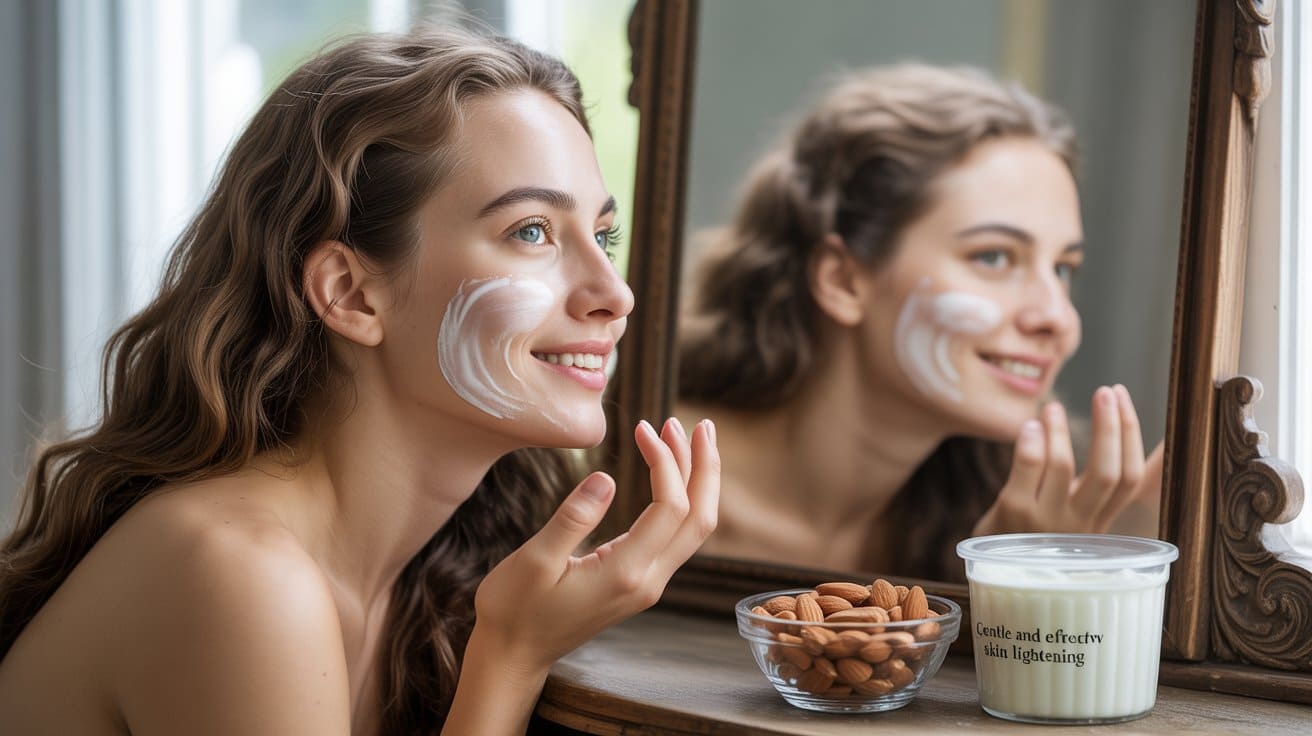
Introduction
Many people search for natural ways to brighten and even out their skin tone without resorting to harsh chemicals or invasive procedures. Two kitchen staples—almonds and yogurt—have long been used in traditional beauty recipes and are now supported by modern science for several skin benefits. Almonds supply nourishing vitamins and fatty acids that help skin texture and resilience, while yogurt supplies lactic acid and probiotics that gently exfoliate, hydrate, and support the skin’s microbiome. This article gives you an evidence-informed, SEO-friendly guide to using almonds and yogurt for gentle skin lightening: why it can work, how to prepare and apply masks safely, supporting clinical research, and precautions to keep your routine effective and safe.
Primary SEO keywords (used throughout): almond face mask, yogurt face mask, natural skin lightening, DIY brightening mask, lactic acid for skin, vitamin E benefits, home remedies for pigmentation.
Key points
- Almonds contain vitamin E and healthy fats that can support skin hydration and may help improve appearance of fine lines and tone when consumed or applied appropriately. PMCalmonds.com
- Yogurt delivers lactic acid, a mild alpha-hydroxy acid (AHA) that encourages gentle exfoliation and brighter skin; fermented dairy may also support skin via probiotic effects. PMC+1
- A simple almond + yogurt mask used consistently (with sun protection) can soften texture and reduce dullness; results are gradual and safest for most skin types. (Patch test first.) Healthline
- Avoid overuse: AHAs combined with strong sun exposure can increase photosensitivity; always use SPF. PMC
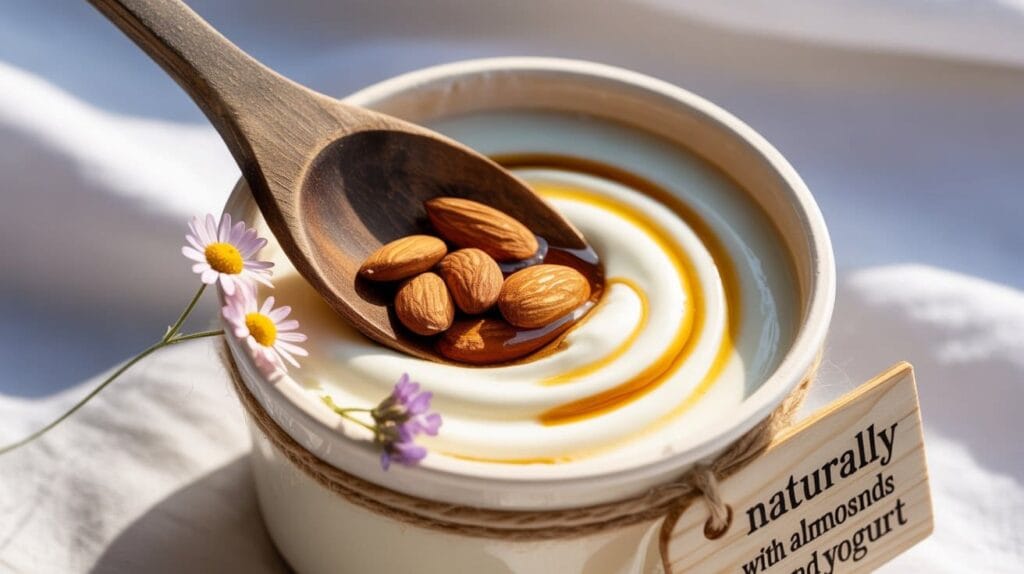
Why almonds and yogurt work together
Almonds: Vitamin E, fatty acids, and gentle physical exfoliation
Almonds (especially when ground into a fine paste or oil) are a source of alpha-tocopherol (vitamin E) and monounsaturated fats that help reinforce the skin’s lipid layer and support hydration. Ingested almonds have also been studied for skin appearance—one randomized pilot study reported reduced wrinkle severity in women consuming daily almonds, suggesting systemic nutritional benefits to skin quality. PMCWiley Online Library
Topical almond preparations (powder, paste, or oil) are often used for gentle mechanical exfoliation and as emollients: they remove dead cells and leave the skin feeling softer. Because almond particles can be gritty, choosing a very fine grind (or using almond oil) is recommended for delicate facial skin.
Yogurt : Lactic acid, probiotics, and gentle chemical exfoliation
Plain yogurt contains lactic acid, a naturally occurring AHA that loosens the bonds between dead skin cells and encourages cellular turnover. Clinical and review literature supports lactic acid’s role in increasing epidermal renewal, improving texture, and enhancing skin brightness when used at appropriate concentrations. Fermented dairy products containing beneficial strains have also been associated with positive skin outcomes when used topically or consumed, likely via anti-inflammatory and microbiome-modulating effects. PubMedPMC
When mixed together, almond (for gentle buffing and nourishment) and yogurt (for chemical exfoliation and hydration) create a complementary mask that addresses both dead-cell buildup and skin nutrition.
Evidence and recent studies (select highlights)
- Almond ingestion and skin appearance: A randomized clinical pilot study (Foolad et al., 2019) found that daily almond consumption over several weeks was associated with measurable improvement in wrinkle severity in post-menopausal women; researchers suggest vitamin E, fatty acids, and antioxidant effects as plausible mechanisms. PMCWiley Online Library
- Lactic acid dermatologic effects: Classic and more recent studies document lactic acid’s epidermal and dermal effects—promoting exfoliation, increasing epidermal thickness, and improving smoothness—when used at controlled concentrations. Lactic acid is often better tolerated than stronger AHAs and has hydrating properties as a humectant. PubMedPMC
- Fermented dairy and skin health: Trials of specific probiotic strains and fermented milk products indicate potential systemic benefits (reduced inflammation, improved skin parameters) when consumed; topical application of fermented products (including yogurt) may also exert beneficial effects via probiotic metabolites and lactic acid. PMC
Note: While these studies support the biological plausibility of almond and yogurt benefits, they do not claim overnight “whitening.” Expect gradual improvements in tone, texture, and radiance with consistent, safe use.
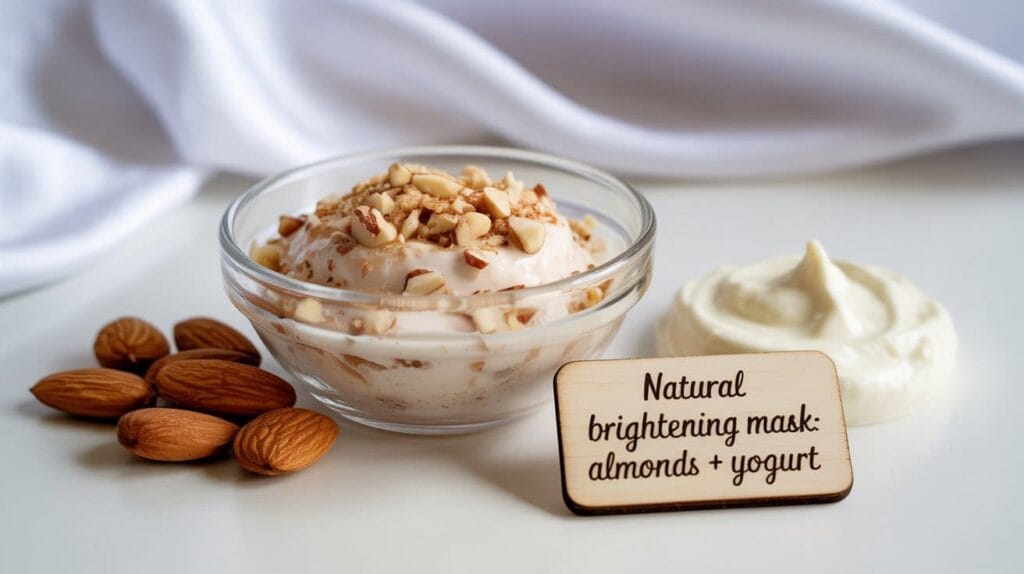
How to prepare and use an Almond + Yogurt Brightening Mask
Ingredients (simple, kitchen-friendly)
- 6–8 raw almonds (soaked overnight) or 1 teaspoon sweet almond oil
- 2 tablespoons plain, unsweetened yogurt (full-fat for extra nourishment)
- Optional: ½ teaspoon honey (for extra hydration) or a pinch of turmeric for anti-inflammatory effect (use cautiously — turmeric can stain)
Method
- Soak almonds overnight (if using whole). Peel and grind to a very fine paste with a small amount of water, or use a blender. If you prefer no grit, substitute 1 tsp almond oil.
- Mix the almond paste (or oil) with 2 tbsp plain yogurt until smooth. Add honey if desired.
- Apply a thin, even layer to clean skin—avoid the eye area.
- Leave on 10–15 minutes (shorter time for sensitive skin).
- Rinse gently with lukewarm water while massaging in circular motions to aid exfoliation. Pat dry and follow with moisturizer and sunscreen (AM) or nourishing night cream (PM).
- Frequency: start 1–2 times weekly; increase to 3 times weekly if tolerated.
Quick table : Mask frequency and benefits
| Frequency | Benefit | Who should use |
|---|---|---|
| 1× week | Mild exfoliation, hydration | Very sensitive skin |
| 2–3× week | Improved tone and texture | Normal/combination skin |
| <1× week or oil only | Nourishment without exfoliation | Very dry skin (use almond oil) |
(Always patch test a small area for 24–48 hours.)
Safety, precautions, and best practices
- Patch test first. Apply a small amount on the inside wrist or behind the ear and check for irritation after 24–48 hours.
- Nut allergy warning. If you are allergic to tree nuts, do not use almonds topically or ingest them. Almond oil and paste can trigger reactions in sensitive individuals. Verywell Health
- Sun protection essential. Because lactic acid increases cell turnover, treated skin may be more sun-sensitive—always apply a broad-spectrum SPF 30+ during the day. PMC
- Don’t over-exfoliate. Combining multiple exfoliants or scrubbing vigorously can damage the skin barrier and cause rebound darkening, especially in darker phototypes.
- Staining risk with turmeric. If you add turmeric, use very small amounts and rinse promptly to avoid yellow stains.
How results typically appear (timeline)
- Week 2–4: Noticeably softer, smoother skin; reduced dullness.
- 6–12 weeks: Gradual improvement in overall tone and reduced appearance of superficial dark spots with consistent use and sun protection.
- Long term: Maintain with balanced diet (including almonds for systemic nutrients), hydration, protective sunscreen, and periodic gentle exfoliation.
References & further reading (selected)
- Foolad, N., et al. Prospective randomized controlled pilot study on the effects of almond consumption on facial wrinkles and skin tone. (2019). PMCWiley Online Library
- Smith, W. P. Epidermal and dermal effects of topical lactic acid. (1996). Journal of the American Academy of Dermatology. PubMed
- Feng, X., et al. Lactic Acid Chemical Peeling in Skin Disorders. (2024). PMC review on lactic acid uses in dermatology. PMC+1
- Kimoto-Nira, H., et al. New lactic acid bacteria for skin health via oral intake; fermented milk studies. (2018). PMC
- Healthline. 9 Benefits of a Yogurt Face Mask and How to DIY It. (overview & practical guidance). Healthline
- Almond Board / press & summaries on almond ingestion and skin benefits. almonds.com+1
(Where possible, consult the original peer-reviewed papers for methods, populations, and limitations. If you have persistent hyperpigmentation or an underlying skin condition, consult a board-certified dermatologist before starting DIY chemical or enzymatic exfoliation.)
Conclusion
Almonds and yogurt offer a gentle, accessible, and evidence-informed approach to improving skin texture, hydration, and brightness. Almonds provide nourishing lipids and vitamin E that support barrier function; yogurt delivers lactic acid and probiotic-rich metabolites that gently exfoliate and may calm the skin. Used sensibly—patch tested, kept gentle, and always paired with daily sun protection—an almond + yogurt mask can be a comforting, effective component of a natural skin-brightening routine. Results are cumulative and gradual: think consistency rather than instant whitening. For stubborn or medical pigmentation issues, coordinate with a dermatologist so that natural routines complement, rather than replace, evidence-based therapies.
Scientific Reference
- Arct, J., & Pytkowska, K. (2008). Flavonoids as components of natural anti-aging cosmetics. Clinics in Dermatology, 26(6), 631–636.
- Mukherjee, S., Date, A., Patravale, V., Korting, H. C., Roeder, A., & Weindl, G. (2011). Retinoids in the treatment of skin aging: An overview of clinical efficacy and safety. Clinical Interventions in Aging, 6, 327–348.