 Bbihi L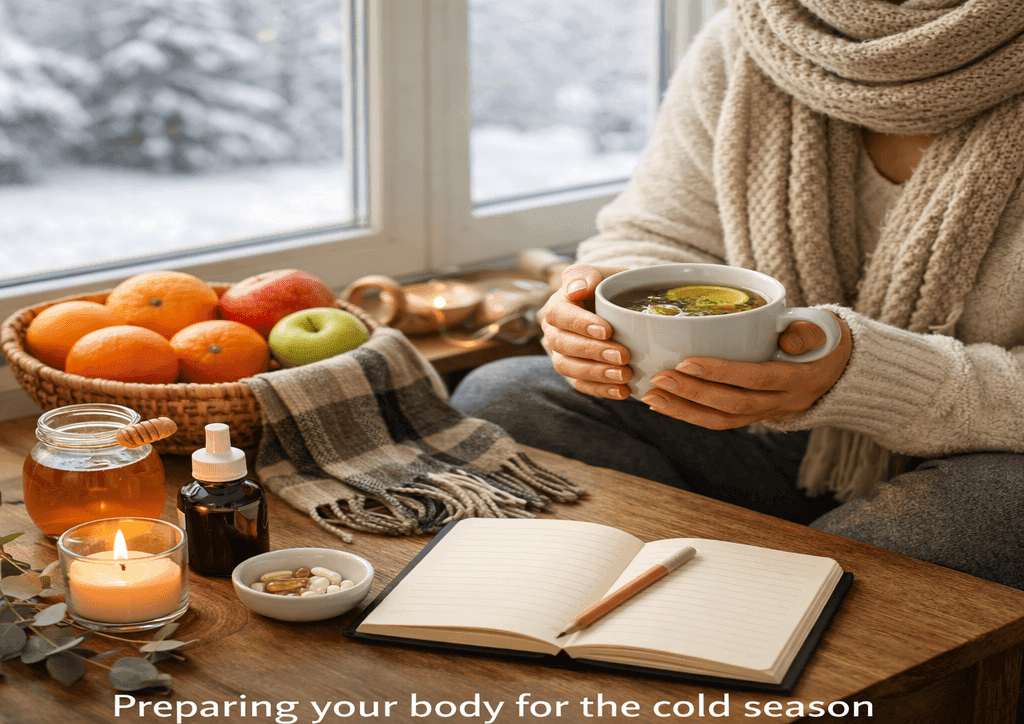
Quick Facts
- Nutrition : Choose a varied diet based mainly on whole and minimally processed foods.
- Hydration : Continue drinking fluids regularly, even when cold weather reduces your sense of thirst.
- Movement : Maintain regular physical activity and adapt your routine to weather conditions.
- Sleep : Keep a consistent sleep schedule and create a comfortable nighttime environment.
- Mental well-being : Stay socially connected and make time for relaxation and daylight exposure.
- Skin care : Moisturize regularly and protect exposed skin from cold, dry conditions.
- Prevention : Practice good hygiene and adjust clothing and daily routines to changing temperatures.
Introduction
As temperatures fall and daylight hours become shorter, many people notice changes in their energy levels, routines, sleep patterns, and overall comfort. Cold weather can also bring drier air, less outdoor activity, and more time spent indoors. Together, these seasonal changes can affect everyday well-being.
Preparing your body for cold season does not mean avoiding winter or following restrictive routines. Instead, it means building healthy habits that support your body as environmental conditions change.
Small, consistent lifestyle choices can make a meaningful contribution to overall well-being. A balanced approach that includes nutritious food, regular movement, adequate sleep, stress management, hydration, skin care, and preventive habits can help you maintain a comfortable and sustainable routine throughout the colder months.
This guide brings together practical cold-weather health tips to help you prepare for the season and make informed lifestyle choices.
Why Preparing for Cold Season Matters
Cold weather can influence daily routines in several ways. Understanding these seasonal changes can help you adapt your habits before winter becomes challenging.
How Cold Weather Can Affect Daily Well-Being
Seasonal changes may influence :
- Daylight exposure, which can affect daily routines and sleep-wake patterns.
- Skin comfort, particularly when outdoor air is cold and dry or indoor heating reduces humidity.
- Physical activity, as cold or unpleasant weather may make outdoor exercise less appealing.
- Sleep and eating routines, which can change as daylight hours and daily schedules shift.
- Time spent indoors, which may reduce movement and increase close contact with other people.
Preparing ahead allows you to adapt rather than react when temperatures change.
Build a Strong Nutritional Foundation
Nutrition is an important part of maintaining overall health throughout the year, including during cold weather. Rather than searching for a single “winter superfood,” focus on balance, variety, and nutrient-dense foods.
Key Nutrition Principles for Cold Weather
Consider these simple habits :
- Prioritize whole and minimally processed foods.
- Include a variety of vegetables and fruits.
- Choose nutritious sources of protein, such as beans, lentils, eggs, fish, poultry, or other suitable options.
- Include whole grains such as oats, brown rice, and barley.
- Add healthy sources of unsaturated fats, including nuts, seeds, and olive oil.
- Maintain regular meal patterns that suit your lifestyle.
- Stay adequately hydrated throughout the day.
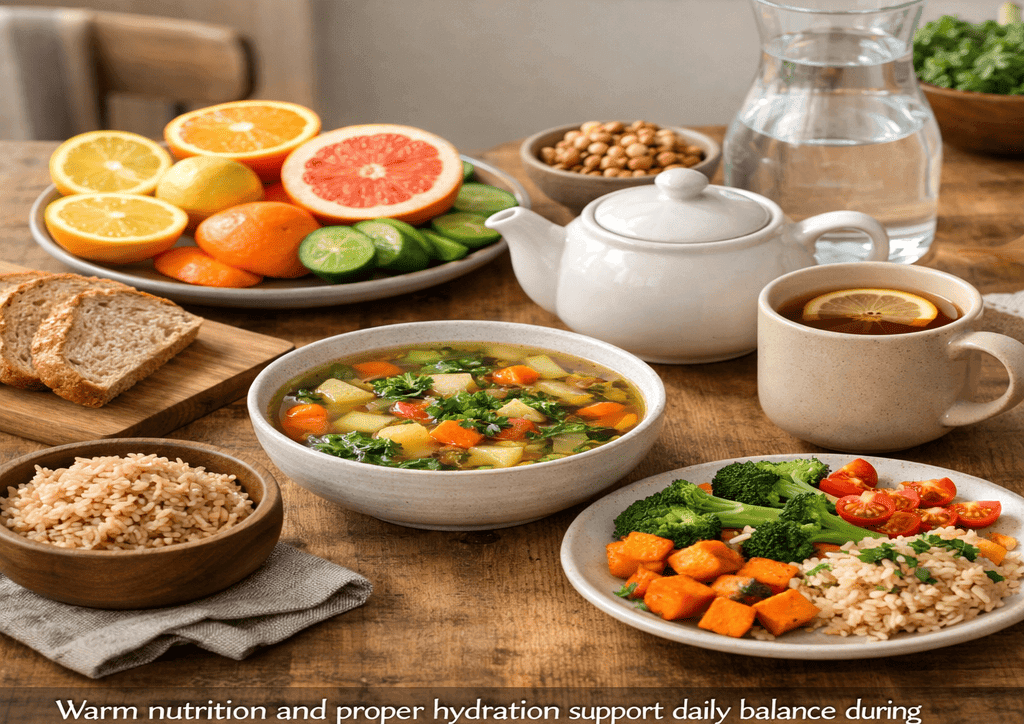
Warm meals such as soups, stews, vegetable dishes, and whole-grain meals can be comforting during cold weather while providing an opportunity to include a wide range of nutritious ingredients.
Seasonal Foods to Include
| Food Group | Examples | General Benefit |
|---|---|---|
| Vegetables | Squash, carrots, leafy greens | Provide fiber, vitamins, minerals, and other beneficial plant compounds |
| Fruits | Citrus fruits, apples, berries | Provide fiber, vitamins, and naturally occurring antioxidants |
| Protein | Beans, lentils, eggs, fish | Supply protein and other essential nutrients |
| Whole grains | Oats, brown rice, barley | Provide carbohydrates, fiber, and sustained energy |
| Healthy fats | Olive oil, nuts, seeds | Provide unsaturated fats and help make meals satisfying |
No single food can prevent illness. The goal is to maintain a varied and balanced diet over time.
Stay Hydrated During Cold Weather
Hydration is sometimes overlooked during winter because people may feel less thirsty than they do in hot weather. However, the body still requires fluids throughout the day.
Practical Hydration Tips
- Drink water regularly rather than relying only on thirst.
- Keep water accessible throughout the day.
- Include water-rich foods such as fruits, vegetables, and soups.
- Enjoy unsweetened warm beverages, such as herbal tea, if they fit your preferences.
- Pay attention to signs that you may need more fluids, particularly during physical activity.
Adequate hydration supports normal body functions and can contribute to skin comfort, physical performance, and overall well-being.
Stay Active When It’s Cold Outside
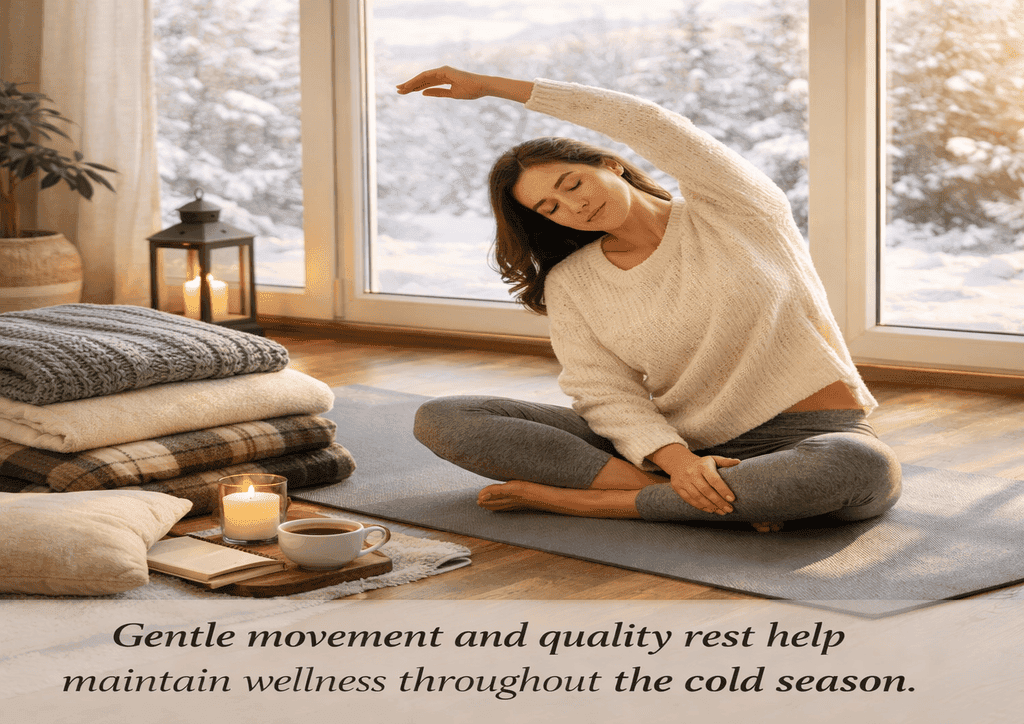
Regular physical activity remains an important part of a healthy lifestyle during winter. Cold temperatures may make outdoor exercise less appealing, but there are many ways to stay active indoors or outdoors safely.
Why Movement Matters During Cold Season
Regular movement can help :
- Maintain muscle strength and physical function.
- Support cardiovascular fitness.
- Preserve mobility and flexibility.
- Promote better mood and mental well-being.
- Reduce prolonged sedentary time.
- Maintain a consistent daily routine.
Simple Ways to Stay Active Indoors
| Activity Type | Examples | General Frequency |
|---|---|---|
| Light cardio | Walking indoors, marching in place, climbing stairs | Most days |
| Strength | Bodyweight exercises, resistance exercises | Around 2–3 days per week |
| Flexibility | Gentle stretching, yoga | Regularly |
| Mobility | Joint mobility exercises and controlled movements | Daily or regularly |
The focus should be on consistency rather than intensity. If exercising outdoors in very cold or hazardous conditions, adjust the activity to the weather and your individual fitness level.
Support Quality Sleep in Winter
Changes in daylight, temperature, activity levels, and daily routines can influence sleep habits. Maintaining a consistent sleep schedule can help support healthy routines during the colder months.
Sleep-Friendly Winter Habits
- Keep consistent sleep and wake times whenever possible.
- Create a quiet, comfortable bedroom environment.
- Reduce stimulating screen use before bedtime.
- Follow a relaxing evening routine.
- Avoid making major changes to your sleep schedule without a good reason.
- Make your bedroom temperature comfortable for sleep.
Quality sleep supports physical recovery, concentration, mood, and everyday functioning.
Manage Stress and Protect Mental Well-Being
Cold weather and shorter days can sometimes make people feel less motivated or more socially isolated. Mental well-being deserves the same attention as physical health.
Everyday Stress-Management Practices
Try incorporating simple habits such as :
- Spend time outdoors in natural daylight when conditions allow.
- Practice slow breathing, relaxation exercises, or mindfulness.
- Maintain regular contact with family and friends.
- Make time for enjoyable hobbies and activities.
- Set realistic expectations for work and productivity.
- Balance responsibilities with adequate rest.
Mental well-being does not require eliminating every source of stress. Instead, healthy routines can help you respond to everyday challenges more effectively.
Protect Your Skin During Cold Weather
Cold outdoor air, low humidity, wind, and indoor heating can contribute to dry or uncomfortable skin.
General Winter Skin-Care Tips
- Use gentle cleansers instead of products that leave the skin excessively dry.
- Apply a suitable moisturizer regularly.
- Avoid very hot showers and baths.
- Protect exposed skin from cold air and wind.
- Choose skin-care products appropriate for your individual needs.
These measures are intended to support skin comfort and routine care, not to treat medical skin conditions.
Maintain Preventive Lifestyle Habits
Preparing for cold season is most effective when healthy habits become part of your regular routine.
Everyday Preventive Actions
- Wash your hands regularly, especially before eating and after being in shared public spaces.
- Keep frequently used living areas reasonably clean.
- Dress appropriately for changing temperatures.
- Balance physical activity with sufficient recovery.
- Follow recommended preventive health measures relevant to your age, health status, and location.
- Stay home and limit close contact with others when you are unwell, when appropriate.
Good hygiene, sensible clothing, regular movement, adequate rest, and a balanced diet are important components of general health and well-being.
A Simple Daily Cold-Season Routine
| Time of Day | Suggested Habit |
|---|---|
| Morning | Nutritious breakfast, water, and light stretching |
| Midday | Balanced meal and a short walk or movement break |
| Afternoon | Hydration and regular physical activity |
| Evening | Nourishing dinner and reduced stimulating screen use |
| Night | Relaxation routine and consistent bedtime |
This routine is only a framework. Adjust it to your schedule, preferences, climate, and individual needs.
Common Cold-Season Mistakes to Avoid
Preparing for winter is not only about what you should do. It is also useful to recognize habits that may make seasonal routines more difficult.
1. Drinking Less Because You’re Not Thirsty
Cold weather can reduce the sensation of thirst. Continue drinking fluids regularly rather than waiting until you feel very thirsty.
2. Becoming Completely Inactive
Poor weather can encourage sedentary behavior. If outdoor exercise is not practical, replace it with safe indoor movement.
3. Ignoring Sleep
Shorter days and changing schedules can disrupt routines. Protect your regular sleep schedule whenever possible.
4. Relying on Supplements Instead of Food
Supplements are not a substitute for a balanced diet. Their usefulness depends on individual circumstances, and some supplements can interact with medications or cause harm when taken unnecessarily.
5. Taking Extremely Hot Showers
Very hot water may worsen skin dryness. Warm rather than excessively hot showers are generally more comfortable for dry winter skin.
6. Following Extreme Winter Health Plans
There is rarely a need for drastic dietary restrictions, excessive exercise, or complicated routines. Simple habits that you can maintain consistently are usually more practical.
Frequently Asked Questions
When should I start preparing for cold season?
You can begin before temperatures drop significantly. Starting gradually makes it easier to establish sustainable habits involving nutrition, sleep, physical activity, hydration, and preventive care.
Do I need dietary supplements during cold season?
Not necessarily. Many people can obtain essential nutrients through a varied and balanced diet. Supplements may be appropriate in certain circumstances, but they should be considered according to individual needs and professional medical or nutritional advice.
Is it normal to feel less energetic during winter?
Some people experience changes in energy, motivation, or daily routines during the colder months. Sleep, physical activity, nutrition, daylight exposure, and social connection can all contribute to overall well-being. Persistent or severe changes in mood or energy should be discussed with a qualified healthcare professional.
Can lifestyle habits really make a difference?
Yes. Consistent habits such as regular physical activity, adequate sleep, balanced nutrition, hydration, and good hygiene are fundamental components of healthy living throughout the year.
What should I eat during cold weather?
There is no single diet specifically required for winter. Focus on a varied eating pattern that includes vegetables, fruits, whole grains, protein-rich foods, and healthy fats. Warm, balanced meals can also make it easier to maintain nutritious eating habits during cold weather.
How can I stay active if it is too cold outside?
Try indoor walking, bodyweight exercises, stretching, mobility exercises, dancing, or other suitable forms of physical activity. If you exercise outdoors, consider the temperature, wind, surface conditions, clothing, and your individual health and fitness level.
Key Results : What to Focus on This Cold Season
The most practical approach to preparing your body for cold season is to concentrate on a few sustainable habits :
- Eat a varied, nutrient-dense diet.
- Drink fluids regularly.
- Stay physically active.
- Maintain a consistent sleep routine.
- Protect your mental well-being.
- Take care of your skin in cold, dry conditions.
- Practice good hygiene and preventive habits.
- Adapt your routine instead of relying on extreme measures.
General Expert and Organizational Guidance
The general principles discussed in this article are consistent with widely recognized approaches to healthy living promoted by major public health and health-education organizations. These principles include balanced nutrition, regular physical activity, adequate sleep, hygiene, hydration, and preventive health practices.
However, general lifestyle guidance cannot replace individualized medical advice. Specific nutritional, exercise, or preventive recommendations may differ according to age, health status, medications, climate, and other personal factors.
Conclusion
Preparing your body for cold season is not about following rigid rules or making extreme lifestyle changes. It is about creating a practical routine that supports your body as the weather changes.
A balanced diet, regular movement, adequate hydration, quality sleep, stress management, basic skin care, and preventive habits can provide a strong foundation for winter well-being.
The most valuable tools are consistency, flexibility, and self-awareness. Start with a few manageable changes, maintain them throughout the season, and adapt your routine when circumstances change.
With thoughtful preparation and sustainable habits, cold weather can become an opportunity to strengthen your daily routine and support your overall well-being.
Health Disclaimer
This article is intended for general health and lifestyle information only. It does not provide medical advice, diagnosis, or treatment.
Individual health needs vary. People with medical conditions, specific nutritional needs, or concerns about exercise in cold weather should consult a qualified healthcare professional for personalized guidance.
General References
- World Health Organization (WHO) : Healthy Living and General Health Guidance
- Centers for Disease Control and Prevention (CDC) : Healthy Living, Physical Activity, and Prevention Resources
- Harvard T.H. Chan School of Public Health : Nutrition and Healthy Living Resources
- National Institutes of Health (NIH) : General Health and Nutrition Information